Expanding the Foundations of the Upper Jaw
When most people think of orthodontic treatment, they envision straightening crooked enamel or closing gaps between front teeth. However, a stable, healthy smile relies just as heavily on the transverse dimension—the overall width of the upper jaw (maxilla).
When the upper jaw is structurally too narrow relative to the lower jaw, it creates severe mechanical and respiratory issues. Teeth become overcrowded, the bite fails to interlock properly, and the floor of the nasal cavity is constricted.
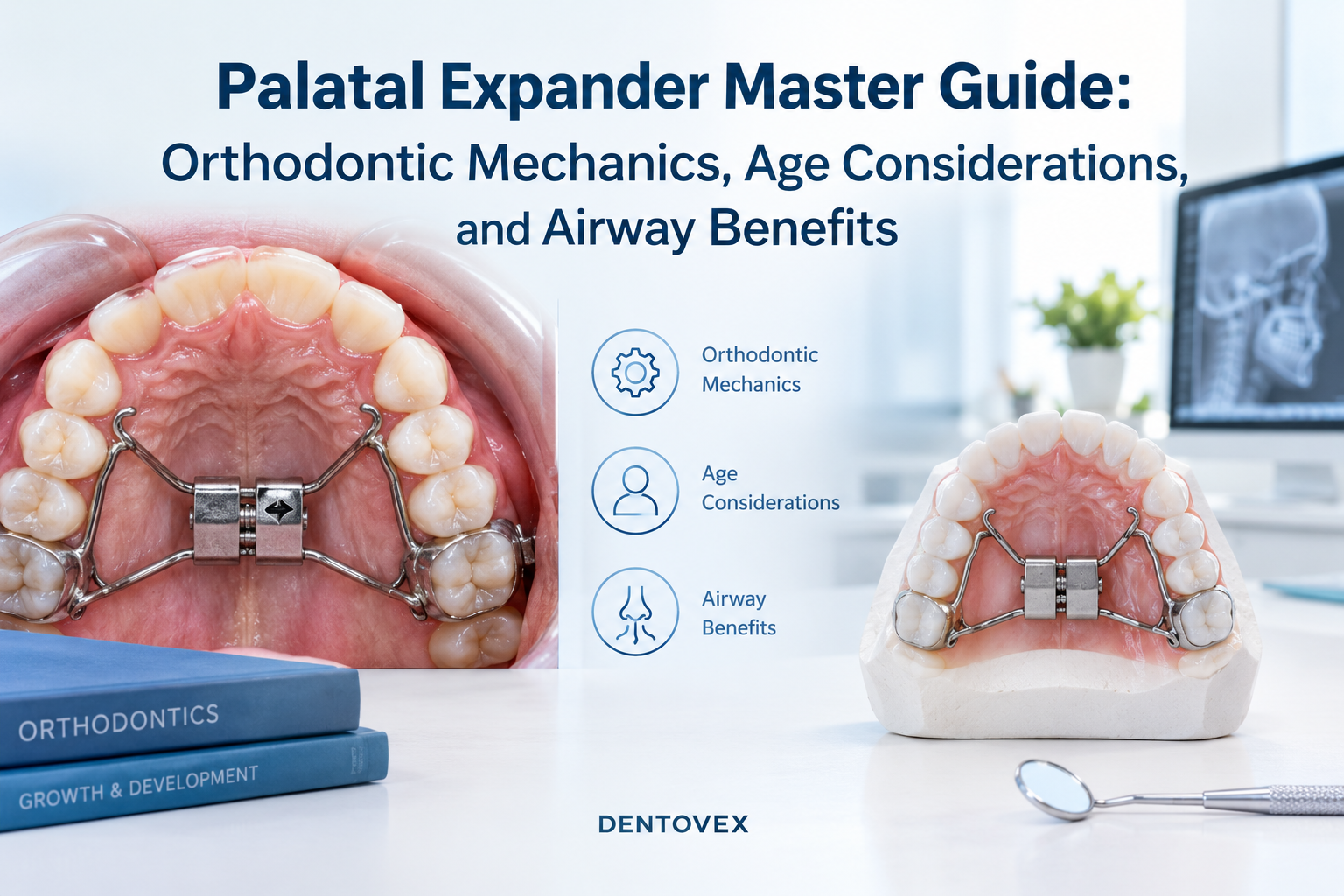
In clinical orthodontics, resolving this transverse deficiency requires a specialized appliance known as a palatal expander (often referred to as a Rapid Palatal Expander or RPE).
Unlike standard braces that move individual teeth through alveolar bone, a palatal expander applies targeted orthopedic force directly to the palatine bones, separating the midpalatal suture to widen the bone itself.
At Dentovex, we believe that understanding the structural biology behind your treatment leads to better clinical outcomes. In this comprehensive master guide, we deconstruct the anatomy of maxillary expansion, evaluate clinical indications across different age groups, analyze the primary types of expanders (RPE, MARPE, and SARPE), and detail the day-to-day care protocol for a seamless treatment journey.
1. Anatomy & Mechanics: How Maxillary Expansion Works
To understand how a palatal expander operates, we must examine the developmental anatomy of the human upper jaw.
The maxilla is actually composed of two distinct halves joined down the center of the roof of the mouth by a band of cartilage called the midpalatal suture.
The Orthopedic Opportunity in Young Patients
During childhood and early adolescence, this suture remains un-fused, flexible, and responsive to mechanical pressure.
When an orthodontist places an expander against the upper molars and activates the central jackscrew, the appliance generates lateral force. Instead of merely tipping the teeth outward, this physical pressure gently separates the two halves of the palatal bone along the suture line.
[Targeted Force on Molars] ➔ [Pressure on Midpalatal Suture] ➔ [Suture Separation & Jaw Widening] ➔ [New Bone Mineralization]
Once the desired width is achieved, the appliance is locked in place. Over the following 3 to 6 months, osteoblasts (bone-building cells) fill the opened gap with fresh calcium deposits, permanently solidifying the newly widened jaw structure.
2. Primary Clinical Indications for a Palatal Expander
An orthodontist will prescribe maxillary expansion when structural width discrepancies compromise oral function, aesthetics, or respiratory health:
A. Posterior Crossbite Correction
In a balanced bite, the upper teeth sit slightly outside the lower teeth like a lid on a box. If the upper jaw is too narrow, the upper back teeth bite down inside the lower teeth. This crossbite forces the jaw to shift laterally when chewing, leading to facial asymmetry and severe TMJ pain and dysfunction.
B. Relieving Severe Dental Crowding
When the dental arch lacks sufficient perimeter, permanent teeth erupt rotated, overlapping, or blocked out entirely. Expanding the maxillary bone creates physical arch perimeter, allowing teeth to align naturally without requiring tooth extractions or compromise.
C. Preventing Canine Impaction
Upper canine teeth develop high in the facial bone and require a clear path to erupt into the mouth. By expanding the upper arch perimeter early, a palatal expander opens up adequate space, preventing canines from becoming stuck (impacted) inside the palate.
D. Nasal Airway Resistance & Sleep-Disordered Breathing
The roof of the mouth serves as the floor of the nasal cavity. When the palate is narrow and high-arched, it restricts the volume of the nasal passages. Widening the palate lowers the palatal vault and expands the nasal cavity floor, decreasing nasal airway resistance and helping children transition from chronic mouth breathing to healthy nasal breathing.
3. Types of Palatal Expanders: Matching Appliance to Biological Age
Because the midpalatal suture gradually interlocks and fuses as we mature, the mechanical strategy for maxillary expansion changes significantly across different stages of life:
| Expander Variant | Anchoring System | Optimal Patient Age | Primary Biological Mechanism |
| Rapid Palatal Expander (RPE / Hyrax) | Stainless steel bands attached to back molars | Children & early teens (Ages 7 – 14) | Direct orthopedic separation of the un-fused midpalatal suture. |
| Miniscrew-Assisted RPE (MARPE) | Anchored directly to palatal bone via 4 micro-implants (TADs) | Late teens & young adults (Ages 15 – 25) | Bone-borne force bypasses fused teeth to separate maturing sutures. |
| Surgically Assisted RPE (SARPE) | Banded expander combined with Le Fort I surgical osteotomy | Fully mature adults (Ages 25+) | Surgical release of fused facial sutures followed by mechanical expansion. |
The Evolution: From RPE to MARPE and SARPE
- Traditional RPE (Hyrax/Haas): In growing children, tooth-borne expanders work seamlessly because the suture offers minimal resistance.
- MARPE (Miniscrew-Assisted): In older teenagers where the suture has begun to interlock, applying heavy force strictly to teeth can cause tooth tipping or gum recession. MARPE uses temporary anchorage devices (TADs) inserted directly into the palatal bone, delivering force straight to the skeleton without stressing tooth roots.
- SARPE (Surgically Assisted): In adults, the facial sutures are completely fused and calcified. Attempting mechanical expansion without surgery will simply tilt the back teeth or cause severe periodontal trauma. An oral surgeon performs minor osteotomies to release the bony resistance points, allowing the expander to widen the palate safely.
4. The Step-by-Step Treatment Journey
Undergoing palatal expansion follows a precise, multi-stage clinical timeline:
1.1. Impression & Appliance Bonding:Duration: 45 minutes.
Your orthodontist takes a digital 3D intraoral scan of your upper arch. A custom-fitted expander is fabricated and securely bonded or banded to your upper primary or permanent molars.
2.2. The Active Activation Phase:Duration: 14 to 21 days.
The patient or parent uses a specialized key to turn the central jackscrew mechanism once or twice daily (typically expanding the appliance by 0.25 mm per turn). You will feel mild pressure across the bridge of the nose and cheekbones.
3.3. Emergence of the Diastema:Visual Marker.
As the bone halves separate, a noticeable gap (diastema) will open between your two upper front teeth. This is a positive clinical indicator that orthopedic bone expansion has occurred rather than mere tooth tipping.
4.4. Retention & Bone Mineralization:Duration: 3 to 6 months.
Turning stops, but the expander remains in the mouth. During this crucial stabilization phase, fresh bone matrix fills the opened suture gap, and elastic gum fibers naturally draw the two front teeth back together.
5.5. Appliance Debonding & Alignment Transition:Final Stage.
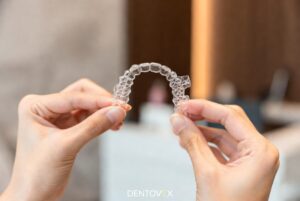
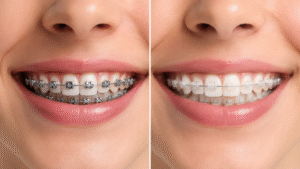
The expander is removed, and your orthodontist immediately transitions your care to invisalign clear aligners or fixed transparent teeth braces to level and align the newly expanded arch.
5. Daily Care, Nutrition, and Appliance Maintenance
Adapting to a palatal expander takes a few days. Proper maintenance ensures optimal comfort and prevents soft-tissue inflammation:
Managing Speech and Swallowing Changes
For the first 3 to 5 days, your tongue will need to adjust to the metal framework in the roof of your mouth. Excess salivation and minor lisping (especially with “S” and “T” sounds) are normal. Reading aloud for 15 minutes a day speeds up tongue adaptation.
Dietary Adjustments
- Foods to Avoid: Sticky candies (caramel, taffy, chewing gum) can pull the appliance loose from molars. Hard foods (nuts, ice, hard pretzels) can bend the metal arms or jam the central adjustment screw.
- Recommended Foods: Soft, nutrient-dense foods like smoothies, scrambled eggs, pasta, yogurt, and soups are ideal during the active turning phase.
Oral Hygiene Protocols
Food particles easily collect between the expander’s metal frame and the roof of your mouth.
- Water Flosser Usage: Use an oral irrigator on a low-pressure setting to flush out trapped food debris beneath the central screw daily.
- Interdental Brushes: Clean thoroughly around the molar bands and acrylic pads with a soft interdental brush to keep gums firm and healthy.
6. Retention & Long-Term Stability
Achieving a broad, beautifully proportioned upper jaw is only half the battle; maintaining transverse stability requires disciplined retention planning.
Once active orthodontic alignment is complete, your specialist will implement a custom stabilization plan:
- Custom Clear Protection: Wearing high-durability invisalign vivera retainers at night prevents the arch perimeter from collapsing inward over time.
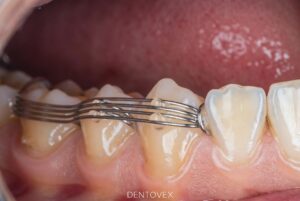
- Permanent Underpinning: Your specialist may pair clear night trays with a discreet permanent retainer wire placed behind the front teeth to hold the newly shaped arch form in place indefinitely.
Conclusion: Building a Healthier Facial Architecture
A palatal expander is far more than a simple orthodontic appliance—it is a powerful orthopedic tool that corrects structural bone discrepancies at their root cause. By widening a narrow maxilla, this treatment opens space for crowded enamel, corrects damaging crossbites, harmonizes your facial proportions, and expands your airway for better breathing.
Whether utilized during early childhood growth or executed via advanced MARPE and SARPE techniques in adulthood, palatal expansion lays the absolute foundation for a stable, functional, and radiant lifetime smile.
To determine if maxillary expansion is the right structural step for you or your child, schedule a comprehensive clinical evaluation with your orthodontic team today.
Disclaimer: Palatal expansion is a specialized orthopedic procedure requiring careful clinical evaluation of bone maturity, root health, and facial anatomy. Always consult with a licensed orthodontic specialist to design the safest treatment approach.

No responses yet