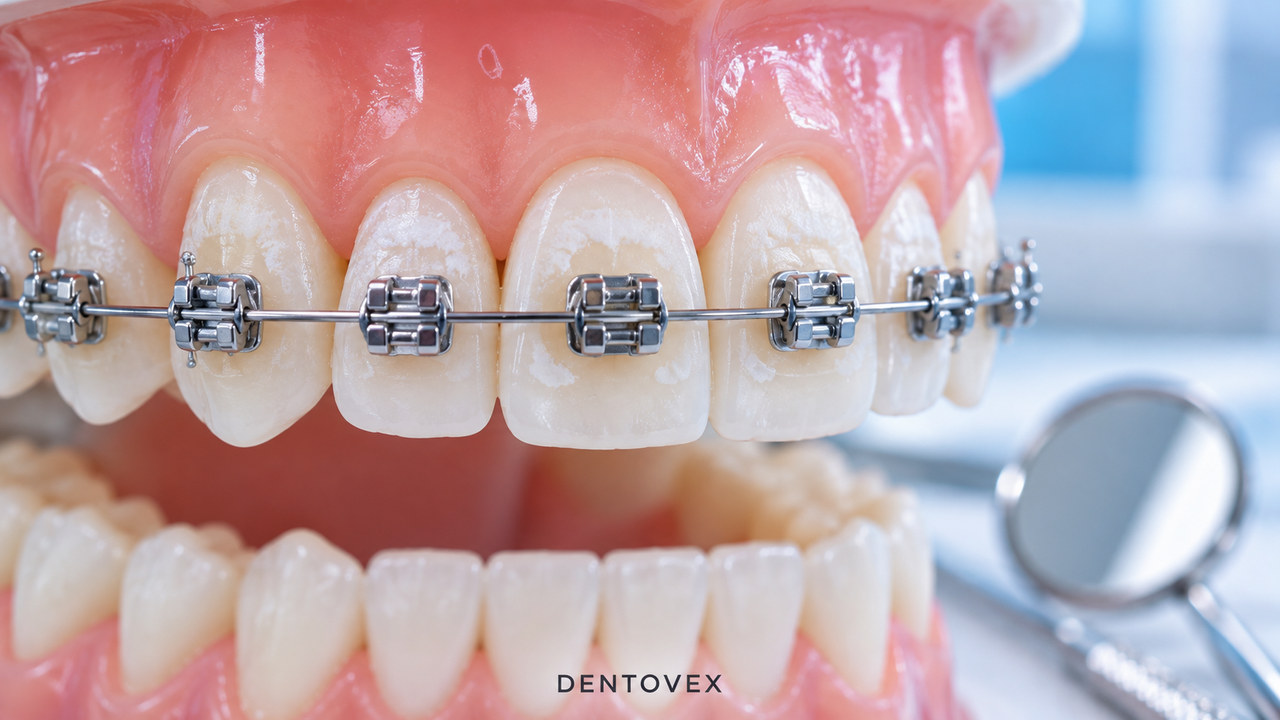
Quick answer: White spots that become visible during or after braces are often areas of enamel demineralization, sometimes called white spot lesions. Plaque and frequent acid exposure can remove minerals from enamel around brackets. Not every pale mark is the same: fluorosis, developmental enamel changes and other conditions can look similar. A dentist should examine new spots before you try whitening or cosmetic treatment. Prevention focuses on careful plaque removal, fluoride and fewer frequent sugary or acidic drinks. The American Association of Orthodontists explains the mechanism and prevention steps.
Removing braces is a milestone. It can also reveal a frustrating contrast: the teeth look straighter, but pale patches remain where brackets once sat. The first impulse may be to buy a whitening kit. That is not always the right first move. What matters is why the spots appeared, whether the enamel surface is intact and whether there is still active decay.
This guide separates what you can reasonably do at home from procedures that require a dental examination. It also explains what published research can and cannot promise about making the marks less visible.
What are white spots after braces?
Enamel is a highly mineralized outer layer. When bacterial plaque stays on a tooth and is repeatedly exposed to sugars, acids produced by the biofilm can dissolve some of the minerals beneath the surface. The enamel may then scatter light differently and look chalky, opaque or matte. Early lesions can have an intact outer surface; a cavity is a later and more destructive possibility, not an inevitable outcome.
Brackets do not chemically bleach a square onto the tooth. Instead, the areas around brackets and along the gumline are harder to clean. The surface directly beneath a well-bonded bracket may be relatively sheltered, creating a visible contrast when the appliance is removed. The AAO’s 2026 patient guide emphasizes plaque and acid exposure rather than blaming the bracket itself.
Do all white marks mean early cavities?
No. A white appearance is a finding, not a diagnosis. Fluorosis and enamel defects that developed years before orthodontics can also produce pale areas. Dehydration immediately after braces removal may make some enamel differences more conspicuous. A clinician evaluates location, texture, history and activity, and may use additional tests if needed. Avoid assuming that a photo can distinguish all causes.
Why are spots often close to the gums?
The region between the bracket and gumline is easy to miss while brushing. Plaque may remain there even when the front of the bracket looks clean. Gum inflammation can make access harder. Regular professional checks help detect changes while braces are still on.
What should you do if you notice a new white spot?
First, book a dental examination. Tell the dentist when the mark first appeared, whether it changed, and whether you have sensitivity. A spot that feels rough, traps food, is turning brown or is associated with pain deserves particular attention. Do not wait for your next routine orthodontic adjustment if a dentist suspects decay.
Second, review daily habits without scrubbing harder. Use a soft brush and fluoride toothpaste, clean above and below the wire and between teeth, and limit repeated exposure to soda, sports drinks and sweet snacks. Aggressive brushing or abrasive powders do not rebuild lost enamel and can damage gums.
Third, avoid immediately bleaching the whole smile. Whitening may make the surrounding enamel lighter without treating the underlying lesion. It can sometimes make the contrast more noticeable, especially before the cause has been assessed. Discuss the timing of any cosmetic treatment with your dentist.
A practical decision table
| What you notice | What it may mean | Sensible next step |
|---|---|---|
| Chalky marks near former brackets, no pain | Possible demineralization | Arrange dental assessment; strengthen daily fluoride and plaque control |
| A spot that was present before braces | Developmental change or fluorosis is possible | Bring old photos or records to the appointment |
| Rough surface, brown discoloration or a visible hole | More advanced mineral loss or decay may be present | Prompt dental examination; do not rely on cosmetic whitening |
| White mark with persistent sensitivity | Several possible causes | Ask the dentist to assess for decay, exposed dentin or other problems |
| New spots while brackets are still attached | Active hygiene or dietary risk | Contact the orthodontic and dental teams before appliance removal |
The table helps you describe the problem; it cannot replace an examination.
Can white spots disappear on their own?
Some early lesions become less noticeable over time, particularly when plaque control improves and enamel can take up minerals from saliva and fluoride. Others persist. Improvement in appearance is not the same thing as proof that a lesion has fully reversed. The initial depth, surface integrity, activity and individual oral environment all matter.
A review of white spot lesions after orthodontics describes prevention and several treatment options, while noting differences between studies. It is reasonable to hope for improvement; it is not reasonable to promise that every white patch will vanish with toothpaste alone.
Treatment options: what is each one for?
Fluoride toothpaste and professional fluoride varnish
Fluoride helps make enamel more resistant to acid and supports remineralization. It is the foundation of preventive care, not a cosmetic eraser. The American Dental Association’s fluoride overview explains the role of topical fluoride and the distinction between over-the-counter and prescription-strength products. A dentist may recommend additional fluoride for a person at higher risk, but prescription products should not be started without individual advice.
Resin infiltration
For selected non-cavitated lesions, a dentist may use a low-viscosity resin that penetrates porous enamel and changes how the area reflects light. This can improve the visual contrast without the same amount of tooth removal required for some other restorative procedures. It is not appropriate for every spot and does not substitute for treating active decay. A 2021 systematic review and meta-analysis found evidence of improved masking, but the authors cautioned that relatively few well-conducted randomized trials underpinned the conclusion.
Enamel microabrasion
A clinician may remove a very thin superficial layer of enamel to reduce the appearance of selected shallow discolorations. Depth matters: a deeper lesion may not respond as expected. Because this is an irreversible procedure, it should be considered only after an examination and a discussion of alternatives.
Restorative treatment
If enamel has broken down or a cavity is present, cosmetic masking alone is not enough. The dentist may recommend a filling or another restoration based on the extent of damage. A small white spot should not automatically lead to drilling; equally, a visible hole should not be dismissed as a stain.
Whitening and other cosmetic approaches
Whitening can change the color of surrounding teeth, but it does not directly restore missing mineral. It may be useful in a carefully sequenced aesthetic plan, or it may increase contrast. The correct order of treatment depends on the lesion and the patient’s goals. Be skeptical of before-and-after photos that do not explain the diagnosis, treatment or follow-up period.
Which option should you ask about first?
| Main question | What to discuss with the dentist |
|---|---|
| Is the enamel surface intact? | Whether prevention or a minimally invasive approach is appropriate |
| Is the lesion active? | Plaque control, diet, fluoride and follow-up interval |
| Is the main problem cosmetic? | Whether infiltration or microabrasion is suitable and what limits apply |
| Is there cavitation? | Whether restorative care is needed before cosmetic decisions |
| Are multiple teeth affected symmetrically? | Whether the pattern suggests a cause other than braces-related demineralization |
A useful appointment outcome is a written plan: diagnosis, proposed intervention, alternatives, likely limitations and when the result will be reviewed.
How to prevent white spots while wearing braces
Clean the enamel around not just on the brackets
Angle the brush to reach above and below the bracket and near the gumline. Use an interdental brush where your orthodontic team recommends it, and clean between teeth daily. For a practical walkthrough, see Dentovex’s daily braces cleaning guide. Water flossers can be useful additions but should not automatically replace other cleaning methods your clinician has recommended.
Make fluoride a consistent habit
Brush with fluoride toothpaste at least twice daily. A clinician may recommend an additional fluoride rinse or professional varnish depending on your risk. Compare ingredients and professional indications in the Dentovex toothpaste and mouthwash overview, but remember that the best routine is one you can perform thoroughly and consistently.
Reduce the number of acid attacks
The frequency of sugary or acidic drinks matters. Sipping soda over an entire afternoon repeatedly challenges enamel, even if the total amount seems modest. Choose water between meals when possible. After acidic drinks, rinsing with water is reasonable; avoid forceful brushing immediately after a strong acid exposure.
Keep dental appointments during orthodontics
Your orthodontist monitors tooth movement; your general dentist also checks for decay and gum disease. These roles complement each other. If the gums are swollen or bleed, review the Dentovex gum-health guide and arrange an examination rather than assuming the brackets alone are responsible.
What the research does not establish
A common online claim is that one procedure can remove all post-braces spots permanently. Evidence is more nuanced. Reviews have reached different conclusions because studies vary in lesion severity, follow-up, outcomes and risk of bias. A 2016 systematic review judged the available evidence for several post-orthodontic treatments very low quality, while later work on resin infiltration suggests a useful masking effect in selected patients. Those findings can coexist: promising results do not make a treatment universally effective.
There is also no single percentage that accurately predicts your outcome without an examination. If a clinic quotes a success rate, ask what kind of lesions were treated and how long the results were followed.
Frequently asked questions
Are white spots permanent after braces?
Some improve; others remain visible. An examination is needed to determine the cause and whether a treatment is appropriate.
Can I use whitening strips on white spots?
Do not use whitening strips as a substitute for diagnosis. Whitening can change contrast and does not treat active decay.
Is a white spot the same as a cavity?
Not necessarily. An early non-cavitated lesion can precede a cavity, but other enamel conditions also cause white areas.
Should I remove my braces early if spots appear?
Do not remove appliances yourself. Ask your orthodontist and dentist to assess the severity and whether the treatment or hygiene plan needs changing.
Can clear aligners cause similar marks?
Yes. Plaque, sugar and acid exposure still matter with removable aligners, especially if trays are worn over unclean teeth or with sweet drinks.
The bottom line
White spots after braces deserve a careful diagnosis, not an automatic whitening purchase. The most useful first steps are professional evaluation, consistent plaque removal and fluoride-based prevention. If appearance remains a concern, ask about the benefits and limitations of minimally invasive options. A straighter smile should also be a healthy one.
Sources and further reading
- American Association of Orthodontists — Do Braces Cause White Spots on Teeth? (2026).
- American Dental Association — Fluoride: Topical and Systemic Supplements.
- White Spot Lesions—Post-Orthodontic Occurrence, Management and Treatment Alternatives: A Narrative Review.
- Efficacy of resin infiltration to mask white spot lesions: systematic review and meta-analysis (2021).
- Management of post-orthodontic white spot lesions: updated systematic review (2016).
Medical information notice: This article is educational and does not provide a diagnosis or a personalized treatment plan. A licensed dentist must assess enamel changes and recommend treatment. Prepared for editorial review; no clinical reviewer has been assigned.

No responses yet