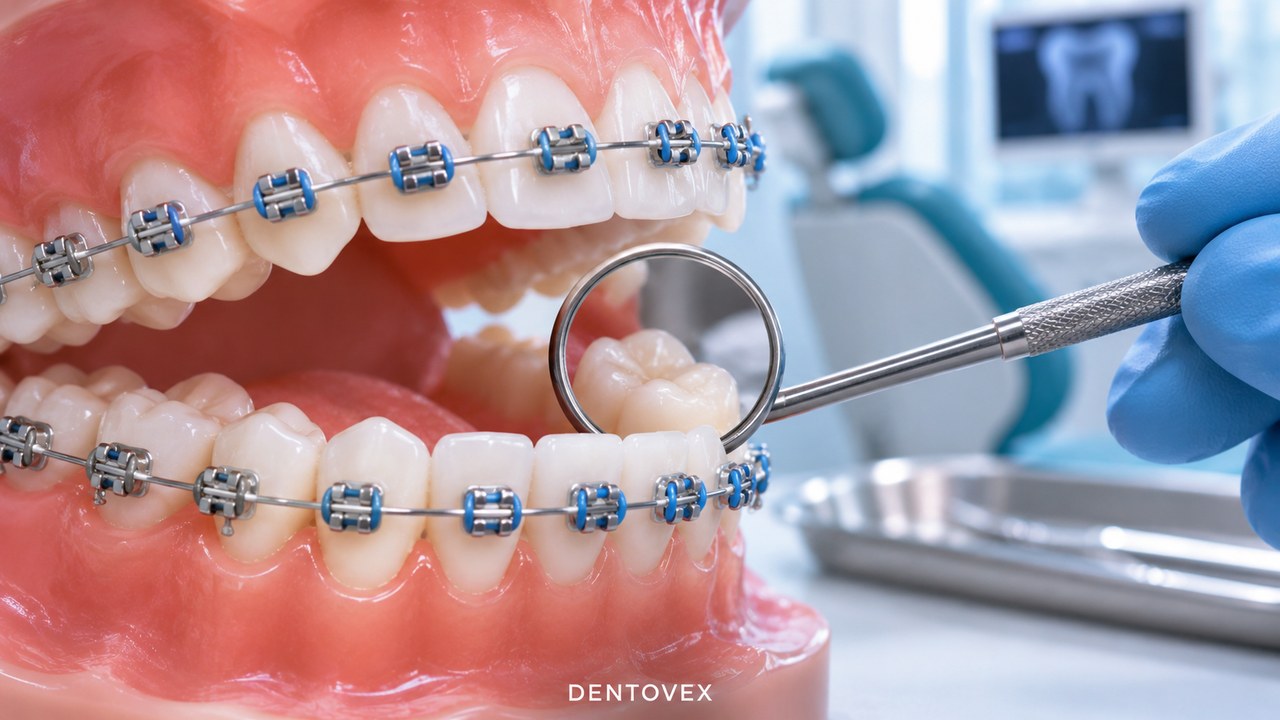
Quick answer: Yes, a dentist can often treat a cavity while you have braces. Whether a bracket or wire needs to be temporarily moved depends on where the decay is, how much of the tooth needs treatment, and how the orthodontic hardware affects access. Do not postpone a suspected cavity until your braces come off without getting dental advice.
Getting a cavity during orthodontic treatment can feel particularly frustrating. You are already making time for adjustments, brushing around brackets, and changing how you eat. Now your dentist says a tooth needs a filling. Does that mean the braces must come off? Will treatment stop? Is a white spot the same as a cavity?
There is no single answer for every tooth. The useful distinction is between treating the dental disease and working around the orthodontic appliance. A general dentist usually diagnoses and restores decay; an orthodontist manages tooth movement and the hardware. When both communicate, many routine dental procedures can be coordinated without abandoning the orthodontic plan.
Can You Get a Filling With Braces On?
Usually, yes. A filling repairs a tooth that has developed a cavity. The NHS explains that fillings are used to repair holes caused by decay, and that the appropriate material depends on clinical needs. Having braces does not make the underlying tooth untreatable.
However, access matters. If decay is on an exposed chewing surface, the dentist may have enough room to work around the brackets. If it is under a bracket, close to the gumline, or between tightly positioned teeth, the dentist may need a different approach. In some situations, the orthodontist may temporarily remove or reposition a bracket or archwire and then restore the appliance after dental care. That decision is made by the treating clinicians, not by the patient.
It is also possible for a dentist to decide that a suspicious area does not yet require a filling. Early enamel demineralization may be managed differently from a true cavity. That is why an examination, and sometimes radiographs, are more useful than trying to diagnose the spot from a photograph.
Why Cavities Can Develop Around Brackets
Brackets, bands, and wires create additional surfaces where plaque and food debris can remain. Bacteria in plaque produce acids that can remove minerals from enamel. The American Association of Orthodontists (AAO) explains that inadequate cleaning around appliances can contribute to white marks, cavities, and gum problems. The NHS orthodontics guidance similarly identifies white spots as an early warning of mineral loss around braces.
This does not mean braces automatically cause cavities. The risk depends on cleaning, dietary exposure to sugars and acids, fluoride use, existing dental conditions, and other individual factors. A cavity can develop on a tooth with or without braces.
White spot, stain, or cavity: why the difference matters
A chalky white area near a bracket may represent early mineral loss. A brown mark might be a stain, but it can also deserve assessment. A dark pit, a rough area, food trapping, or pain can have several explanations. None of these signs is enough to establish a diagnosis on its own.
Early enamel changes sometimes respond to professional preventive care, improved plaque control, and fluoride-based treatment. The NHS tooth-decay guide distinguishes early decay, which may be managed with fluoride, from a cavity that may require a filling. A dentist must determine which situation applies.
What Happens at a Filling Appointment When You Have Braces?
The appointment is usually planned around the location and extent of decay. A realistic sequence may include the following, although your dentist may use a different approach:
- Assessment: The dentist examines the area, reviews symptoms and prior images, and decides whether a filling or another treatment is appropriate.
- Access check: The dentist determines whether brackets, a molar band, or the archwire obstruct the area.
- Coordination if needed: The dental and orthodontic offices agree on whether hardware must be temporarily adjusted and when it will be replaced.
- Restoration: The dentist removes diseased tissue as appropriate and restores the tooth with a suitable material. Local anesthesia may be offered when needed.
- Bite and appliance check: The dentist checks the restoration, and the orthodontist verifies any hardware that was changed.
You should not try to remove a bracket, bend a wire, or detach a band at home. Doing so can injure the mouth, compromise the appliance, or delay treatment.
Does the bracket always need to come off?
No. The dentist’s ability to reach the affected surface is the deciding factor. A cavity on a molar chewing surface may be accessible without removing the front-facing bracket. Decay next to or beneath a bonded attachment can be more complicated. The orthodontist and dentist decide together whether temporary removal is necessary.
Does getting a filling hurt more with braces?
The braces themselves do not determine whether a filling will be painful. Sensitivity depends on the tooth, depth of decay, procedure, and use of anesthesia. Tell the dentist if your teeth are already sore from an orthodontic adjustment so they can plan the appointment comfortably.
Should You Wait Until Braces Are Removed?
Do not assume that waiting is safe. Untreated decay can progress, potentially requiring more extensive care. The NHS notes that advanced decay may involve the pulp and require root canal treatment or, in some cases, extraction. Your dentist can tell you whether the finding needs prompt treatment or whether monitoring is appropriate.
If a dentist identifies a cavity while you are in braces, ask for a clear plan rather than making the timing decision yourself. You can also request that the dentist send notes or images to your orthodontist.
| Situation | Reasonable next step | What not to assume |
|---|---|---|
| Chalky white area near a bracket, no pain | Arrange a dental evaluation and review hygiene/fluoride | Every white mark needs drilling |
| Dentist confirms a cavity | Discuss restoration and orthodontic access | Treatment must wait until braces are removed |
| Pain on biting or persistent sensitivity | Contact your dentist promptly | It is always normal orthodontic soreness |
| Facial swelling, fever, severe spreading pain | Seek urgent dental/medical assessment | An adjustment appointment can safely replace urgent care |
| Loose bracket near a damaged tooth | Inform the orthodontist and dentist | You should repair the bracket yourself |
The table is a decision aid, not a diagnostic tool. For emergency symptoms such as significant swelling or difficulty swallowing, seek urgent care rather than waiting for a routine appointment. The AAO’s emergency guidance explains which appliance problems need prompt attention and which symptoms constitute a true emergency.
Will a Filling Delay Orthodontic Treatment?
Sometimes there is little or no interruption. If a bracket needs to be removed, a short adjustment to the treatment sequence may be necessary. The actual effect depends on how much dental work is needed, whether the tooth is actively being moved, and how quickly the appliance can be restored. A filling does not automatically reset months of orthodontic progress.
If a tooth needs more extensive treatment, the orthodontist may temporarily avoid applying certain forces until the dental condition has been addressed. Ask both offices who is coordinating the next appointment. Clear communication is often more useful than guessing how long treatment will take.
For a broader explanation of the role of brackets and wires, see Dentovex’s orthodontic treatment overview.
How to Lower the Risk of Another Cavity
Prevention is not about buying the most complicated cleaning gadget. It is about consistently removing plaque and controlling the conditions that allow decay to develop.
Brush around every bracket and along the gumline. Use a soft brush and fluoride toothpaste. Pay attention to the small areas above and below brackets, where a quick pass over the front of the teeth may miss plaque.
Clean between teeth every day. Floss threaders, orthodontic flossers, and interdental brushes may help you work around the wire. A water flosser can be an adjunct, but do not assume it replaces every other cleaning method. The AAO’s flossing guide explains why interproximal cleaning matters during treatment.
Reduce repeated sugar and acid exposure. Frequent sweet drinks or grazing can prolong acid challenges to enamel. Choose water between meals when practical and follow your dental team’s advice about fluoride. The NHS orthodontics page highlights the role of plaque removal, fluoride, and avoiding sugary or acidic drinks.
Keep seeing your general dentist. Orthodontic visits are not a substitute for examinations, cleanings, or fillings. The AAO’s braces guide stresses preparing a healthy mouth for treatment and maintaining regular care.
Protect your hardware. Avoid hard or sticky foods that can dislodge brackets. If your orthodontist has placed spacers before molar bands, follow the specific cleaning instructions for that short stage rather than applying generic flossing advice to the separator site.
Questions to Ask Before the Filling
A brief conversation with both offices can prevent avoidable repeat appointments:
- Which tooth surface is affected, and is this early enamel change or an actual cavity?
- Can the dentist reach it with the current bracket and wire in place?
- If hardware must be removed, who will do that and when will it be reattached?
- Will the filling change how my teeth contact when I bite?
- Do I need a different fluoride or hygiene plan afterward?
- When should I contact the office if pain or swelling develops?
If you are also wearing power chains, mention them when scheduling. These linked elastics are part of the orthodontic mechanics and should not be altered by the patient.
Frequently Asked Questions
Can a dentist fill a cavity without removing the wire?
Often yes, when the affected area is accessible. If a wire or bracket obstructs treatment, the dentist and orthodontist can coordinate a temporary change.
Can braces cause cavities underneath brackets?
Plaque can accumulate around orthodontic attachments, and decay can develop in difficult-to-clean areas. The exact location and cause need a dental examination; not every dark or white mark is decay.
Can I get a root canal while wearing braces?
A root canal may be necessary if decay or infection affects the pulp. The dental and orthodontic teams must coordinate treatment and tooth movement. The need for one is not determined by braces alone.
Will the filling change the color of my tooth after braces?
Restorative materials and natural enamel may reflect light differently. Ask your dentist about appearance and shade, especially for a front tooth. Do not delay treatment of active decay solely for cosmetic timing without clinical advice.
What if my cavity does not hurt?
Cavities do not always cause pain early on. An examination is still important when a dentist suspects decay, even if you feel fine.
The Bottom Line
A cavity with braces is treatable, and it deserves the same careful attention as decay without braces. Your dentist determines the appropriate restorative care; your orthodontist manages access to and replacement of any affected hardware. A prompt assessment, good communication, and a practical prevention plan protect both your oral health and your orthodontic progress.
Editorial note: This article is educational information, not a diagnosis or individualized treatment plan. It has not been medically reviewed. Decisions about fillings, imaging, anesthesia, and appliance adjustments belong to licensed clinicians who have examined the patient.
No responses yet