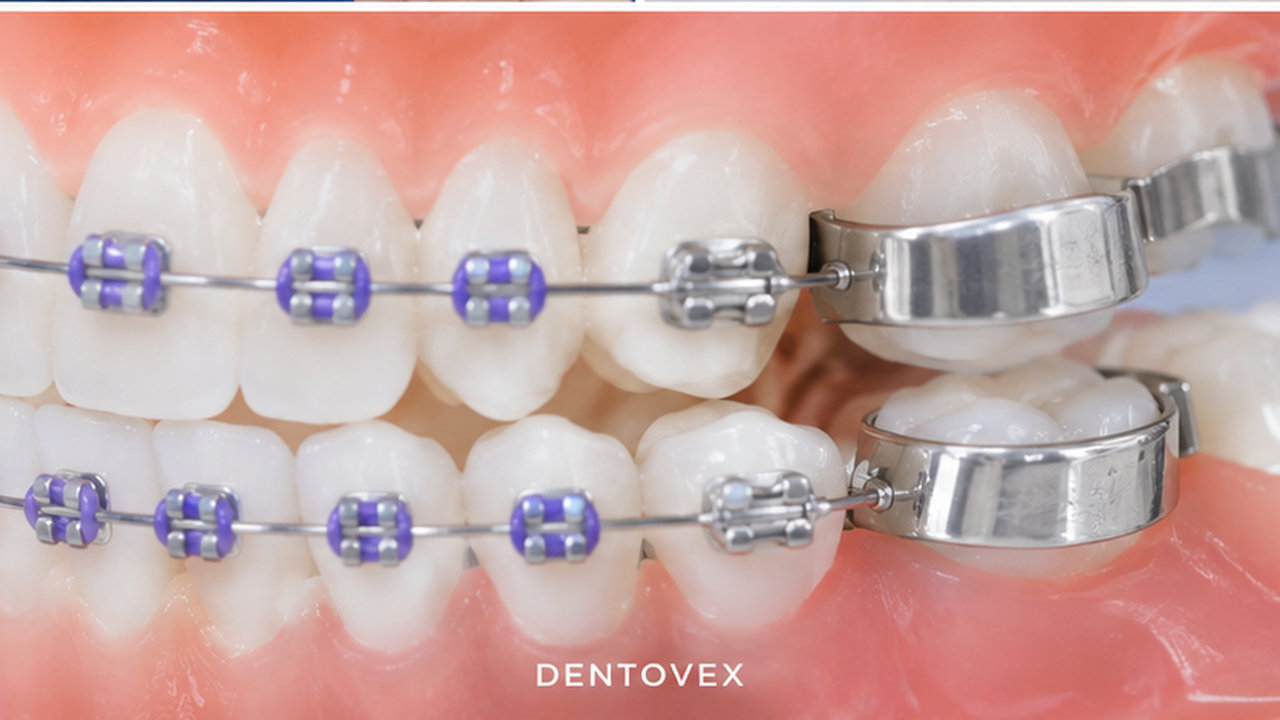
Quick answer: Molar bands are thin metal rings that fit around certain back teeth and provide a secure attachment for braces or other orthodontic appliances. Not everyone with braces needs them. If your orthodontist plans to use a band, small spacers (separators) may first create enough room between the molars. Placement can cause pressure or temporary soreness, but a loose band, persistent pain or swelling deserves a call to your orthodontic team.
Patients often hear the words “spacer,” “band,” “bracket,” and “tube” at the same appointment. These are related but different components. Understanding them makes the first week less confusing and helps you recognize when something needs attention.
What exactly is a molar band?
An orthodontic molar band is a metal ring often stainless steel cemented around a back tooth. It may carry a small tube or an attachment for wires and other orthodontic devices. A conventional bracket or bonded molar tube, by contrast, attaches to part of the tooth surface rather than surrounding it. The University of Toronto Faculty of Dentistry explains that bands may be especially useful when a tooth is only partly erupted, has certain restorations, or must support an additional appliance.
A band is not a dental crown and is not intended to cover or restore a broken tooth. It is temporary orthodontic hardware that the dental team removes when that phase of treatment is finished.
Molar band, bonded tube, or spacer: the differences
| Component | Where it goes | Main purpose | Usually removed when? |
|---|---|---|---|
| Separator or spacer | Between selected teeth | Makes temporary room before band fitting | At the next band-fitting appointment |
| Molar band | Around the whole molar | Provides attachment for orthodontic wires or appliances | When the planned banded phase ends |
| Bonded molar tube | Glued to the molar surface | Holds an archwire without a full metal ring | When the orthodontist removes the bonded appliance |
| Regular bracket | Bonded to tooth surface | Helps guide movement of that tooth | At the end of its treatment phase |
For more detail on what separators feel like, read the Dentovex spacers for braces guide. You may not need separators at all; your orthodontist decides based on the space and the type of band being used.
Why choose bands instead of bonding a tube?
The choice is not simply “old technique versus new technique.” Each attachment has advantages in a particular situation. Bands can provide reliable retention for some appliances and teeth. A multicenter randomized trial involving 80 orthodontic patients compared specific cemented first-molar bands with bonded molar tubes. Under the methods and materials studied, first-time attachment failure was lower for bands (2.6%) than for bonded tubes (18.4%). The trial also assessed enamel changes and discomfort.
This does not establish that every band on every tooth is superior to every bonded tube. Materials, patient characteristics, hygiene, tooth shape and treatment goals vary. For some patients the orthodontist may prefer a bonded tube because it is suitable for that tooth and treatment plan.
What happens at the appointment?
A typical pathway, described in the University of Toronto’s patient instructions, looks like this:
- Assessment: The orthodontist decides which molars need bands and checks space around them.
- Separators, if needed: Small separators are placed between teeth before the banding visit. The timing is clinic-specific; Toronto describes a common one-week interval.
- Separator removal: The team removes the spacers before fitting the band.
- Trial fitting: The clinician selects the correct band size and checks that it seats snugly around the tooth. You may be asked to bite gently on a fitting tool.
- Cleaning and cementation: The tooth is cleaned, and the band is cemented with a suitable dental material.
- Final check: The team removes excess cement, checks the bite and attachment, and explains home care.
Do not try to push a band into position yourself before the appointment. A good fit requires special instruments and clinical evaluation.
Do molar bands hurt?
It is common to feel pressure when a band is seated, followed by some tenderness or an unfamiliar bulky feeling around the back teeth. Spacers may have already made the area sensitive. A band or its attachment can also rub against the cheek. Temporary discomfort is different from persistent or severe pain, expanding gum swelling, uncontrolled bleeding, or an appliance edge that cuts tissue. Contact your orthodontist if symptoms worsen or prevent normal eating.
The clinical trial comparing bands and bonded tubes did not find a statistically significant discomfort difference in the particular groups studied; individual experiences still vary. Ask your team which over-the-counter comfort measures, if any, are appropriate for you rather than self-prescribing a medication regimen.
What should you eat after getting molar bands?
For the first day or two, patients may find softer foods more comfortable: scrambled eggs, yogurt, mashed vegetables, cooked pasta or soft rice. Once you adapt, follow your orthodontist’s usual braces-safe food advice. Sticky candy, gum, very hard nuts, chewing ice or crunching hard foods may loosen attachments. Cut firm fruit or vegetables into smaller pieces instead of biting aggressively into them.
If a band feels like it moves when chewing, stop testing it with food and call the orthodontic office. Repeatedly pushing on a loose band can increase irritation or risk swallowing it if it detaches.
How to clean around a molar band
Even though the metal covers part of the tooth, plaque can accumulate along the gumline and near the edges, attachments and wires. Brush gently but thoroughly around the front, back and gum-facing margins. Use floss or an interdental tool only as shown by your orthodontic team, and do not force a device under a loose band. Consistent fluoride toothpaste use and routine dental checkups remain important.
A clinical study of glass-ionomer cements during orthodontic banding examined white-spot changes around banded teeth; it underscores why enamel protection and technique matter, but it should not be interpreted as proof that bands are automatically free from decay risk. Daily plaque control is still essential. Our related guide explains how to clean around braces.
A quick home check after brushing
Look for a metal edge that suddenly seems higher or farther away from the gum than before, unexpected rocking, a hook rubbing a new sore spot, or trapped food you cannot remove gently. Do not pull or rotate the band to investigate. If the appliance is attached to a wire, attempts to remove it may damage neighboring components.
Molar band feels loose or has fallen off: what now?
Call your orthodontist promptly. A loose band can trap debris, irritate tissue or let an attached appliance shift. Do not glue it back with household adhesives, use tools to tighten it, or keep chewing on the affected side. If a part has completely detached, keep it safely for the office, provided there is no risk in retrieving it. If a sharp metal point irritates the cheek, ask the office whether temporary orthodontic wax is appropriate.
| Situation | What to do |
|---|---|
| Band wiggles or feels different but breathing and swallowing are normal | Contact orthodontist for a repair assessment; avoid pulling or chewing on it |
| Band edge rubs cheek | Ask about temporary wax, then arrange assessment |
| Band falls completely out | Save it safely if possible; tell the clinic and follow its instructions |
| Severe swelling, uncontrolled bleeding, trauma, or difficulty breathing/swallowing | Seek urgent or emergency care |
The American Association of Orthodontists’ emergency guidance distinguishes loose bands from potentially serious medical emergencies. You can also prepare for routine visits with the Dentovex first orthodontist appointment guide.
How long do molar bands stay on?
There is no single duration for every braces patient. Bands may remain through a long phase of fixed-appliance treatment or be used for a shorter phase involving a specific device. Their removal timing depends on the treatment plan not on whether the band feels comfortable. Never try to remove cemented orthodontic bands at home.
Frequently asked questions
Are molar bands necessary for all braces?
No. Some patients use bonded tubes instead of full bands. The orthodontist chooses based on tooth condition, appliances and treatment requirements.
Can a molar band make my tooth feel taller?
An unfamiliar bite sensation can occur after fitting, but a persistent bite interference or pain when closing deserves assessment to check the band seating and attachments.
Is a molar band the same as a spacer?
No. The separator creates space before fitting; the metal band is the attachment fitted around the molar afterward.
Can food get stuck around bands?
Yes, particularly around gum-facing margins, tubes or wires. Clean carefully and ask for specific tools if debris is hard to remove.
Will a loose band tighten itself?
Do not count on that. Call your orthodontic team and avoid manipulating it.
Are molar bands more likely to cause cavities?
Risk depends on hygiene, cementation, tooth conditions and follow-up. Proper plaque control and professional review remain necessary even when fluoride-releasing cements are used.
Can I use household glue if my band falls off?
No. Household adhesives are not suitable for oral medical devices and may damage teeth or create safety risks. Have the band assessed and reattached professionally.
Questions to ask your orthodontist
“Why is a band preferred for this tooth?” “Will I need spacers?” “What will the band connect to?” “How should I clean behind it?” “What changes should prompt a phone call?” and “When is the band likely to be removed?” Those questions are more useful than trying to compare appliances on appearance alone.
Medical information notice: This article is general patient education and has not been independently clinically reviewed on behalf of Dentovex. It is not a substitute for examination or instructions from your orthodontic practice.

No responses yet