Immediate Relief for Soft Tissue Friction
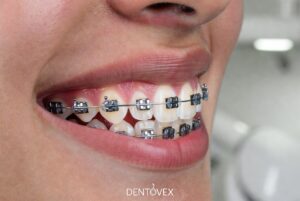
Starting your journey with fixed appliances—whether traditional metal brackets, ceramic systems, or lingual braces—is an exciting step toward a healthier smile. However, during the initial weeks of treatment, your mouth’s sensitive inner cheeks, lips, and tongue must adapt to the presence of metal and ceramic hardware.
Before your oral mucosa forms protective micro-calluses, sharp bracket edges, long archwire ends, or protruding hooks can cause localized friction, sore spots, and painful aphthous ulcers.
This is where orthodontic wax (often called braces wax or relief wax) becomes your most valuable everyday companion.
Orthodontic wax is a specially formulated, medical-grade substance designed to act as a smooth, physical barrier between sharp hardware and soft tissue. At Dentovex, we recommend every patient keep relief wax on hand to eliminate discomfort and maintain uninterrupted progress. In this practical guide, we cover the material composition of dental wax, step-by-step application techniques, safety considerations, and emergency alternatives.
1. What Is Orthodontic Wax Made Of?
Orthodontic wax is engineered specifically for intraoral safety. Unlike household waxes, dental wax is non-toxic, clear or semi-opaque, tasteless, and safe if accidentally swallowed.
Key Ingredients
- Paraffin Wax / Microcrystalline Wax: Provides the structural flexibility required to mold the material around complex bracket shapes.
- Beeswax: Natural wax added to increase pliability and temperature adaptability, helping the wax stay soft at body temperature.
- Carnauba Wax: Derived from palm leaves to improve consistency and moisture resistance against saliva.
- Flavoring Oils (Optional): Some variants include subtle mint, bubblegum, or aloe vera extracts to soothe irritated tissues.
2. Step-by-Step: How to Apply Orthodontic Wax Correctly
Applying orthodontic wax is simple, but following a precise routine ensures it stays securely attached despite saliva flow and chewing forces:
1.1. Wash Your Hands:Eliminate bacterial transfer.
Thoroughly wash your hands with soap and water before touching your mouth or the wax to prevent introducing bacteria into open sores or raw tissue.
2.2. Pinch and Roll the Wax:Prepare a pea-sized portion.
Pinch off a small piece of wax—roughly the size of a small pea or popcorn kernel. Roll it between your clean fingers for 5 to 10 seconds. The frictional warmth from your fingers softens the wax, making it malleable.
3.3. Dry the Target Bracket:Crucial for adhesion.
Wax will not adhere to a wet tooth surface. Use a clean cotton swab or tissue to gently dry the specific bracket, wire end, or hook that is causing irritation.
4.4. Press and Smooth over Hardware:Form a smooth dome.
Press the softened ball of wax directly onto the dry bracket or poking wire. Flatten it slightly with your thumb or forefinger, molding it around the edges until it forms a smooth, protective dome.
5.5. Test and Reapply as Needed:Check for comfort.
Relax your lips and cheeks. If you still feel a sharp point, add a slightly larger piece. Replace the wax after meals, toothbrushing, or whenever it naturally detaches.
3. Important Protocols & Safety Tips
What If You Accidentally Swallow Orthodontic Wax?
Do not panic. Orthodontic wax is completely non-toxic and digestive-safe. If a piece detaches while you are sleeping or eating and you swallow it, it will pass naturally through your digestive system without any adverse effects.
Eating and Drinking with Wax
- Remove Before Meals: While swallowing wax is harmless, chewing food with wax in place will cause it to break apart, lodge between teeth, and mix into your food. Remove the wax before eating, brush or rinse your teeth, and apply a fresh piece afterward.
- Drinking Liquids: Cold water will harden the wax, making it stay in place better. Hot beverages (coffee, tea, soup) will soften and melt the wax away, requiring reapplication.
Sleeping with Orthodontic Wax
Yes! Sleeping with wax applied to troubling brackets is highly recommended during the first few weeks of treatment. Unconscious facial movements and grinding during sleep can push cheeks firmly against hardware, causing deeper ulcers if left unprotected.
4. Managing Poking Wires vs. Soft Tissue Sores
It is vital to distinguish between normal bracket friction and a true mechanical orthodontic issue:
| Scenario | Symptom | Action Plan |
| Normal Bracket Friction | Cheeks feel raw or sore from new brackets. | Apply orthodontic wax regularly for 1 to 2 weeks until tissues adapt. |
| Poking Archwire End | The back end of the wire is sticking into the cheek as teeth move. | Cover with a generous ball of wax immediately. Schedule a quick comfort visit with your orthodontist to clip the excess wire. |
| Loose Bracket | A bracket has unbonded and is sliding freely on the archwire. | Secure the loose bracket against the neighboring tooth using a piece of wax to prevent it from spinning, then call your clinic. |
Emergency Tip: If a long wire end is causing severe pain and you cannot reach your orthodontic clinic immediately, place a large ball of wax over it. In an absolute emergency, clean fingernail clippers sanitized with rubbing alcohol can be used to carefully snip the thin wire end behind the last secure bracket.
5. Alternatives When You Run Out of Wax
If you run out of orthodontic wax and experience sudden irritation, try these safe temporary substitutes:
- Silicone Wax (Orthodontic Grade): Synthetic silicone strips offer longer-lasting wear and superior moisture resistance compared to standard paraffin wax.
- Unflavored Dental Gum: In a pinch, a small piece of sugar-free, unflavored chewing gum can be dried and molded over a poking bracket temporarily.
- Warm Salt Water Rinses: Dissolve 1/2 teaspoon of salt in warm water and swish for 30 seconds 3 to 4 times daily to speed up healing of existing sores.
Conclusion: Small Tool, Big Difference
Orthodontic wax is a simple, cost-effective solution that turns a painful adjustment period into a manageable experience. By keeping a compact case of relief wax in your pocket, bag, or desk, you ensure that cheek irritation and poking wires never interrupt your daily routine or halt your progress toward a transformed smile.
Disclaimer: Orthodontic wax provides temporary symptomatic relief. If a wire or bracket is broken or causing persistent bleeding, contact your orthodontist for professional assistance.
No responses yet