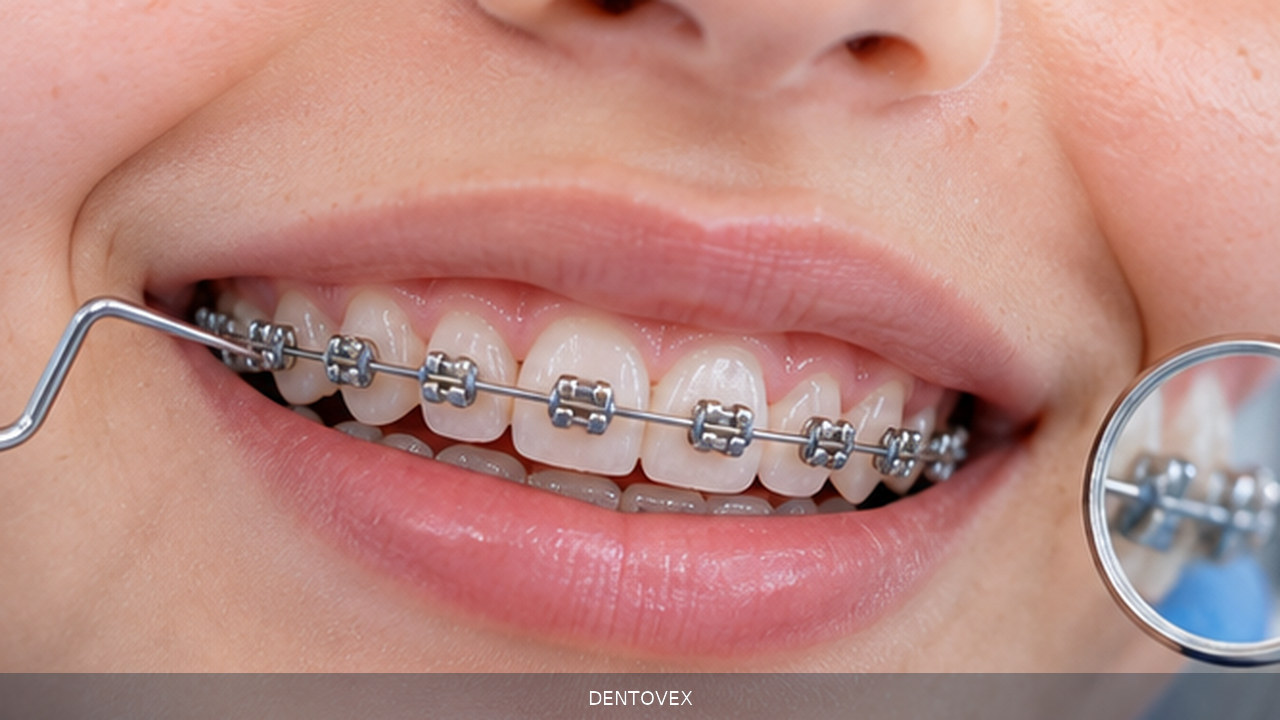
Quick answer: Some people notice a headache around the time braces are placed or adjusted, but a headache has many possible causes and should not automatically be blamed on orthodontic treatment. Temporary tooth tenderness is common; persistent, worsening or unusual head pain deserves a separate assessment. Severe sudden headache or headache with neurological symptoms is a medical emergency. This guide helps you describe symptoms and decide whom to contact without assuming that every headache is a dental problem.
When your teeth feel sore after an orthodontic appointment, it is easy to connect every new sensation to your braces. A dull headache that starts the same evening may seem related. Sometimes there is a plausible connection through discomfort, jaw-muscle tension or changes in routine. But timing alone does not prove cause, and common conditions such as migraine, tension-type headache, dehydration and illness can occur during orthodontic treatment too.
Understanding that distinction is useful. It can prevent unnecessary alarm about normal tooth tenderness while also avoiding the opposite mistake: ignoring a medical problem because you happen to wear braces.
Why might a headache happen around an orthodontic appointment?
Tooth pressure and an unfamiliar bite
Braces move teeth through controlled forces. After fitting or an adjustment, it is common to notice tooth tenderness, especially when biting. The American Association of Orthodontists’ pain guidance describes temporary soreness as an expected part of treatment. Some patients may also notice jaw fatigue or find themselves clenching in response to discomfort. None of this establishes that braces directly cause a particular headache disorder.
Jaw-muscle tension and clenching
Muscles around the jaw, face and neck can contribute to some head and facial pain. If you are holding your jaw differently because chewing feels awkward, it is worth telling your clinician. MedlinePlus’ tension-headache overview lists stress, muscle tension and jaw clenching among possible contributors. The same symptoms can also occur without braces.
Changes in eating, drinking and sleep
A person who eats less or drinks less after an adjustment because chewing hurts may develop a headache for unrelated everyday reasons. Sleep disruption and stress can also matter. This is a practical possibility, not proof of a direct orthodontic mechanism. Try to maintain regular meals, hydration and sleep while following your dental team’s food advice.
A separate headache condition
Migraine, sinus problems, viral illness, vision strain and other medical causes do not stop happening when braces are fitted. The character of the headache, associated symptoms, history and examination help a healthcare professional decide what is likely. If you have recurring headaches, do not ask the orthodontist to diagnose a neurological condition without appropriate medical assessment.
Headache or ordinary braces soreness: how to tell them apart
| Feature | More typical of orthodontic tenderness | Needs broader assessment |
|---|---|---|
| Location | Teeth or gumline, especially when biting | Head, temple, eye, neck or widespread pain |
| Timing | Shortly after fitting or a wire adjustment | Recurrent episodes unrelated to appointments or worsening pattern |
| Sensation | Pressure, tooth tenderness, mild mouth soreness | Throbbing, severe sudden pain, unusual neurological symptoms |
| Associated signs | Localized cheek irritation from hardware | Fever, stiff neck, vision change, weakness or confusion |
| Next step | Ask orthodontic team about routine comfort measures | Contact medical professional; emergency evaluation for red flags |
These are tendencies, not diagnostic rules. A person can have both orthodontic soreness and a migraine at the same time.
Can braces cause TMJ problems or make them worse?
The temporomandibular joints connect the lower jaw to the skull. Temporomandibular disorders (TMD) can involve jaw pain, muscle tenderness, limited opening or painful joint symptoms. Headache can occur alongside some jaw-muscle disorders, but a painless clicking joint by itself is common and often does not require treatment.
The relationship between orthodontics and TMD is complex. Some observational reviews report associations, while others do not establish a clear cause-and-effect relationship. An association does not show that braces caused the problem in an individual patient. The National Institute of Dental and Craniofacial Research recommends conservative approaches for many TMD symptoms and cautions against irreversible changes to the bite as a first-line response. It would be misleading to promise that braces will cure headaches or TMJ problems, or to claim they inevitably cause them.
What if your jaw starts clicking during braces?
Tell your orthodontist if clicking is accompanied by pain, locking, limited opening or a new change in how the teeth meet. Describe whether the problem began before treatment. Avoid trying to force the jaw into a new position or changing your elastics on your own.
What can you do for a mild headache after braces?
Check your mouth first. Is a wire poking your cheek? Did a bracket become loose? A sharp edge may create local pain that is best handled by the orthodontic office. Dentovex’s orthodontic wax guide explains temporary protection for minor rubbing; wax is not a treatment for unexplained headache.
Eat and drink normally as far as comfortable. Choose softer foods for a short period if chewing is tender, but do not skip meals or become dehydrated. If a bite block changes how your teeth contact, the bite turbos guide explains why the bite may feel unusual.
Use comfort measures recommended for you. A cold compress may help some local facial soreness. If you are considering an over-the-counter pain reliever, follow the label and check with a healthcare professional if you have a medical condition, take other medications, are pregnant or are unsure whether it is appropriate. Do not take repeated medication solely to mask a worsening headache.
Keep a short symptom record. Note when the pain started, where it is, what it feels like, how long it lasts, whether it follows appointments and what else accompanies it. A brief record is more useful to a clinician than an assumption that the braces are the cause.
A simple symptom log
| Record | Example of useful detail |
|---|---|
| Start time | The evening after an adjustment, or on an unrelated day |
| Pain location | Teeth, temples, forehead, one side of head or behind an eye |
| Severity and duration | Mild and improving, or intense and prolonged |
| Triggers | Chewing, missed meal, poor sleep, stress or no obvious trigger |
| Other symptoms | Jaw locking, nausea, fever, visual change, dizziness |
| What helped | Rest, hydration, a dentist-approved comfort measure or nothing |
Do not delay emergency care to complete a log.
When should you call the orthodontist?
Contact the orthodontic team if you have a new bite-related pain, a wire or bracket that is cutting tissue, unusual jaw discomfort, or symptoms that begin after an appliance change and are not settling. Tell them whether the pain is mainly in the teeth, the jaw muscles or the head. They may need to inspect the appliance or advise a dental or medical evaluation.
If your headache is persistent or recurring, especially when the mouth itself feels normal, contact your primary care clinician. The orthodontist can assess appliance issues but is not a substitute for a medical headache workup.
When is a headache an emergency?
Seek emergency medical attention for a sudden explosive headache, the worst headache of your life, or a headache accompanied by weakness, confusion, trouble speaking, new vision loss, fever with stiff neck or other serious neurological symptoms. These warning signs come from MedlinePlus’ emergency headache guidance. They are not ordinary effects to wait out after an orthodontic adjustment.
A severe headache after a fall or head injury also warrants prompt medical evaluation. If you are unsure and the symptoms are rapidly worsening, seek urgent help rather than assuming an appliance is responsible.
Do rubber bands or bite turbos cause headaches?
Elastics and bite turbos can change how the bite feels during treatment. They may be associated with temporary local soreness or muscle awareness in some patients, but there is no reliable rule that a particular appliance produces headaches in everyone. Do not change elastic placement, double bands or remove a fixed bite turbo to test a theory. Your orthodontist can evaluate whether an appliance adjustment is appropriate.
For questions about pressure from separators rather than the main braces, Dentovex’s spacers guide explains the expected temporary tooth soreness and when to contact the office.
What does research actually say about orthodontics and jaw pain?
It is important not to flatten a complex evidence base into a headline. A 2015 systematic review found no convincing cause-effect relationship between orthodontic treatment and TMD in the studies it examined. A later review and meta-analysis reported an association in a smaller set of observational studies, but observational evidence cannot prove causation and interpretation has been debated. These studies concern TMD, not a controlled experiment proving that braces directly cause headache.
The clinically useful conclusion is modest: evaluate symptoms individually. Avoid promising that braces either prevent or inevitably produce TMD or headaches. The NIDCR patient guidance is a reliable place to learn about conservative assessment and management.
Frequently asked questions
Is a headache normal the day after tightening braces?
Temporary tooth soreness is common after adjustments. A headache may happen at the same time, but it is not specific enough to label as a normal orthodontic symptom. Discuss persistent or unusual pain with a clinician.
Can braces trigger migraines?
There is not enough evidence to tell an individual that braces are the cause of a migraine. If you have a migraine history or new migraine-like symptoms, discuss them with a medical professional and keep a symptom record.
Should I remove my rubber bands if I get a headache?
Do not independently change your orthodontic instructions. Contact your orthodontist if you think the appliance is contributing to discomfort.
Will headaches stop when braces come off?
There is no guarantee. If the headache has another cause, removing braces will not necessarily help. Seek a diagnosis before attributing a chronic headache to orthodontics.
Can I take pain medicine after a braces adjustment?
Ask your clinician or pharmacist what is appropriate for your age, medical history and other medications. Do not exceed label instructions or ignore worsening symptoms.
Questions to take to your next appointment
Ask whether the appliance is contacting tissue unexpectedly, whether the bite has changed as planned, whether jaw muscles or joints need examination, and whether your symptoms warrant medical referral. Bring the headache log and a list of medicines you have taken. This creates a more useful conversation than simply asking whether braces cause headaches.
The bottom line
Braces commonly cause temporary tooth tenderness, but headaches are not specific to orthodontics. A short-lived mild headache may coincide with an adjustment; recurrent, worsening or unusual symptoms need proper assessment. Never dismiss emergency headache warning signs as a normal part of wearing braces.
Sources and further reading
- American Association of Orthodontists — Do Braces Hurt?.
- National Institute of Dental and Craniofacial Research — Temporomandibular Disorders.
- MedlinePlus — Headaches: Danger Signs.
- MedlinePlus — Tension Headache.
- Influence of orthodontic treatment on temporomandibular disorders: systematic review (2015).
- Association between orthodontic treatment and TMD: systematic review (2023).
Medical information notice: This guide provides general education and cannot diagnose headache, TMD or an appliance problem. Seek immediate medical care for emergency warning signs. Prepared for editorial review; no clinical reviewer has been assigned.
No responses yet