How Much Do Braces Cost in Florida? A Clinical and Financial Overview
Orthodontic treatment represents both a biological intervention and a long-term investment in craniofacial health. Prospective patients frequently ask: how much do braces cost in Florida? While the state average typically spans from $3,000 to $7,500 , final costs vary substantially depending on the diagnostic complexity of the malocclusion, appliance choice, patient age, and geographical practice overhead within the state.
At Dentovex, clinical teams evaluate each case through an evidence-based diagnostic protocol to ensure patients receive appropriate biomechanical management alongside clear financial expectations. Understanding the clinical components of this investment helps patients navigate their treatment options with confidence.
Orthodontic Biomechanics: What the Cost Truly Covers
The financial investment in braces is not merely a purchase of brackets, wires, and auxiliary appliances. It covers continuous clinical expertise and specialized mechanotherapy designed to guide complex tissue remodeling.
When an archwire delivers controlled force to a tooth, it creates regions of tension and compression within the periodontal ligament (PDL). On the compression side, osteoclasts resorb alveolar bone; on the tension side, osteoblasts lay down new bone matrix. This cellular turnover must occur at a biologically safe rate to prevent root resorption, devitalization, or alveolar bone loss.
Your overall treatment fee covers the continuous cephalometric monitoring, adjustments of force vectors, and ongoing management required to safely execute these biological shifts over several months or years.
Average Cost of Braces in Florida by Appliance System
The total fee for orthodontic therapy depends heavily on the bracket system and materials selected. Ceramic systems, customized lingual brackets, and proprietary aligner systems incur higher laboratory and manufacturing costs than traditional stainless steel brackets, which shifts the final financial tier.
| Appliance Type | Average Cost in Florida | Aesthetic Profile | Clinical Strengths | Typical Duration |
|---|---|---|---|---|
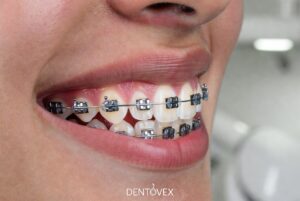
| Traditional Metal Brackets | $3,000 – $6,500 | High visibility (stainless steel) | Superior torque expression, high durability, cost-effective | 18 – 30 months |
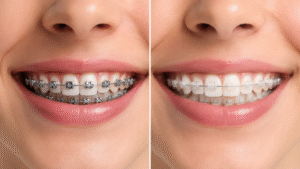
| Ceramic (Clear) Brackets | $4,000 – $7,500 | Low visibility (polycrystalline alumina) | Blends with natural enamel, excellent for adult aesthetics | 18 – 30 months |
| Self-Ligating Systems | $4,500 – $7,500 | Moderate to low visibility | Reduced friction mechanics, easier oral hygiene maintenance | 16 – 24 months |
| Lingual Brackets | $8,000 – $12,000 | Invisible (bonded to lingual surface) | Completely concealed, custom gold or alloy casting | 18 – 36 months |
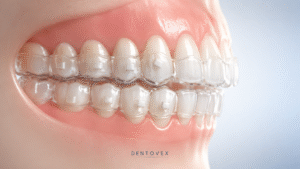
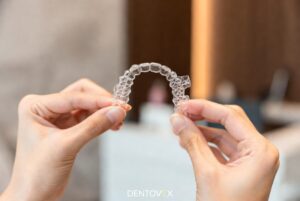
| Clear Aligner Therapy | $3,500 – $7,000 | Near-invisible (polyurethane trays) | Removable, optimal hygiene access, software-driven staging | 12 – 24 months |
Clinical Determinants That Shape Treatment Costs
Two patients seeking orthodontic care in Florida may receive entirely different cost estimates based on their clinical presentations. Key clinical variables include:
1. Severity of Malocclusion and Skeletal Discrepancies
Mild dental crowding (less than 4 millimeters of arch length deficiency) requires shorter active intervention and straightforward biomechanics. In contrast, severe skeletal Class II or Class III discrepancies, significant vertical skeletal open bites, or impacted maxillary canines require complex auxiliary systems, intermaxillary elastics, temporary anchorage devices (TADs), or multidisciplinary orthognathic surgical planning. These advanced interventions lengthen treatment duration and increase clinician chair time, raising total procedural costs.
2. Treatment Phasing (Early Intervention vs. Comprehensive)
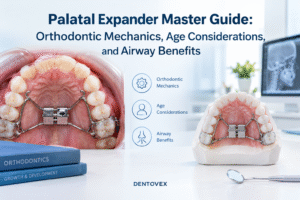
Phase I interceptive treatment for pediatric patients (often between ages 7 and 10) addresses transverse maxillary deficiencies or severe crossbites using palatal expanders and limited mechanics. Phase I costs typically range from $1,500 to $3,500 Comprehensive Phase II therapy later in adolescence requires a separate clinical fee, though early intervention often reduces the complexity, duration, and expense of the secondary phase.
3. Patient Compliance and Retention Needs
Extended treatment timelines directly increase clinic operational costs. Broken brackets, missed monthly adjustment appointments, or non-compliance with auxiliary wear (such as elastics) prolong active mechanotherapy. Additionally, complex cases may require customized long-term retention systems, such as bonded lingual retainers combined with thermoformed overlay retainers, which add to initial fabrication and monitoring costs.
The Clinical Orthodontic Workflow
To understand the scope of care reflected in orthodontic fees, patients can review the standard clinical pathway from baseline diagnostics through post-treatment stabilization.
- 1. Comprehensive Diagnostic Workup
The clinician acquires digital extraoral and intraoral photographs, panoramic radiographs, lateral cephalograms, and high-resolution 3D intraoral surface scans to evaluate bone architecture, soft-tissue profiles, and tooth angulations.
- 2. Biomechanical Planning and Staging
Using cephalometric tracing software and biomechanical modeling, the orthodontist formulates a customized treatment plan detailing bracket prescriptions, extraction vs. non-extraction strategies, and the sequencing of archwires.
- 3. Bonding and Active Archwire Engagement
Enamel surfaces are conditioned using acid-etch protocols, bonding agents are cured, and brackets are placed on clinical crowns. Initial nickel-titanium (NiTi) leveling and aligning wires are engaged to express low, continuous forces.
- 4. Working and Detailing Phases
The clinician progresses to heavier stainless steel or beta-titanium archwires to close spaces, correct transverse relationships, resolve torque issues, and establish functional Class I canine and molar relationships.
- 5. Debonding, Enamel Polishing, and Retention
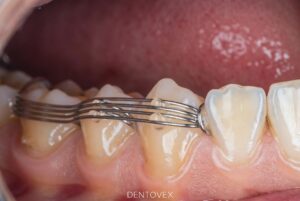
Appliances are removed, residual composite is cleared with specialized finishing burs to preserve native enamel prisms, and fixed or removable retainers are delivered to stabilize the newly remodeled periodontal architecture.
Insurance, Medicaid, and Payment Options in Florida
Navigating payment methods helps mitigate out-of-pocket costs for orthodontic care across Florida.
- Dental Insurance with Orthodontic Riders: Unlike standard restorative dental benefits that reset annually, orthodontic benefits typically carry a once-in-a-lifetime maximum benefit, usually ranging between $1,000 and $3,000 . This maximum pays out across active treatment rather than in a lump sum.
- Florida Medicaid (Statewide Medicaid Managed Care): For children under age 21, Florida Medicaid covers comprehensive orthodontic care only if the patient meets strict criteria for severe, handicapping malocclusion (often validated through the Salzmann Index or a similar clinical scoring system) . Adult orthodontic coverage through Medicaid is generally non-existent unless directly tied to cleft lip and palate reconstruction or craniofacial anomalies.
- Flexible Spending Accounts (FSA) and Health Savings Accounts (HSA): Patients can apply pre-tax funds toward initial down payments or recurring monthly orthodontic installments, reducing their effective tax burden.
- In-Office Financing: Most modern Florida orthodontic clinics offer zero-interest, in-house financing programs spread over 18 to 24 months, balanced against an initial down payment to keep monthly outlays manageable.
Long-Term Outcomes and Value Preservation
The ultimate return on orthodontic investment depends heavily on the retention phase. Alveolar bone and collagen fibers within the gingiva exhibit biological memory. Transseptal fibers can take up to a year or longer to fully reorganize around newly positioned teeth.
Without diligent retention wear, clinical relapse can occur, undoing years of functional correction and tissue remodeling. A well-managed treatment plan concludes with durable retention strategies that protect your financial and biological investment for decades.
Medical Disclaimer:
The content provided in this article is for informational and educational purposes only and does not constitute professional medical or dental advice, diagnosis, or treatment. Always seek the advice of a qualified dentist, orthodontist, or other authorized healthcare provider regarding any medical condition or treatment plan. Never disregard professional medical advice or delay seeking it because of something you have read on the Dentovex blog.
No responses yet