
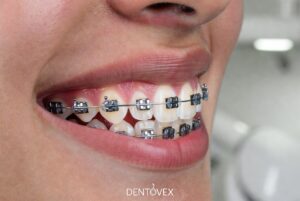
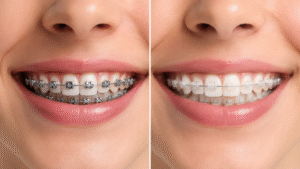
The “Hidden” Shift You spent your teenage years in that dental chair. You remember the discomfort, the food restrictions, and the glorious day the brackets were finally removed. You had a perfect, straight smile a “Hollywood” result that you were promised would last a lifetime. But then, life happened. Maybe you lost your retainer behind the couch, maybe you just got busy and stopped wearing it, or perhaps you just assumed that after a decade, your teeth were permanently “set” in place.
Fast forward 10 or 15 years, and you’re looking in the mirror, noticing a slight overlap in your bottom front teeth or a gap that definitely wasn’t there in your twenties. You are experiencing orthodontic relapse.
It’s frustrating, and for many, it feels like a failure. But at Dentovex, we want to tell you something important: this isn’t a failure it’s biology. Your mouth is a living, breathing system, not a statue. In this 1,500-word guide, we’re going to walk through why your teeth decided to move, the structural changes happening in your jaw as you age, and more importantly, how the technology of 2026 allows you to fix this faster and more discreetly than you ever thought possible.
1. The Biological Reality: Teeth Have a Memory
The biggest myth in orthodontics is that once teeth are moved, they stay put forever. In reality, teeth are held in the jawbone by the periodontal ligament a complex, elastic web of fibers. Think of these fibers like tiny, microscopic rubber bands. Even years after your braces are off, these fibers “remember” where your teeth were positioned originally. If you aren’t wearing a retainer to counter that tension, those fibers will slowly, almost imperceptibly, pull your teeth back toward their old homes.
Furthermore, we have to talk about “Late-Stage Crowding.” As we enter our 30s and 40s, the jawbone undergoes subtle shifts. The lower jaw often narrows, creating a natural tendency for the lower front teeth to bunch up. This happens to people who never even had braces. It is a natural part of human aging, but when you’ve had orthodontic work, it becomes much more noticeable.
2. The “Retainer Neglect” Trap
If we are being brutally honest, the number one reason for relapse is simple: the loss or abandonment of retainers. For decades, many orthodontists told patients they only needed to wear retainers for a year or two. We now know that this was flawed advice. In 2026, the clinical consensus is clear: if you want your teeth to stay straight, you must wear a retainer indefinitely.
If you are reading this and haven’t worn a retainer in years, don’t beat yourself up. You aren’t alone, and this is the most common reason we see patients walk into our clinic for “retreatment.”
3. The 2026 Solutions: Faster, Discreet, and Easier
The good news? You don’t have to go through your teenage years all over again. If you only have a minor relapse (perhaps one tooth is slightly rotated), you don’t necessarily need full-mouth metal braces.
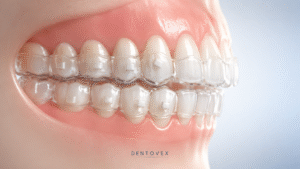
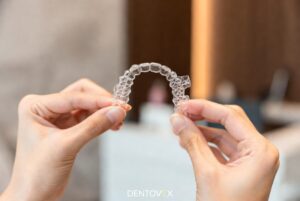
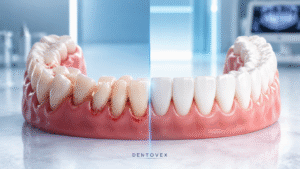
- Clear Aligner “Touch-ups”: Today, we have systems designed specifically for relapse. They are essentially a “lite” version of the full aligner treatment, designed to gently guide those one or two shifted teeth back into place over 3 to 6 months. They are almost invisible and can be worn while you continue your professional life.
- Lingual Braces: If you are worried about aesthetics, lingual braces are placed on the back of your teeth. No one will know you are in treatment, but they provide the heavy-duty mechanical leverage needed if the shift was more significant.
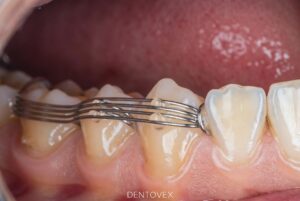
- The Hybrid Approach: Sometimes, the best solution is a fixed wire (bonded permanently behind the teeth) to act as a “foundation” for a new, short round of aligner therapy.
4. Why You Should Fix it Now
“It’s only one tooth, does it really matter?” This is a question we hear a lot.
The danger isn’t just aesthetic. When teeth shift, they can begin to hit each other in ways that cause wear and tear on the enamel. This is called “occlusal trauma.” Over time, this can lead to cracks in your teeth or even jaw pain (TMJ issues). Fixing the relapse isn’t just about vanity; it’s about restoring the health and longevity of your bite.
5. Prevention: The Double-Lock Method
Once you fix the relapse, you need to ensure it never happens again. We recommend the “Double-Lock” strategy for 2026:
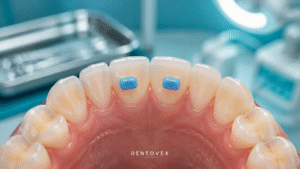
- The Bonded Wire: A thin, comfortable wire glued permanently behind your lower teeth.
- The Night Guard: A clear Essix retainer that you wear just 3 nights a week. This acts as a backup in case the wire ever breaks or shifts.
Conclusion: A Second Chance Relapse is a common part of the orthodontic lifecycle. With 2026 technology, you have more options than ever to reclaim your smile without the social awkwardness of your teen years. Don’t wait until the shift becomes a permanent structural issue. Your smile is an investment protect it, maintain it, and if it slips, know that it’s never too late to make it right.
Disclaimer: Orthodontic retreatment must be evaluated by a licensed specialist. Relapse patterns are unique to every individual and require professional diagnosis.
No responses yet