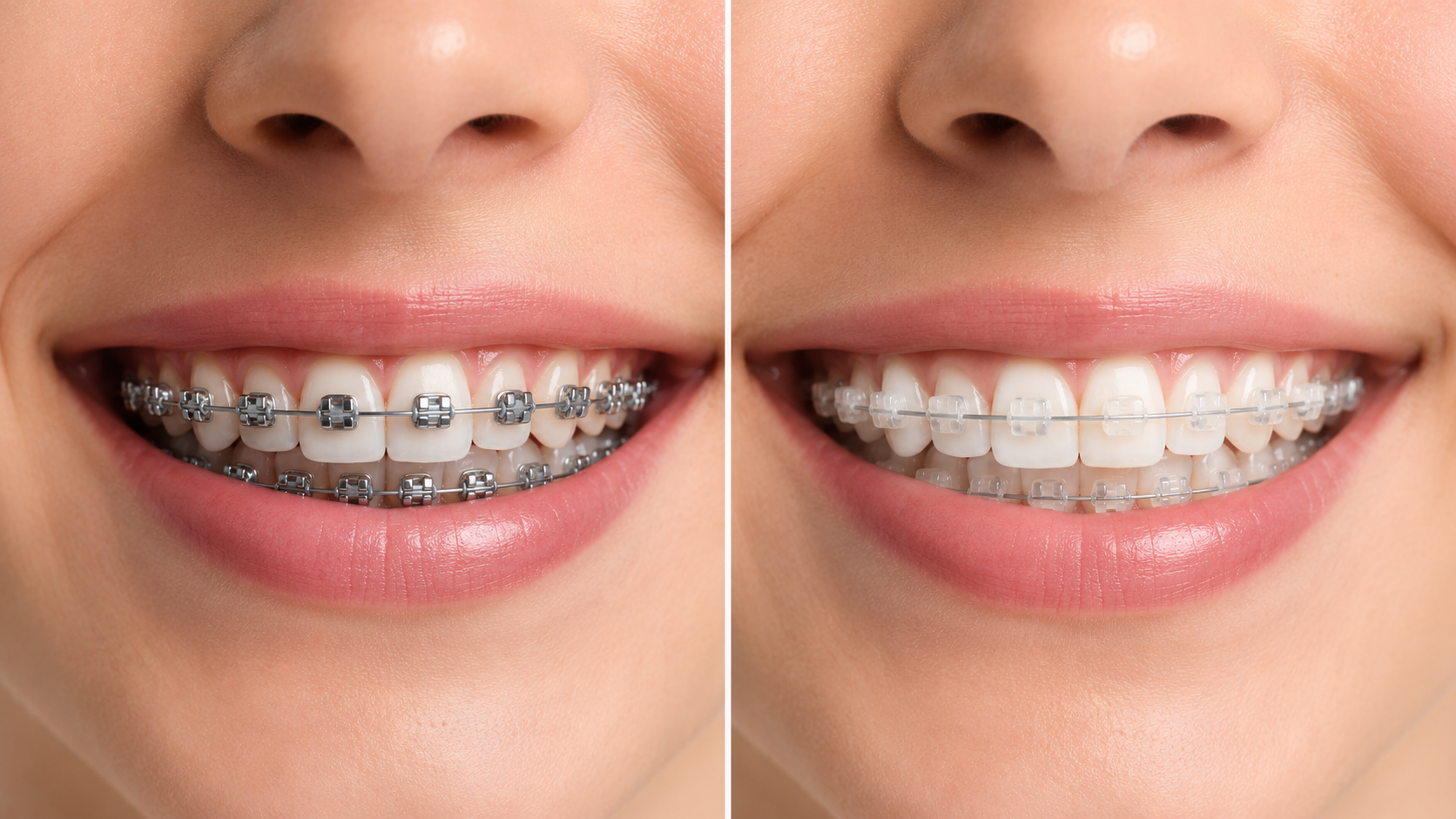
The Orthodontic Dilemma : Clear Braces Versus Metal Braces
When embarking on a journey to correct a malocclusion, establish physical bite harmony, and design a balanced smile, one of the first major decisions you will face is selecting your physical treatment hardware.
While removable aligners have gained massive popularity, fixed brackets and wires remains the absolute gold standard for treating complex tooth rotations, severe crowding, and major skeletal bite discrepancies.
But choosing fixed appliances does not mean you have to settle for a highly visible metal smile. The debate of clear braces versus metal braces has become a central clinical and aesthetic conversation for adults, working professionals, and teenagers alike.
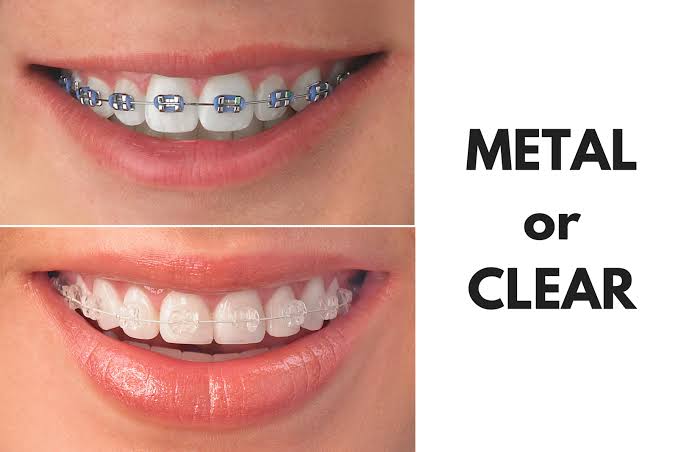
While both systems rely on the same fundamental biomechanical laws to guide your tooth roots through living alveolar bone, their materials science, structural durability, aesthetic profiles, and daily lifestyle impacts are vastly different.
At Dentovex, we believe that clinical transparency is key to patient empowerment. In this comprehensive, multi-dimensional guide, we pull back the curtain on the materials and engineering behind clear (ceramic) and metal braces, analyze how they compare head-to-head across essential clinical metrics, and help you select the ideal appliance to re-engineer your smile.
1. Deconstructing the Competitors: Materials & Engineering
To understand how clear braces compare to metal braces, we must first look at the unique materials utilized by leading global braces manufacturers.
Metal Braces: The Industrial Powerhouse
Traditional metal brackets are cast from high-grade 316L medical stainless steel or a highly durable titanium alloy.
- The Structure: These brackets are incredibly low-profile, smooth, and physically dense. Because stainless steel is exceptionally strong, the brackets can be engineered to be quite small, minimizing soft-tissue irritation inside the lips and cheeks.
- The Mechanics: Metal braces offer exceptionally low friction when paired with high-tech Nickel-Titanium (NiTi) archwires. This allows teeth to slide smoothly and rapidly along the wire during the leveling and aligning phases.
Clear Braces: The Aesthetic Illusion
“Clear braces” (frequently called ceramic braces) are fabricated from advanced polycrystalline alumina or premium monocrystalline sapphire.
- The Structure: Rather than reflecting light like polished metal, clear brackets are designed to be translucent or tooth-colored. They mimic the natural optical depth of your tooth enamel, blending into your smile line from a distance.
- The Mechanics: Ceramic material has a naturally higher coefficient of friction than stainless steel. To ensure wires slide efficiently, premium ceramic bracket slots are sometimes lined with an ultra-thin metal track or polished with advanced laser technology to minimize resistance.
2. Head-to-Head: Clear Braces Versus Metal Braces
Let’s break down how these two orthodontic powerhouses perform across critical clinical and lifestyle parameters:
| Performance Parameter | Traditional Metal Braces | Clear (Ceramic/Sapphire) Braces |
| Visual Discretion | Low. Polished silver brackets and wires are highly visible across all distances. | Extremely High. Translucent brackets blend with natural enamel; often paired with white coated wires. |
| Material Durability | Indestructible. Stainless steel easily resists high chewing forces and accidental impacts. | Slightly Brittle. Ceramic can chip or crack if subjected to extreme physical trauma or hard foods. |
| Friction & Tooth Movement | Low Friction. Promotes rapid, highly efficient sliding mechanics and tooth rotation. | Moderate Friction. May require slightly more adjustment time due to ceramic-on-wire resistance. |
| Staining Vulnerability | Zero. Stainless steel is completely impervious to food pigments and lifestyle staining. | Brackets resist stains, but the clear elastic ties holding the wire can yellow from coffee, tea, or curry. |
| Soft Tissue Comfort | Initial Adjustment Period. Low-profile brackets can feel rough initially but smooth out quickly. | Comfortable but Thicker. Brackets are engineered slightly thicker to prevent ceramic fractures. |
| Clinical Versatility | Unlimited. Can correct even the most severe skeletal bite discrepancies and deep malocclusions. | Highly Versatile. Excellent for most cases, though less ideal for severe lower-arch deep bites. |
3. Deep Dive: Durability and Fracturability
A key engineering difference when comparing clear braces versus metal braces is their tensile strength and brittleness.
Because metals are highly ductile, they can bend or deform slightly under extreme pressure without breaking. If you bite down too hard on a piece of food with metal braces, the bracket will typically shear clean off the tooth rather than breaking into pieces.
Ceramic, however, is an incredibly hard but brittle crystalline material. It does not bend; under extreme stress, it will fracture or chip.
- The Lower Arch Challenge: If you have a severe overbite, your upper teeth may bite down directly onto your lower brackets. If those lower brackets are ceramic, the hard ceramic material can rapidly wear away the enamel on your upper teeth, or the brackets themselves may fracture under your biting pressure.
- The Clinical Solution: Orthodontists frequently recommend a hybrid approach. They will place highly aesthetic clear braces on your visible upper teeth, and ultra-durable, low-profile metal braces on your lower teeth where they are hidden by your lip line and subject to higher biting forces.
4. The Staining Myth: What You Need to Know
One of the most common anxieties patients share before their first orthodontist appointment is the fear that clear ceramic braces will turn yellow and look unsightly after a few weeks.
The Truth About Ceramic Brackets
Modern polycrystalline ceramic and monocrystalline sapphire brackets are completely color-stable. They are non-porous and highly polished, meaning they will not absorb pigments from black coffee, red wine, soy sauce, or turmeric.
The Real Culprit: Elastic Ligatures
While the brackets themselves will not stain, traditional clear braces use tiny elastic rings (ligatures) to tie the archwire to each bracket. These medical-grade elastic bands are porous and will gradually absorb pigments from your diet, turning a dull yellow or light brown over time.
To keep your clear braces looking flawlessly transparent:
1.Rinse with Water Instantly:Post-meal action.
If you consume highly pigmented foods or drinks (such as coffee, berries, or curry), rinse your mouth vigorously with water immediately afterward to wash away loose pigments before they bind to your elastic ties.
2.Maintain Meticulous Brushing Habits:Targeted brushing.
Brush your teeth with a soft toothbrush and non-abrasive fluoride toothpaste after every meal. Use a specialized interdental brush to sweep food debris out from around the clear brackets.
3.Skip Abrasive Whitening Toothpastes:Avoid abrasive whitening pastes.
Do not use harsh charcoal or whitening toothpastes while wearing clear braces. These abrasive formulas will not whiten your elastic ties; instead, they can scratch the ceramic surface and leave dark residue around the bracket borders.
4.Look Forward to Your Adjustment Days:Fresh elastics.
At every orthodontic adjustment visit (every 4 to 6 weeks), your clinical team will remove your old, stained elastic ligatures and replace them with fresh, clean, and crystal-clear bands, instantly restoring your aesthetic profile.
5. Treatment Speed: Is One System Faster?
From a purely biological perspective, the speed of tooth movement depends on how your periodontal ligament (PDL) and alveolar bone remodel under gentle, continuous forces.
Because traditional metal braces introduce less physical friction between the stainless-steel bracket slot and the archwire, your teeth can slide into place with slightly less mechanical resistance. In complex cases requiring major space closure or extensive tooth extraction, this lower friction can occasionally reduce your overall treatment time by a few months.
However, modern clear braces have largely closed this gap. By utilizing passive self-ligating clear brackets (which feature a built-in sliding door instead of elastic ties) or by incorporating ultra-smooth metal-lined slots, top-tier clear braces manufacturers have engineered aesthetic systems that match the speed and efficiency of traditional metal appliances.
6. Long-Term Retention: Maintaining Your Alignment
Whether you choose clear ceramic brackets or traditional stainless steel, the active phase of your treatment will eventually end. The moment your braces are debonded, your teeth enter a highly vulnerable stage where the elastic periodontal fibers will attempt to pull them back to their original positions.
To preserve your hard-earned alignment, your orthodontic specialist will custom-design a long-term retention plan:
- Invisible Nighttime Protection: Your clinician can fabricate custom-molded Invisalign Vivera retainers. These clear, durable trays fit over your teeth during sleep, protecting your alignment without anyone knowing.
- Discreet 24/7 Security: For continuous, effort-free stability, your specialist may pair your nightly clear trays with a bonded permanent retainer wire hidden completely out of sight on the tongue-side of your lower front teeth.
Conclusion: Choosing the Right Hardware for Your Smile
Ultimately, the choice between clear braces versus metal braces is a personal decision that balances your aesthetic goals, clinical needs, budget, and lifestyle.
If you prioritize absolute visual discretion, work in a face-to-face professional environment, and are committed to keeping your brackets clean and free of pigments, clear ceramic braces offer a gorgeous, highly discreet orthodontic experience.
If you prioritize absolute physical durability, want to avoid any dietary restrictions, require the fastest possible treatment speed for a highly complex bite, or prefer a lower treatment cost, traditional metal braces remain an exceptionally reliable, high-performance option.
To discover which system is the ideal fit for your unique bone biology and dental structure, schedule a formal clinical consultation with your orthodontic team. Together, you will select the perfect physical framework to align your teeth, balance your bite, and construct a radiant smile that lasts a lifetime.
Disclaimer: Braces system suitability is a clinical decision that must be tailored to your unique malocclusion, tooth root anatomy, and jaw relationship. Always trust your licensed orthodontic specialist to recommend the optimal physical appliance for your personalized treatment plan.
No responses yet