Deconstructing the Overbite (clear aligners for overbite)
An overbite is one of the most common orthodontic concerns worldwide. However, it is also one of the most widely misunderstood. Many people use the term “overbite” to describe buck teeth that protrude forward.
In clinical terms, a true overbite (or “deep bite”) refers to the vertical overlap of your teeth—specifically, how much your upper front teeth overlap your lower front teeth when you bite down normally. When the upper teeth cover more than 30% of the lower teeth, it is classified as an excessive overbite.
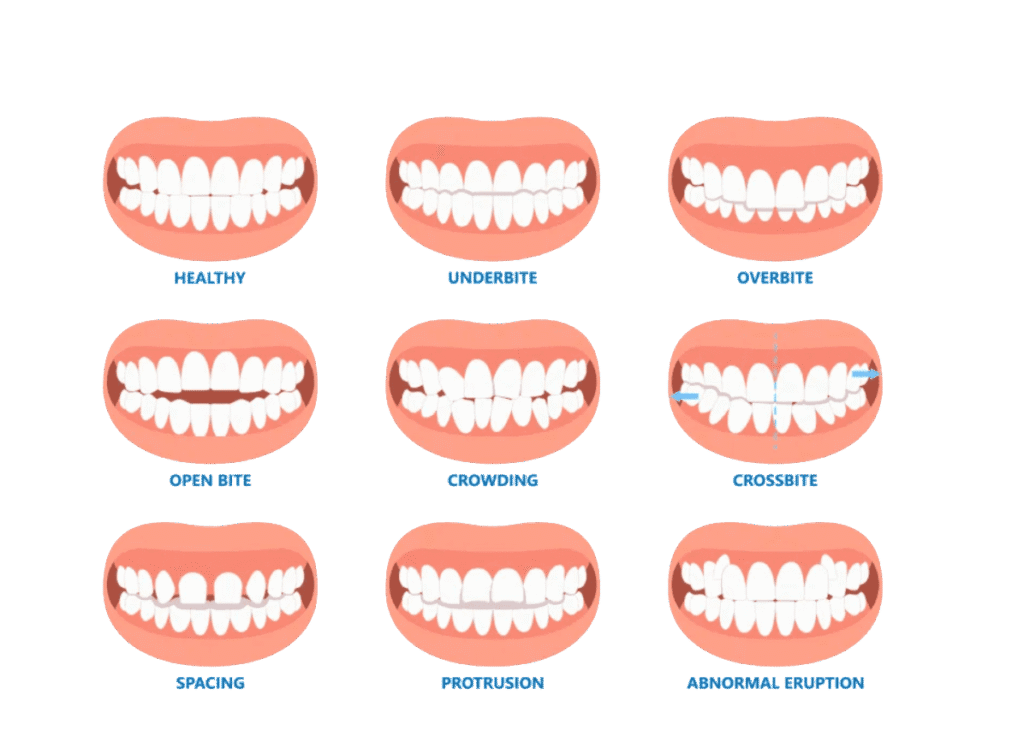
Left untreated, a severe overbite can lead to progressive enamel wear, chronic jaw pain (TMJ dysfunction), gum irritation behind the upper incisors, and structural changes to your facial profile.
Historically, correcting a deep overbite required heavy metal brackets, bulky headgear, or invasive jaw surgery. Today, advanced orthodontic engineering allows us to treat this complex structural issue discreetly using clear aligners for overbite correction.
At Dentovex, we are dedicated to bringing you transparent, science-backed information. In this comprehensive master guide, we will unpack the precise physics of how clear aligners resolve vertical bite issues, analyze the advanced auxiliary tools specialists use to assist the process, outline the day-to-day treatment journey, and help you determine if wireless orthodontics is the right structural solution for your smile.
1. Dental vs. Skeletal Overbites: Why the Cause Matters
Before choosing a treatment path, your specialist must determine the root cause of your bite discrepancy. This is a critical step in your initial orthodontist appointment.
Overbites fall into two distinct anatomical categories:
A. Dental Overbite (Tooth-Driven)
A dental overbite occurs when your jawbones are perfectly proportioned, but your teeth have erupted incorrectly or drifted out of their ideal positions. This is often caused by childhood habits like thumb-sucking, prolonged pacifier use, tongue thrusting, or simple genetics.
- Aligner Suitability: Dental overbites are highly receptive to clear aligner therapy because the correction relies entirely on moving teeth through healthy bone.
B. Skeletal Overbite (Jaw-Driven)
A skeletal overbite is a structural mismatch between your upper and lower jawbones. Typically, this presents as an underdeveloped mandible (receding lower jaw) or an overdeveloped maxilla (protruding upper jaw).
- Aligner Suitability: Mild-to-moderate skeletal overbites in growing teens can often be guided into place using clear aligners equipped with special mandibular advancement features. However, severe adult skeletal overbites may require a hybrid approach combining clear aligners with surgical jaw realignment (orthognathic surgery).
2. The Biomechanics: How Clear Aligners Fix a Deep Bite
How does a thin, flexible plastic tray correct a deep vertical overlap? It comes down to two highly coordinated mechanical processes: intrusion and extrusion.
[Deep Overbite] ➔ [Intrusion of Front Teeth + Extrusion of Back Molars] ➔ [Leveling the Dental Arch] ➔ [Balanced Bite]
Anterior Intrusion (Pushing Teeth In)
To reduce the vertical overlap, the aligner tray is engineered to apply a steady, downward physical force on the upper and lower front teeth (incisors and canines), gently pushing them deeper into the jawbone.
Posterior Extrusion (Pulling Teeth Out)
While the front teeth are pushed in, the back teeth (premolars and molars) are gently pulled outward (extruded). This lifts your bite, creating a flatter, highly balanced chewing plane (clinically referred to as leveling the Curve of Spee).
3. The Power of Auxiliaries: Elastics, Attachments, and Wings
Because clear plastic is naturally smooth, correcting an overbite often requires auxiliary forces to guide the jaw and teeth into position. When utilizing invisalign clear aligners, your specialist will integrate several advanced tools into your digital plan:
SmartForce® Attachments
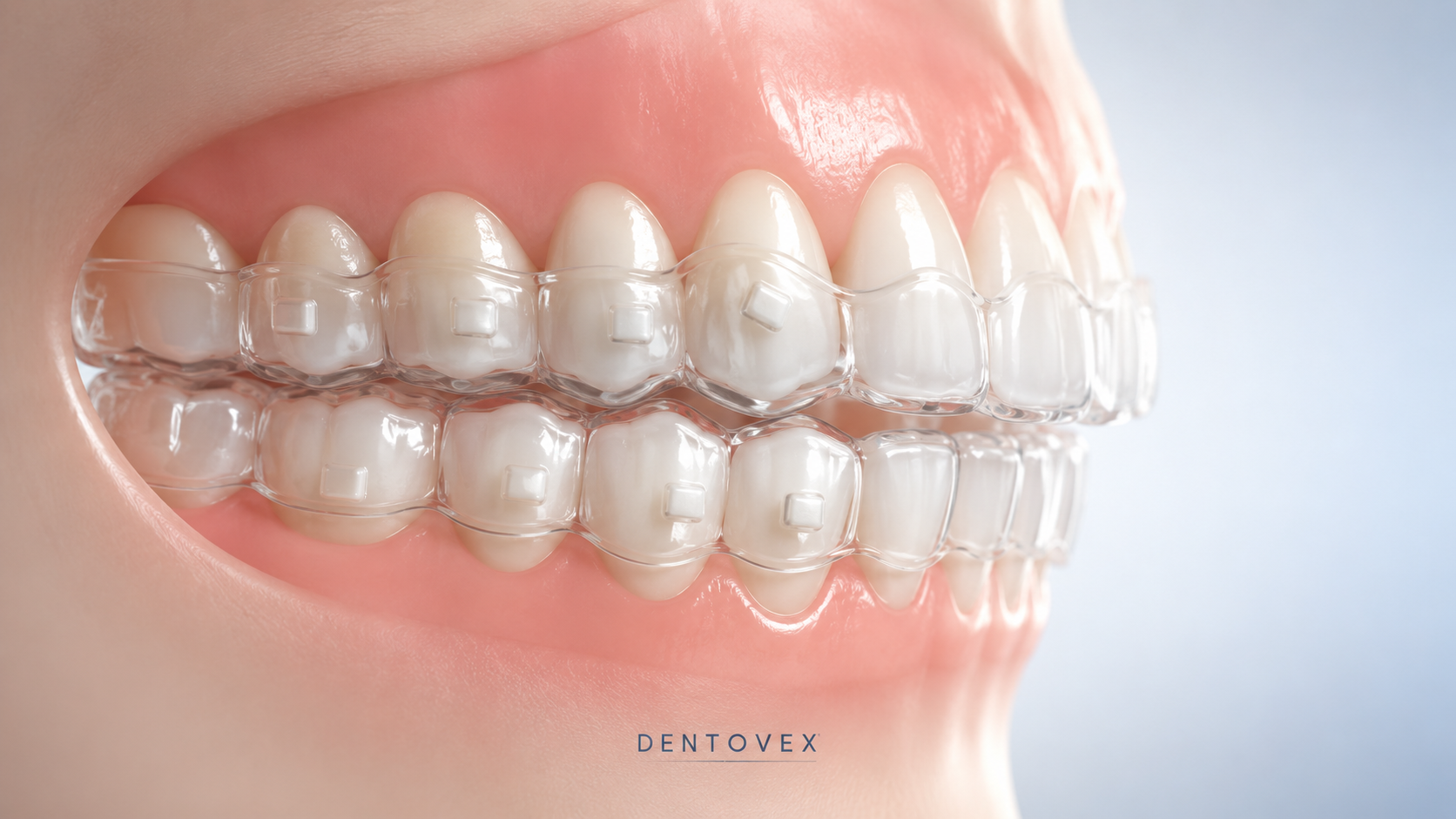
These tiny, tooth-colored composite bumps are bonded directly to the enamel. They give the aligner trays a secure anchor point to apply the upward, downward, or rotational forces required to level your arch.
Orthodontic Elastics (Rubber Bands)
For overbite correction, specialists frequently use “Class II elastics.” These small, medical-grade rubber bands stretch from the upper canine area of the aligner to the lower molar area. The constant elastic tension gently pulls the upper teeth backward while encouraging the lower jaw to move forward, aligning your bite in three dimensions.
Mandibular Advancement Wings
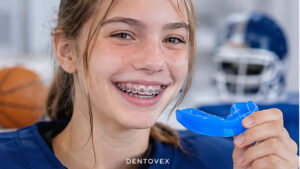
For pre-teens and teenagers going through active growth spurts, specialized aligner trays feature built-in plastic “wings” on the sides. When the patient closes their mouth, these wings index against each other, gently holding the lower jaw forward. This guides the natural growth of the mandible into a more balanced relationship with the upper jaw.
4. The Step-by-Step Treatment Journey
If you choose clear aligners to correct your overbite, your clinical path will follow a highly structured, digitally planned sequence:
1.3D Scan & Digital Bite Simulation:Duration: 30 – 45 minutes.
Your specialist captures a high-definition 3D virtual clone of your mouth. Using advanced orthodontic software, they will simulate your final bite profile, showing you exactly how the overbite will be corrected before your custom trays are made.
2.Attachment Placement & Aligner Fitting:Duration: 30 – 45 minutes.
You return to the clinic to have your tooth-colored SmartForce attachments bonded to your teeth. Your specialist will fit your first set of trays, ensure the plastic edges are comfortable, and demonstrate how to attach your overbite elastics.
3.Active Wear and Elastic Compliance:Duration: 1 – 2 weeks per tray.
You wear your aligners for 22 hours a day, removing them only to eat and clean your teeth. You will swap to a new set of trays every 7 to 14 days, carefully attaching your fresh rubber bands every morning and night to maintain constant corrective force.
4.Clinical Progress Tracking:Duration: 15 – 30 minutes (every 6-8 weeks).
You will visit your orthodontist regularly to monitor how your teeth are responding to the trays. Your specialist will check that the roots are moving safely and make minor adjustments to your plan if needed.
5. Daily Care and Compliance: The Patient’s Responsibility
Because clear aligners are removable, the success of your overbite correction relies entirely on your self-discipline.
The 22-Hour Rule is Non-Negotiable
If you leave your trays out for extended periods, your teeth will rapidly attempt to drift back to their comfortable, deep-bite positions. To avoid stalling your treatment, wear your aligners for at least 22 hours every single day.
Caring for Your Elastics
- Change Bands Frequently: Orthodontic rubber bands lose their elasticity and pulling power after a few hours of use. Change them 3 to 4 times a day to maintain a constant corrective force.
- Wear Them Consistently: Failing to wear your elastics will correct your crooked teeth but will leave your overbite completely uncorrected.
Cleanliness is Key
To prevent plaque buildup and bad breath, always brush and floss your teeth after eating before putting your aligners back in. Clean your trays daily with lukewarm water and a soft toothbrush to keep them perfectly transparent.
6. Long-Term Retention: Locking in Your New Bite
Once your vertical bite has been beautifully corrected, your jawbones and supporting periodontal ligaments require time to completely rebuild and stabilize. Without immediate, high-quality retention, your deep bite can quickly relapse.
To protect your structural investment, your orthodontist will prescribe a custom retention plan:
- Premium Vivera® Retainers: These custom-molded, clear plastic retainers are made by Invisalign to be 30% stronger than standard options. Wearing your invisalign vivera retainers nightly prevents your front teeth from shifting vertically or crowding forward again.
- A Solid Foundation: For maximum safety, your specialist may pair your nightly clear trays with a highly discreet, bonded permanent retainer wire hidden completely out of sight behind your lower front teeth.
Conclusion: Reclaim Your Bite and Your Confidence
Correcting a deep overbite is not just about changing how your smile looks in photos—it is an investment in the longevity of your teeth, the health of your jaw joints, and the balance of your facial structure.
With the advanced materials science and digital precision of modern clear aligners for overbite, you can achieve a perfectly balanced, highly functional bite without the discomfort or high visibility of traditional metal appliances.
Take the first definitive step toward re-engineering your smile today. Schedule a comprehensive consultation at your next orthodontic visit. By exploring your unique skeletal and dental anatomy, your specialist will design a personalized, invisible roadmap to a healthier, more beautiful, and perfectly aligned bite.
Disclaimer: Correcting an overbite with clear aligners is a highly clinical process that depends on your individual jaw structure, bone density, and dental compliance. Always consult with a licensed orthodontic specialist to determine the safest and most efficient treatment plan for your specific bite.
No responses yet