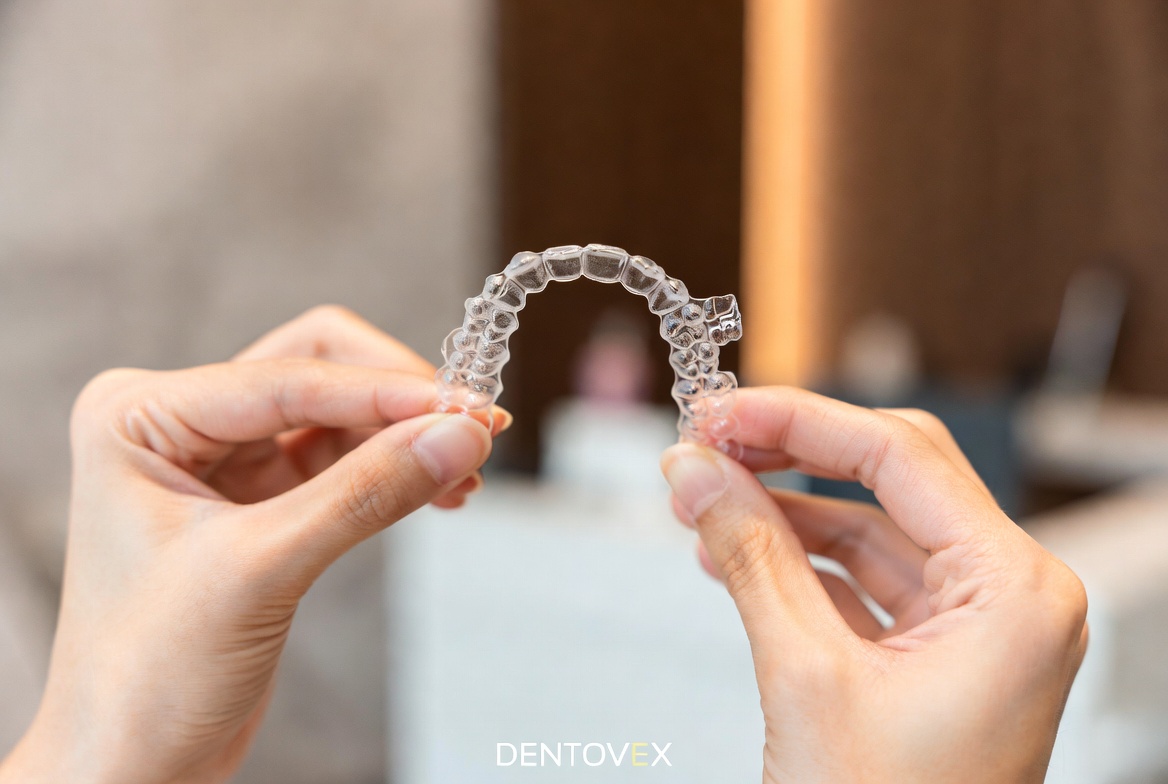
The Wireless Orthodontic Revolution : Invisalign Clear Aligners
For over a century, the architectural process of straightening teeth was bound entirely to physical metal. To resolve dental crowding, close gaps, or realign a mismatched bite, patients had no choice but to accept a highly visible array of stainless-steel brackets, bands, and high-tension archwires.
While incredibly effective, traditional fixed hardware introduced unmistakable challenges: dietary limitations, physical irritation to the soft tissues of the mouth, demanding oral hygiene routines, and a highly visible change to one’s facial aesthetics.
The introduction of invisalign clear aligners fundamentally shattered this paradigm. By replacing fixed metal brackets with a series of custom-molded, highly engineered transparent plastic trays, orthodontic treatment has transformed from a rigid physical appliance into a highly predictable, virtually invisible digital workflow.
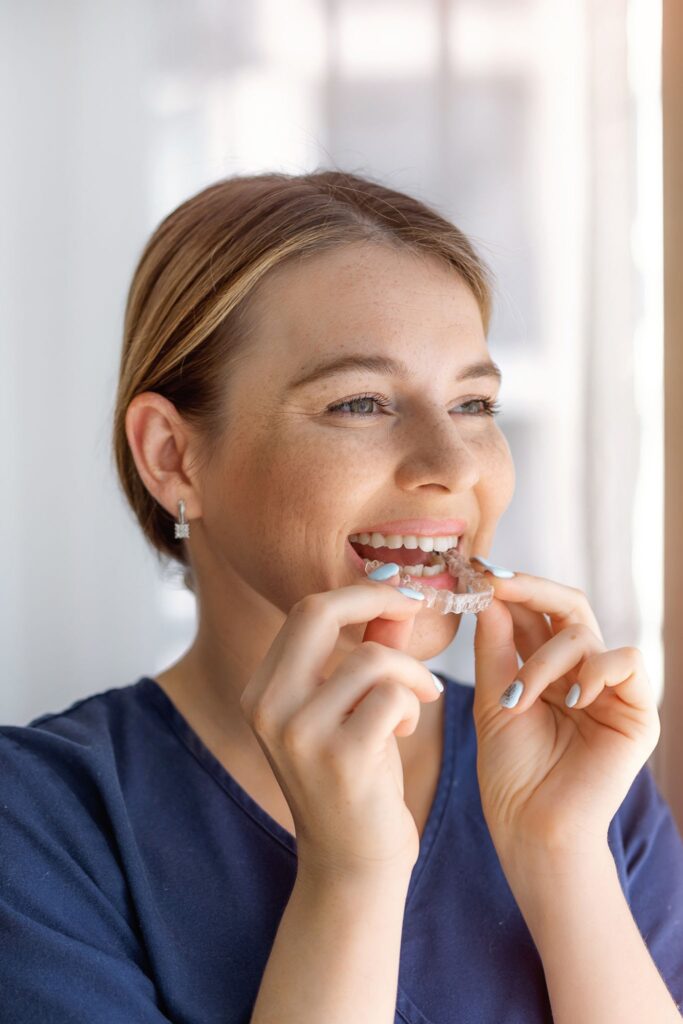
But how does a set of removable plastic trays exert enough physical force to safely guide roots through living jawbone? How does the day-to-day experience compare to traditional brackets? What is the actual materials science behind the plastic? And how do you know if you are a candidate for this wireless transformation?
In this definitive, master clinical guide, we will unpack the precise biomechanics of Invisalign, explore the advanced materials science that makes it work, detail the step-by-step daily wear protocols, analyze the financial realities, and help you determine how to maximize your orthodontic investment.
1. The Materials Science: What Makes Invisalign Unique?
One of the most common misconceptions is that clear aligners are simply thin sheets of generic, household plastic. In reality, the medical-grade polymers utilized by leading braces manufacturers and digital clear aligner systems represent decades of chemical engineering.
Invisalign aligners are fabricated exclusively from a proprietary, multilayer aromatic thermoplastic polyurethane material known commercially as SmartTrack®.
Unlike generic, rigid plastics used in budget, direct-to-consumer mail-order aligners, SmartTrack material was engineered specifically for the human mouth. It possesses two critical physical characteristics:
- High Elasticity and Constant Force: When you insert a new aligner tray, the plastic must stretch slightly over your teeth. As it tries to return to its original, pre-programmed shape, it delivers a gentle, continuous, and highly controlled force. Rather than a sharp spike of high pressure (which can cause root resorption and discomfort), it provides a low-intensity, biological push over a period of 7 to 14 days.
- Unmatched Adaptation & Grip: The material is laser-cut precisely to the unique, scallop-shaped margin of your gums. This precise contouring prevents the plastic from riding up onto the soft tissues, enhancing physical comfort and drastically improving the tray’s mechanical grip on the teeth without causing gum recession.
2. The Biomechanical Blueprint: How Aligners Move Bone
To understand how Invisalign guides your teeth, we must look at the virtual engineering that takes place before your first tray is ever printed.
During your initial orthodontist appointment, a high-fidelity 3D digital model of your mouth is captured using an intraoral optical scanner. This digital model is imported into Invisalign’s proprietary ClinCheck® software.
Your orthodontist then acts as a digital architect, manually calculating the exact, sequential pathway each tooth root must follow to reach its target position. The software breaks this entire journey down into micro-steps. Each individual tray in your series is engineered to move your teeth by a maximum of only 0.25 millimeters and introduce a tiny fraction of rotational torque.
The Role of SmartForce® Attachments
Because plastic is naturally slippery, flat enamel can be difficult for an aligner tray to grip, especially when a tooth needs to be rotated or pulled downward (extruded). To overcome this, your orthodontist will bond tiny, tooth-colored composite bumps—called SmartForce attachments—directly to specific teeth.
[Clear Aligner Material] ➔ [Pushes against SmartForce Attachment] ➔ [Translates Force into the Tooth Root] ➔ [Precise Bone Remodeling]
These attachments act as custom-molded handles. When your aligner is snapped into place, the plastic grips these precise points to direct force vectors directly down into the root, triggering the safe, predictable remodeling of the surrounding alveolar bone.
3. The Comprehensive Invisalign Treatment Journey
If you and your orthodontic specialist decide that clear aligners are the ideal path for your unique smile, your treatment timeline will follow a structured, highly predictable sequence:
1.High-Fidelity 3D Scanning and Mapping:Duration: 30 – 45 minutes.
Your clinical team captures a full digital clone of your dental arches using an intraoral wand. No messy, gag-inducing putties are used. These scans are paired with digital profile photographs and specialized panoramic X-rays to map your complete craniofacial structure.
2.The ClinCheck Simulation Phase:Duration: 1 – 2 weeks (Behind the Scenes).
Your orthodontist uses advanced CAD software to design your customized tooth movement pathways. They will determine the exact number of aligner trays you require and strategically place your aesthetic attachments on the virtual model before sending the design to the manufacturing facility.
3.The Bonding and Delivery Visit:Duration: 30 – 45 minutes.
You return to the clinic to receive your custom trays. Your specialist will bond your tooth-colored attachments to your enamel and show you how to safely insert and remove your first set of aligners. They will provide you with several weeks’ worth of sequential trays to take home.
4.Sequential At-Home Tray Changes:Duration: Continuous throughout treatment.
You will wear each set of trays for 22 hours a day, swapping them for the next numbered set in your series every 7 to 14 days (as prescribed by your doctor). You will visit the clinic every 6 to 8 weeks to monitor your bone remodeling and receive your next batches of trays.
4. The Rules of Engagement: Daily Wear & Lifestyle Protocols
The greatest advantage of Invisalign is also its greatest responsibility: they are removable.
While traditional braces are working 100% of the time because they are physically glued to your teeth, Invisalign clear aligners only work when they are actively in physical contact with your dentition. To ensure your treatment timeline stays on track, you must commit to a strict daily lifestyle protocol.
A. The 22-Hour Golden Rule
You must wear your aligners for a minimum of 22 hours every single day. The remaining two hours are reserved exclusively for eating meals, drinking hot or colored beverages, and performing your morning and evening oral hygiene routines. If you leave your trays out for extended periods, the teeth will rapidly begin to drift backward, stalling your progress and requiring your orthodontist to order expensive “refinement” trays.
B. The Hygiene Blueprint: Clean Teeth, Clean Trays
Because aligner trays physically seal your teeth off from your natural saliva (which acts as a biological defense mechanism against decay), plaque and food particles can easily become trapped against your enamel.
- Never Eat with Aligners In: The structural forces of chewing will crack the plastic, and food particles will stain the trays and breed harmful bacteria.
- Brush and Floss After Every Meal: Before popping your aligners back in after eating, you must brush and floss your teeth thoroughly. If you are out at a restaurant, carry a travel toothbrush or at least rinse your mouth vigorously with water.
- Clean Your Trays Daily: Clean your aligners using lukewarm water and a soft-bristled toothbrush. Avoid using hot water, as it can warp the medical-grade plastic, destroying the built-in force programming. Never use abrasive toothpastes or colored soaps that can scratch or stain the clear polymer.
5. Clinically Comparing Clear Aligners and Traditional Braces
To help you evaluate if wireless orthodontics aligns with your medical needs and lifestyle preferences, let’s look at the core differences:
| Feature Profile | Invisalign Clear Aligners | Traditional Metal/Ceramic Braces |
| Aesthetic Impact | Virtually Invisible. The clear plastic blends seamlessly with natural enamel. | Visible. Metal brackets and wire run across the front of the smile line. |
| Dietary Freedom | 100% Unrestricted. Trays are removed during meals, allowing you to eat hard or sticky foods. | Restricted. Must avoid popcorn, hard nuts, sticky candies, and biting into whole apples. |
| Oral Hygiene Routine | Effortless. Simply remove the trays to brush and floss normally without any physical wire barriers. | Demanding. Requires threaders, interdental brushes, and patience to navigate around brackets. |
| Comfort & Soft Tissue | Very High. Smooth, laser-cut plastic edges minimize physical cheek and lip lacerations. | Moderate. Initial adjustments can cause friction, occasionally requiring orthodontic wax. |
| Complex Bite Corrections | Highly efficient for resolving moderate crowding, gaps, and vertical issues like open bites. | Exceptional for managing highly severe skeletal discrepancies and major root rotations. |
6. The Retention Phase: Protecting Your New Alignment
Once you have worn your final tray and your attachments are polished off, your teeth are beautifully aligned, but their supporting bone is still soft and reorganizing. To guarantee your new smile remains perfectly intact, you must transition immediately into a strict retention protocol.
To protect your investment, your orthodontist will typically recommend:
- Premium Vivera® Retainers: Fabricated by Invisalign using the same advanced, high-precision digital scan data as your treatment trays, Invisalign Vivera retainers are made from a plastic material that is 30% stronger and twice as durable as standard clear retainers. They are designed to prevent even microscopic dental drift during sleep.
- A Hybrid Security System: For maximum safety, many specialists will place a permanent, bonded permanent retainer wire behind your lower front teeth, while prescribing a clear Vivera retainer to be worn over the top of both arches at night.
Conclusion: Embracing Modern Orthodontic Innovation
Invisalign clear aligners represent the ultimate intersection of modern materials science, computer-aided digital design, and lifestyle-friendly clinical care. By replacing the physical friction and high visibility of traditional braces with a predictable, customized series of clear, comfortable polymer trays, you can achieve your target alignment without putting your daily life on hold.
If you are ready to take the first step toward a healthier, more confident, and perfectly balanced smile, schedule a comprehensive digital consultation at your next orthodontic visit. By exploring the advanced capabilities of Invisalign, you can embark on a customized, highly visual journey to re-engineer your bite and protect your oral health for a lifetime.
Disclaimer: Invisalign clear aligners are a powerful clinical tool, but their success depends on your unique skeletal anatomy and complete compliance. Always schedule a formal, face-to-face evaluation with a licensed orthodontic specialist to determine if clear aligners are the absolute best choice for your personal dental health goals.
No responses yet