The Silent Guardian of Your Smile
The day your active orthodontic appliances are finally removed is a monumental milestone. After months—or even years—of meticulous compliance, constant adjustments, and biological tissue remodeling, your teeth are finally in their ideal aesthetic and functional positions.
However, the completion of active treatment does not mean the biological forces acting on your teeth have ceased. In fact, the moment your braces are debonded or your last clear aligner tray is discarded, your teeth enter their most vulnerable state.
This is where a permanent retainer (also clinically referred to as a bonded lingual retainer, fixed retainer, or lingual splint) becomes the unsung hero of your orthodontic journey.
Unlike removable alternatives that you can forget to pack or neglect to wear, a fixed lingual wire works quietly behind the scenes, 24 hours a day, to ensure your teeth remain locked in their target alignment. But is a fixed wire the right choice for your lifestyle, oral hygiene habits, and specific jaw anatomy?
In this comprehensive clinical guide, we will unpack the science behind permanent retainers, analyze their biological mechanisms, compare them directly to removable options, outline strict dental hygiene protocols, and help you determine how to safeguard your orthodontic investment for the long haul.
1. The Biology of Relapse: Why Teeth Want to Move
To appreciate why a permanent retainer is so highly recommended by modern orthodontists, we must first look at the microscopic cellular environment of your mouth immediately following treatment.
Your teeth are not set in concrete; they are suspended within the alveolar jawbone by a highly dynamic network of collagen fibers known as the periodontal ligament (PDL). When active orthodontic forces are applied, these fibers stretch on one side of the tooth root and compress on the other, triggering specialized cells to dissolve old bone and deposit new bone to accommodate the tooth’s new position.
Once active pressure is removed, two distinct forces threaten to undo this progress:
- Elastic Rebound of Periodontal Fibers: The elastic supracrestal gingival fibers act like microscopic rubber bands. They retain a “memory” of the tooth’s original, crooked position and can take up to 10 to 12 months to completely reorganize and stabilize in their new orientation.
- Natural Mesial Drift and Aging: As we age, our teeth exhibit a natural, lifelong tendency to slowly drift forward (mesially) and crowd toward the midline. This is a normal physiological process that occurs regardless of whether you have had orthodontic treatment.
Without immediate, continuous physical stabilization, these forces will inevitably cause your teeth to shift. A permanent retainer provides the continuous, rigid resistance needed to neutralize these forces during the critical early healing phase and beyond.
2. What Exactly is a Permanent Retainer?
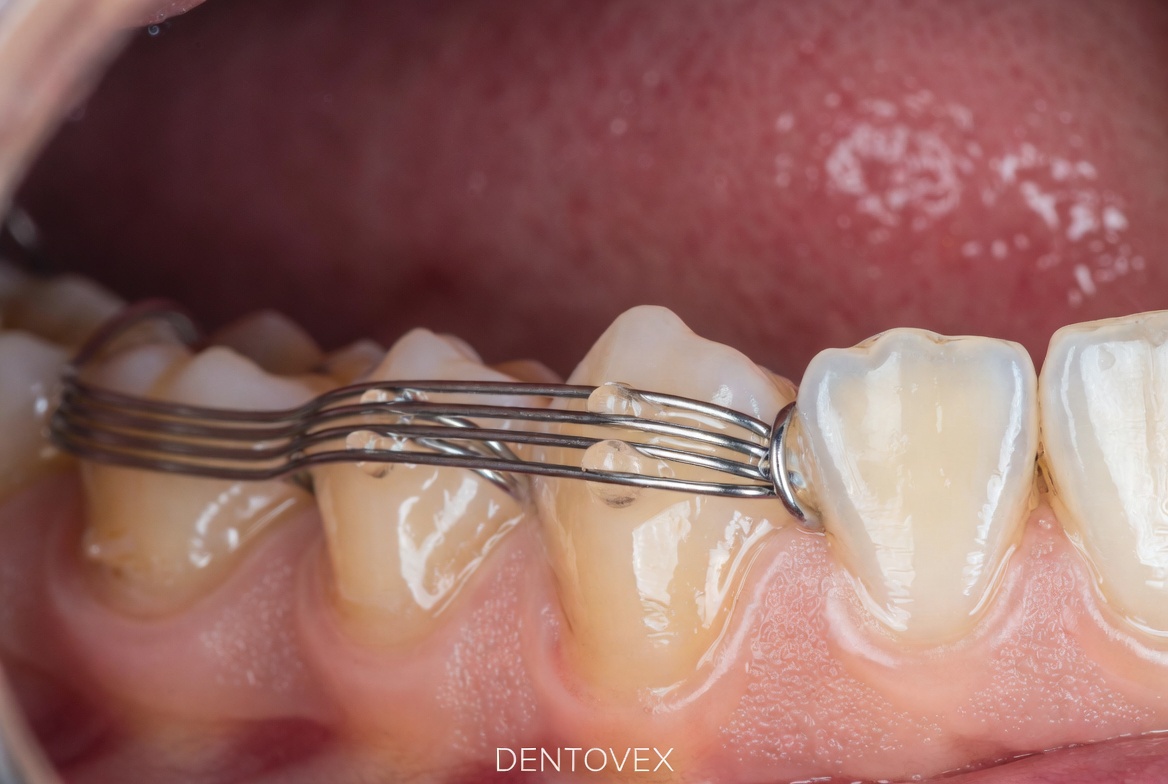
A permanent retainer consists of a specialized, medical-grade metal wire that is contoured precisely to match the natural curvature of the back (lingual) surfaces of your teeth.
Rather than wrapping around your entire arch, it is typically bonded only to the six front teeth (from canine to canine) on either the upper or lower jaw. These six anterior teeth are the most prone to rapid, highly visible aesthetic relapse and crowding.
To secure the wire, your orthodontist utilizes a dental adhesive similar to the composite resin used for white fillings. The wire is placed flat against the enamel, and small drops of composite are applied to the teeth and cured with a specialized blue ultraviolet light. Once hardened, the wire is completely locked in place, making it practically invisible to the outside world and virtually imperceptible to your tongue after a short adaptation period.
3. Permanent vs. Removable Retainers: A Head-to-Head Comparison
When completing your treatment at your orthodontist appointment, you will typically face a choice between a fixed retainer, a removable clear plastic tray, or a hybrid combination of both.
Let’s analyze how these options stack up across key lifestyle and clinical metrics:
| Performance Metric | Permanent (Fixed) Retainer | Clear Removable Retainer (e.g., Vivera) | Traditional Hawley Retainer |
| Aesthetic Visibility | 100% Invisible (Hidden entirely on the tongue-side of the teeth). | Nearly Invisible (Clear plastic fits over the teeth but can reflect light). | Moderate to High (Features a visible metal wire running across the front). |
| Compliance Requirement | Zero Daily Effort (It is permanently bonded; you cannot lose it or forget to wear it). | High Compliance (Must be manually inserted/removed; highly prone to being lost). | High Compliance (Must be worn as directed; easily misplaced in napkins). |
| Hygiene & Maintenance | Requires Diligent Flossing (Acts as a physical plaque trap; requires floss threaders). | Simple Maintenance (Easily popped out for normal brushing and flossing). | Simple Maintenance (Easy oral hygiene; retainer is brushed separately). |
| Durability Profile | Years to Decades (Can last 10+ years if cared for, though single bonds can loosen). | 1 to 5 Years (Plastic will gradually yellow, stretch, crack, or wear down over time). | 5 to 10+ Years (Highly durable acrylic and wire construction; drop-sensitive). |
| Dietary Restrictions | Moderate (Must avoid biting hard or sticky foods directly with front teeth). | None (The retainer is completely removed before eating or drinking). | None (Removed prior to meals, eliminating any dietary interference). |
4. The Step-by-Step Guide to Flossing with a Permanent Retainer
Because a fixed wire physically blocks dental floss from passing straight down between your teeth to the gumline, a permanent retainer is a natural trap for plaque, food debris, and mineralized tartar (calculus).
If you do not maintain meticulous hygiene around the wire, you run a high risk of developing localized gingivitis, enamel demineralization, or periodontal bone loss.
To protect your gums and keep your supporting bone healthy, you must master the art of threading your floss underneath the wire. Here is the highly recommended clinical hygiene sequence:
1.Select a Threading Aid:Prepare your tools.
Purchase a specialized plastic floss threader or a pre-cut Superfloss (which features a stiff plastic tip attached to a spongy section and regular dental floss). The stiff tip is crucial for navigating around the metal wire safely.
2.Thread the Floss:Under the wire.
Insert the stiff plastic end of the threader or Superfloss through the gap between your teeth, just above the gumline and below the bonded retainer wire. Pull it through until the soft thread section is positioned under the wire.
3.Clean the Sides of Both Teeth:The.
Wrap the floss gently into a “C” shape around the side of one tooth. Slide it up and down against the enamel surface, moving gently just below the gum margin to clear away plaque. Repeat this exact motion on the adjacent tooth.
4.Pull the Floss Out Sideways:Gently release.
Once both sides of the interdental gap are clean, do not attempt to snap the floss upward through the tight contact point of the teeth, as this can pull on the wire. Instead, simply release one end of the floss and pull it out horizontally through the side of the teeth.
Pro Tip: Incorporating an advanced water flosser (oral irrigator) into your nightly routine is an exceptional way to blast away larger food particles from behind the wire before you thread your physical floss. However, a water flosser cannot replace physical flossing, as it lacks the scraping mechanical force needed to disrupt stubborn bacterial biofilm.
5. What to Do If Your Permanent Retainer Breaks or Loosens
While permanent retainers are incredibly durable, they are not completely indestructible. Over time, the repeated biting forces of chewing, accidental contact with hard foods (such as nuts, ice, or hard candy), or the natural micro-movements of your teeth can cause the composite adhesive to shear away from the enamel.
How to Spot a Loose Retainer
- You feel a slight wiggle or play in one of your front teeth.
- Your tongue catches on a sharp or rough spot behind your teeth.
- The wire feels bouncy or flexible when you press on it gently with your finger.
- You notice a visual gap forming between the wire and the back of a tooth.
The Immediate Action Plan
If you suspect your permanent retainer has broken or detached from even a single tooth, treat it as a time-sensitive orthodontic emergency.
- Do Not Attempt DIY Repairs: Never attempt to glue the wire back yourself using over-the-counter adhesives. These chemicals are toxic, highly unsafe for intraoral use, and can permanently damage your tooth enamel.
- Wear Your Backup Removable Retainer: If your orthodontist provided a clear plastic backup retainer (like an Invisalign Vivera retainer) designed to fit over your fixed wire, wear it immediately to prevent any active tooth movement while you wait for your appointment.
- Schedule an Emergency Clinic Visit: Contact your orthodontist right away. Re-bonding a single loose tooth is a quick, painless 15-minute procedure. If you delay, the unbound tooth can easily drift out of alignment within a matter of days, potentially requiring expensive active orthodontic re-treatment to correct.
6. The Hybrid Defense: Why One Retainer is Rarely Enough
In elite orthodontic practices, relying solely on a lower permanent retainer is increasingly viewed as an incomplete defense strategy.
While a fixed lower wire is exceptional at preventing the high-relapse crowding typical of lower incisors, it does not protect your back teeth (molars and premolars) from expanding, contracting, or drifting over time. Furthermore, if you have a history of a skeletal open bite or a severe deep bite requiring specialized bite turbos during active care, a simple front wire cannot preserve the complex vertical parameters of your bite.
To achieve maximum protection, clinicians frequently prescribe a hybrid retention framework:
- The Lower Arch: A permanent lingual wire is bonded canine-to-canine to handle the daily, high-risk forces of lower crowding.
- The Upper Arch: A removable clear overlay retainer is worn nightly. This overlay encapsulates the entire upper arch, locking both the front teeth and the back molars in place, while also preventing the upper teeth from shifting due to nighttime clenching or grinding.
7. Crucial Frequently Asked Questions (FAQs)
How long does a permanent retainer actually last?
With excellent oral hygiene and sensible eating habits, a high-quality permanent retainer can easily last between 10 to 20 years. Many patients live with their original wires for decades without ever needing a replacement. However, you should expect to have the composite bonding points checked and occasionally touched up by your dentist during your routine six-month cleanings.
Does getting a permanent retainer hurt?
No. The bonding process is completely non-invasive and pain-free. There is no drilling, numbing, or removal of healthy tooth structure. The enamel is simply cleaned, primed with a mild conditioning gel, painted with adhesive, and cured with a specialized light.
Will a permanent retainer set off airport metal detectors?
No. The metal alloy wires used in orthodontics are extremely small, lightweight, and non-magnetic. They will not trigger airport security scanners, wand metal detectors, or interfere with routine medical imaging like MRIs.
Conclusion: Safeguarding Your Orthodontic Investment
Your journey to a healthy, beautifully aligned smile is a major investment of your time, resources, and personal dedication. A permanent retainer is the ultimate insurance policy designed to protect that investment for decades to come.
By eliminating the daily risk of patient compliance failure, a fixed wire ensures that the complex structural alignment achieved during your active care remains perfectly preserved. While it does demand a higher standard of daily flossing and diligent dental hygiene, the effortless peace of mind it provides is truly unmatched.
When you sit down at your next orthodontic check-up, ask your specialist if a hybrid retention plan featuring a permanent retainer is the right biological choice to lock in your gorgeous, functional smile for a lifetime.
Disclaimer: Retainer selection must be highly customized to your specific bite dynamics, periodontal health, and structural history. Always prioritize a comprehensive evaluation and personalized recommendation from your licensed orthodontic specialist.

No responses yet