The Social Dilemma of Orthodontics
You’ve made the commitment. You’ve sat in the chair, endured the bonding process, and now you’re looking at the world through a new lens one that involves wires, brackets, or plastic trays. It’s exciting, it’s a step toward a better version of yourself, and then comes the first lunch break. You’re holding a simple sandwich, and suddenly, you’re doing a complex mental calculus: “Will this break a bracket? Will this stain my aligners? How long will I be brushing after this?”
Let’s be honest: the romanticized version of orthodontics never mentions the post-meal anxiety. Whether you’re a professional in a high-stakes meeting, a student in the cafeteria, or someone who simply enjoys the finer things in culinary life, your relationship with food has officially changed. But here is the good news: you don’t have to live on lukewarm soups or protein shakes for the next 18 months. At Dentovex, we believe that life is meant to be lived and eaten joyfully.
This guide isn’t a list of “thou shalt nots.” It’s your survival manual for 2026, designed to help you navigate the awkward, the crunchy, and the sticky parts of life with braces or clear aligners, ensuring your treatment stays on track without sacrificing your social life.
1. The Physics of the “Forbidden Zone”: Why Your Orthodontist Freaks Out Over Crunchy Food
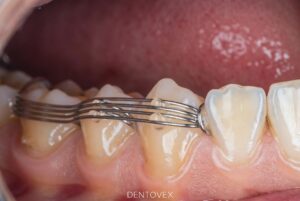
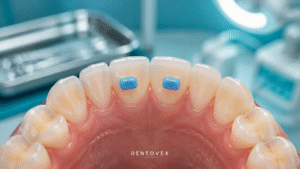
If you’re wearing traditional braces (metal or ceramic), your orthodontist isn’t being a killjoy when they hand you that list of “banned foods.” There is a mechanical reason for it. A bracket is bonded to your enamel with a specific type of adhesive. That adhesive is strong, but it is not industrial steel. When you bite into a hard, crunchy substance like an almond, a baguette crust, or even the edge of a hard taco shell, the force is concentrated on the tiny surface area of the bracket.
If that force exceeds the bond strength, pop. The bracket shears off. Now you have a loose piece of hardware sliding down your wire, potentially poking your gum, and that tooth has effectively stopped moving. You’ve just hit the “pause” button on your treatment progress.
The Survival Strategy:
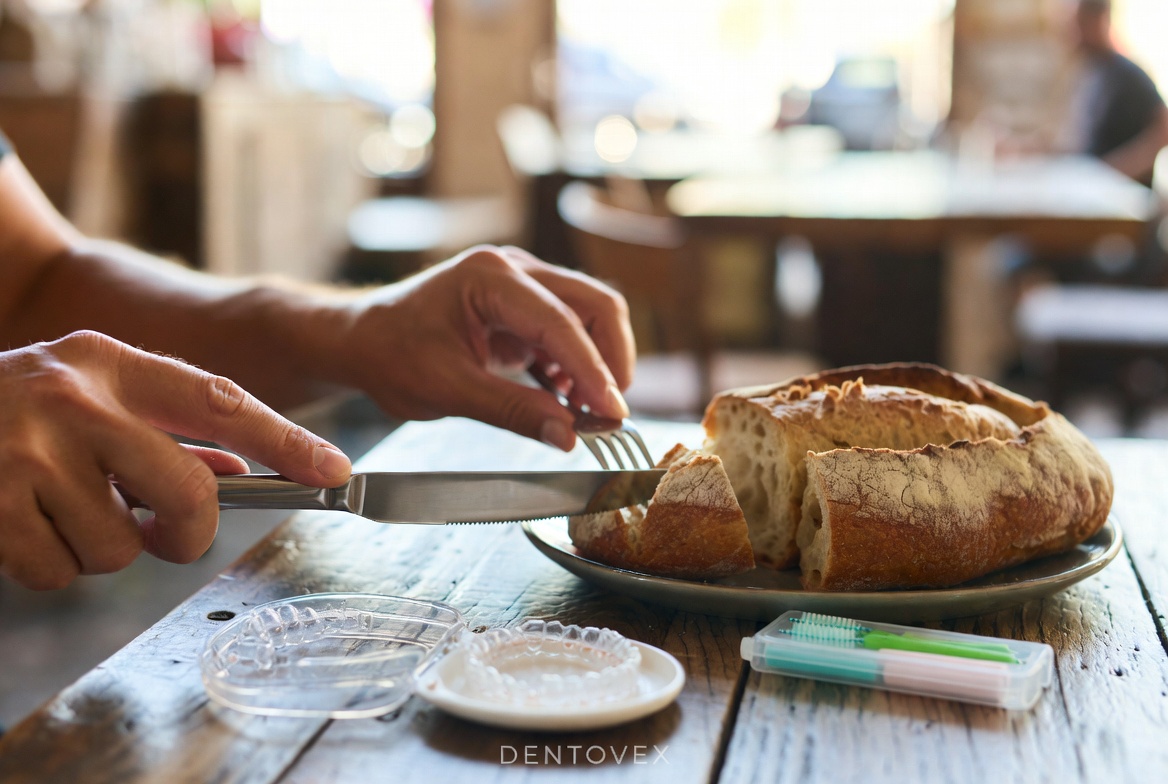
- The “Cut-it-Down” Rule: If it’s crusty, hard, or dense, don’t bite it cut it. A steak knife and a fork are your best friends. Even a burger or a firm apple should be sliced into bite-sized pieces that you can chew with your molars, which have more surface area and can handle the pressure better than your front teeth.
- The “No-Go” List: Popcorn is the ultimate enemy. Those tiny, jagged hulls have a habit of diving deep into the gums, causing infections that can lead to significant swelling. If you must have a movie night, stick to the puffed-corn alternatives that melt away.
2. Living the Aligner Life: The 22-Hour Discipline
If you opted for clear aligners, you didn’t have to worry about the “bracket-pop.” Instead, you signed a contract with yourself. The secret to Invisalign’s success isn’t the trays it’s the wear time.
The Aligner Dining Protocol: The most common mistake we see in 2026 is the “lazy remove.” If you’re at a dinner party and decide to take your trays out, it’s all too easy to forget them on a napkin or leave them out for three hours. The moment those trays are off your teeth, your teeth begin to “drift” back to their original position.
- The 30-Minute Window: Aim to finish your meal and complete your cleaning within 30 minutes. If you’re drinking anything other than plain, room-temperature water yes, even that “healthy” lemon water or iced tea—the trays must come out. The sugar and acid in these drinks get trapped between the plastic and your teeth, effectively creating a “petri dish” for decay.
- The “Clear Drink” Myth: Many patients ask if they can keep their trays in while drinking a light-colored beverage. Don’t do it. Even if it’s not heavily pigmented, the warmth of the drink can warp the precision-engineered plastic of the aligner. Once that plastic is warped, it no longer applies the correct force, and your treatment plan goes off the rails.
3. The Professional’s Kit: What You Need in Your Bag in 2026
If you’re constantly on the go, your “orthodontic survival kit” is non-negotiable. Forget the bulky travel brushes of the past; 2026 has provided us with some incredible, discreet tools.
- Interdental Brushes (The “Christmas Tree” Brushes): These are the unsung heroes of braces care. While a normal toothbrush can clean the surface of the teeth, it cannot reach the space between the archwire and the bracket. These tiny brushes act like a micro-scrubbing tool. Carry three of them in your pocket at all times.
- Orthodontic Wax (The Savior of Sanity): There is no shame in using wax. If you’re in a meeting or a lecture and a wire end starts digging into your cheek, don’t suffer in silence. Dry the area with a tissue, roll a pea-sized amount of wax into a ball, and press it firmly. It’s a temporary fix, but it’s the difference between being present and being in agony.
- Water Flossers for Travel: We’ve discussed the importance of water flossers (M16) before, but in 2026, the portable, cordless options have become remarkably powerful. If you are a heavy coffee drinker, using a quick water-floss session after your lunch break can prevent the accumulation of plaque that inevitably causes “white spots” the permanent scars on the enamel that appear once the braces are removed.
4. Dining Out: The “Social Anxiety” Factor
Let’s talk about the elephant in the room: eating in front of others when you have hardware in your mouth. Whether it’s having a piece of spinach stuck in your wire during a date or having to awkwardly remove your aligners in a public restroom, it’s natural to feel self-conscious.
- The “Check-After-Check” Routine: Develop a habit of excusing yourself to the restroom right after the meal is over, but before you pay the bill. A quick check of your smile in the mirror and a swift swish with water can save you from a major “cringe” moment later.
- Don’t Hide It: You’d be surprised how many people are either currently in treatment or have been in the past. If you’re struggling with an aligner that just won’t pop out, or you’re picking a piece of food out of a wire, be casual about it. The more confident you are, the less people will notice the “orthodontic” aspect of your meal.
5. Hydration and Enamel Health: The Silent Protector
In our previous discussions, we’ve covered the importance of fluoride and sensitivity-reducing toothpastes (M26). But diet plays a role here, too. When you have brackets or attachments on your teeth, the natural “self-cleaning” action of your saliva is partially blocked.
- The pH Balance: After you eat, your mouth’s pH drops, making it more acidic. This is the prime time for enamel demineralization. If you can’t brush immediately, rinse with water. A good, vigorous rinse with plain water can neutralize the acids and dislodge loose food particles, acting as a “mini-cleanse” until you can get to your toothbrush.
6. Dealing with Post-Adjustment Tenderness
Let’s address the “adjustment day” reality. Every time you get a new set of trays or a heavier gauge wire, your teeth will feel “tender.” This is a physiological response you are literally causing a controlled inflammation to move bone.
- The Soft Food List: You don’t have to live on mashed potatoes. In 2026, we have a vast array of nutrient-dense soft foods. Think protein-rich Greek yogurt, blended lentil soups, scrambled eggs with soft avocado, and even finely cooked pasta. The goal is to provide your body with the nutrients it needs to build the new bone required for tooth movement. Avoid the “junk food trap” just because it’s soft (like ice cream or cake) doesn’t mean it’s good for your enamel health.
Conclusion: The Long Game
Eating with braces or aligners is a temporary chapter in your life, even if it feels like it’s lasting forever. Every time you make the conscious choice to floss, to cut your food, or to put those aligners back in on time, you are investing in the stability of your future smile. It’s the discipline you show in these “boring” daily moments the moments away from the orthodontist’s office that truly determines how your smile will look in the end.
Stay consistent, stay hydrated, and most importantly, stay kind to yourself. You’re doing the work, and the results will be worth every careful bite.
Disclaimer: This guide is intended for informational purposes and does not replace the specific instructions of your treating orthodontist. If you experience severe pain, excessive bleeding, or repeated hardware failure, contact your clinical team immediately.

No responses yet