Orthodontics Has No Age Limit
There is a widespread misconception that orthodontic alignment is exclusively a adolescent rite of passage. In modern clinical practice, however, adult patients account for over 25% of all orthodontic cases globally. Whether seeking to correct lifelong dental crowding, resolve functional bite discrepancies, or restore spacing prior to dental implant placement, adults are turning to orthodontic treatment in record numbers.
The fundamental biological mechanism of moving teeth through alveolar bone remains identical regardless of age: controlled mechanical pressure induces cellular bone remodeling via the periodontal ligament (PDL).
However, managing an adult dentition introduces unique clinical considerations. Unlike growing children, adults present with fully matured facial skeletal structures, potential history of periodontal bone loss, existing dental restorations (crowns, fillings, implants), and distinct lifestyle requirements for discreet, aesthetic appliances.
At Dentovex, we tailor our treatment plans to the physiological and aesthetic demands of mature dentitions. In this master guide, we deconstruct the biological differences of adult tooth movement, evaluate the primary appliance choices (ceramic, lingual, metal, and clear aligners), discuss periodontal health integration, and outline expected treatment timelines.
1. Biological Differences: Adolescent vs. Adult Orthodontics
Moving teeth in a mature dentition requires specialized clinical planning due to structural and metabolic differences in the oral tissues:
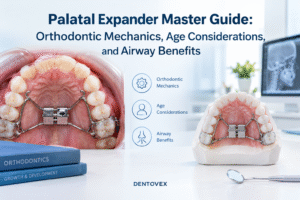
- Skeletal Maturity (Fused Sutures): In children and teenagers, the midpalatal suture and facial bones are still malleable, allowing orthodontists to easily expand the upper jaw using a palatal expander. In adults, these sutures are fully calcified; true skeletal expansion requires surgical assistance (SARPE) or carefully planned dental compensation.
- Slower Cellular Response: Adult bone turnover rate is slower than in developing adolescents. Bone resorption by osteoclasts and bone formation by osteoblasts require slightly more time to initiate, meaning initial alignment phases may progress more gradually.
- Periodontal Status: Adults are more susceptible to previous or active periodontal disease. Moving teeth through inflamed or reduced bone height can accelerate bone loss. Periodontal stability must be achieved before applying any active orthodontic force.
- Pre-existing Dental Restorations: Crowns, root canals, or missing teeth alter anchor points. Furthermore, dental implants are fused directly to bone (ankylosed) and cannot be moved, acting as fixed anchor posts around which natural teeth must be organized.
2. Comparing Appliance Systems for Adult Patients
Adults frequently prioritize aesthetics, comfort, and minimal impact on daily professional interactions. Modern orthodontics offers four main appliance categories:
| Appliance Type | Aesthetic Level | Biomechanical Strengths | Primary Considerations |
| Ceramic (Clear) Braces | High (Tooth-colored) | Exceptional force control; handles complex rotations and root movements easily. | Slightly larger bracket profile; elastomeric ties require care to prevent staining. |
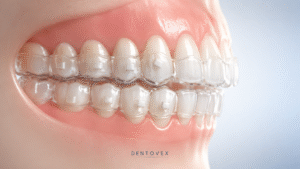
| Clear Aligners (Invisalign) | Very High (Nearly invisible) | Fully removable for eating and oral hygiene; minimal speech impact. | Requires strict 22-hour daily compliance; complex vertical movements can take longer. |
| Lingual Braces | Maximum (100% hidden behind teeth) | Completely invisible from the front; customized gold/cobalt alloy brackets. | Higher cost; longer speech adaptation period; increased tongue irritation initially. |
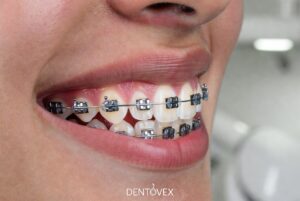
| Traditional Metal Braces | Standard (Visible) | Most cost-effective; highest durability; ideal for severe skeletal malocclusions. | Metallic appearance; requires soft tissue protection during early weeks. |
3. The Clinical Workflow for Adult Treatment
Achieving an optimal aesthetic and functional result follows a comprehensive multi-phase protocol:
1.1. Comprehensive Periodontal Assessment:Establishing a healthy baseline.
Before placing hardware, the orthodontist evaluates bone levels and gum health. Any active periodontal inflammation must be treated and stabilized by a periodontist prior to initiating tooth movement.
2.2. Digital Mapping & Restorative Planning:3D imaging and diagnostics.
High-resolution 3D CBCT scans and digital intraoral impressions are taken. If the patient requires crowns, bridges, or dental implants post-treatment, the orthodontist coordinates space allocation directly with the restorative dentist.
3.3. Appliance Bonding & Initial Light Wires:Precision placement.
The selected appliance (ceramic, lingual, metal, or clear aligner attachments) is bonded. Flexible nickel-titanium (NiTi) wires apply light, continuous forces suited for mature periodontal ligaments.
4.4. Active Mechanical Phase:Space closure and bite correction.
Once initial leveling is complete, stiffer working wires, power chain braces, or rubber bands for braces are introduced to close extraction gaps and correct Class II or Class III bite relationships.
5.5. Lifelong Retention Phase:Safeguarding the result.
Upon active hardware removal, custom orthodontic retainers (such as Essix or fixed bonded lingual wires) are immediately fitted to counteract natural age-related relapse.
4. Managing Comfort and Oral Hygiene in Adult Dentitions
Adults often adapt quickly to orthodontic treatment by establishing disciplined hygiene routines:
- Soft Tissue Care: New brackets or aligner attachments can irritate cheeks and lips during the first 10 to 14 days. Applying medical-grade orthodontic wax over prominent hardware provides instant physical protection while oral mucosa forms calluses.
- Interdental Cleaning: Interdental brushes, water flossers, and super-floss threaders are crucial for cleaning around brackets and under archwires to prevent plaque buildup and gum recession.
- Pain Relief Protocol: To alleviate post-adjustment tightness, Acetaminophen (Tylenol) is preferred over NSAIDs (Ibuprofen). NSAIDs suppress prostaglandin synthesis, which can temporarily slow down biological bone remodeling.
5. Treatment Duration and Cost Factors
The average duration for adult orthodontic treatment ranges from 12 to 24 months, depending on complexity. While minor alignment can take under a year, comprehensive bite reconstruction or surgical cases may take longer.
Primary cost components include:
- Appliance Material: Clear aligners, ceramic systems, and fully custom lingual appliances carry higher lab and material costs than standard metal brackets.
- Treatment Complexity: Severe crowding, impacted teeth, or interdisciplinary restorative planning require more frequent adjustment visits and specialized biomechanical auxiliaries.
- Retention Systems: Long-term fixed bonded wires combined with removable clear retainers are standard for adult stability, factoring into the final fee schedule outlined in our cost of braces overview.
Conclusion: Investing in Long-Term Dental Health
Seeking orthodontic treatment as an adult is far more than a cosmetic choice; it is a vital investment in long-term oral health. Properly aligned teeth reduce plaque buildup, decrease the risk of uneven enamel wear, relieve stress on the temporomandibular joint (TMJ), and establish a stable foundation for a lifetime of healthy function. With modern discreet options, achieving a straight, harmonious smile fits seamlessly into any personal or professional lifestyle.
Disclaimer: Adult orthodontic treatment requires healthy bone and gum support. Always consult a licensed orthodontic specialist for a full periodontal and biomechanical evaluation.
No responses yet