Crossing the Threshold of Smile Architecture Stepping into a specialized clinic for an orthodontist appointment is fundamentally different from arriving at a general dental check-up. While a routine dental visit focuses on the chemical preservation of enamel, the eradication of bacterial decay, and soft-tissue maintenance, an orthodontic evaluation is an intense, comprehensive exercise in structural engineering, craniofacial biology, and three-dimensional spatial mechanics.
Whether you are an adult seeking to resolve years of progressive dental crowding, or a parent bringing in a child for crucial early-interceptive care, that initial consultation sets the entire trajectory for your structural transformation.
At Dentovex, we understand that stepping into an advanced clinical space can evoke a mixture of excitement and underlying anxiety. You are likely asking yourself: Will the diagnostic phase hurt? How do specialists calculate the exact movement of bone? What parameters determine whether I need traditional appliances or clear aligners? How do I navigate the financial framework?
This definitive, master clinical manual is designed to demystify every single phase of your upcoming appointment. We will break down the state-of-the-art diagnostic technologies utilized by modern specialists, detail the step-by-step sequence of a professional consultation, analyze the complex variables of treatment planning, and provide a practical checklist to ensure your visit is seamless, efficient, and highly productive.
1. The Critical Distinction: Dentist vs. Orthodontist
Before you sit in the clinical chair, it is essential to establish exactly why this appointment requires a dedicated specialist. While all orthodontists are dentists first, only a select fraction of dental graduates undergo the rigorous, full-time residency programs required to earn the title of an orthodontic specialist.
This advanced training focuses exclusively on orthodontics and dentofacial orthopedics—the study of how to safely guide facial growth, manipulate jaw relationships, and guide teeth through living alveolar bone using precise, calibrated physics. An orthodontist doesn’t just look at individual teeth; they analyze the entire craniofacial ecosystem, ensuring that your final bite dynamics harmoniously support your temporomandibular joints (TMJ), airway efficiency, and facial aesthetics.
2. Phase 1: The High-Tech Diagnostic Matrix
The moment your appointment begins, the clinical team shifts into a data-collection phase. Modern orthodontics has completely outgrown the era of uncomfortable, messy alginate putty trays that induced gag reflexes. Today, mapping your smile is an entirely digital, high-fidelity engineering workflow.
A comprehensive diagnostic battery consists of three core components:
A. Intraoral Digital Scanning (The Virtual Clone)
Using advanced optical scanning wands (such as the iTero Element or Trios systems), a clinical assistant will capture thousands of high-resolution images of your teeth and soft tissues per second.
As the wand glides smoothly over your dental arches, these images are stitched together in real time by powerful rendering software to create an incredibly precise, interactive 3D virtual model of your mouth. This digital clone allows the orthodontist to view your malocclusion from angles that are physically impossible to see with the naked eye, analyzing tooth width discrepancies, asymmetrical rotations, and contact wear patterns with micron-level accuracy.
B. Digital Radiography: Panoramic and Cephalometric Analysis
To manipulate bones safely, a clinician must see exactly what is happening beneath the surface of the gums. This requires two specialized types of low-radiation digital X-rays:
- The Panoramic Radiograph: This single, wide-angle image captures your entire maxilla (upper jaw) and mandible (lower jaw) in a flat 2D plane. It reveals the exact health, length, and positioning of every tooth root, exposes impacted teeth (such as hidden wisdom teeth or canines), and flags any underlying bone pathology or bone loss.
- The Lateral Cephalometric Radiograph: This highly specialized side-profile X-ray captures the exact spatial relationship between your jaw bones and your cranial base. Using specific anatomical landmarks, the orthodontist measures skeletal angles to determine whether your bite issue is purely dental (crooked teeth) or fundamentally skeletal (a structural jaw mismatch).
C. Clinical Photographic Documentation
A standard orthodontic record requires an array of high-definition digital photographs. These include extraoral (facial) images capturing your natural profile, resting lip posture, and full-smile symmetry, alongside intraoral images capturing the biting surfaces and lateral occlusion of your teeth. These photos serve as a baseline to evaluate how tooth movement will ultimately alter your external facial aesthetics and anti-aging lip support.
3. Phase 2: The Step-by-Step Consultation Sequence
Knowing exactly what to expect chronologically can significantly lower patient anxiety. A standard, high-tier consultation appointment follows a structured three-step workflow:
1.Clinical Examination and Joint Palpation:Duration: 15 – 20 minutes.
The orthodontist performs a manual, intraoral assessment. They will evaluate your oral health, check for tooth wear patterns, and visually measure your overbite or overjet. Concurrently, they will palpate your temporomandibular joints (TMJ) as you open and close your mouth, checking for clicking, popping, or muscular deviation that could alter treatment mechanics.
2.Interactive 3D Simulation and Treatment Engineering:Duration: 25 – 30 minutes.
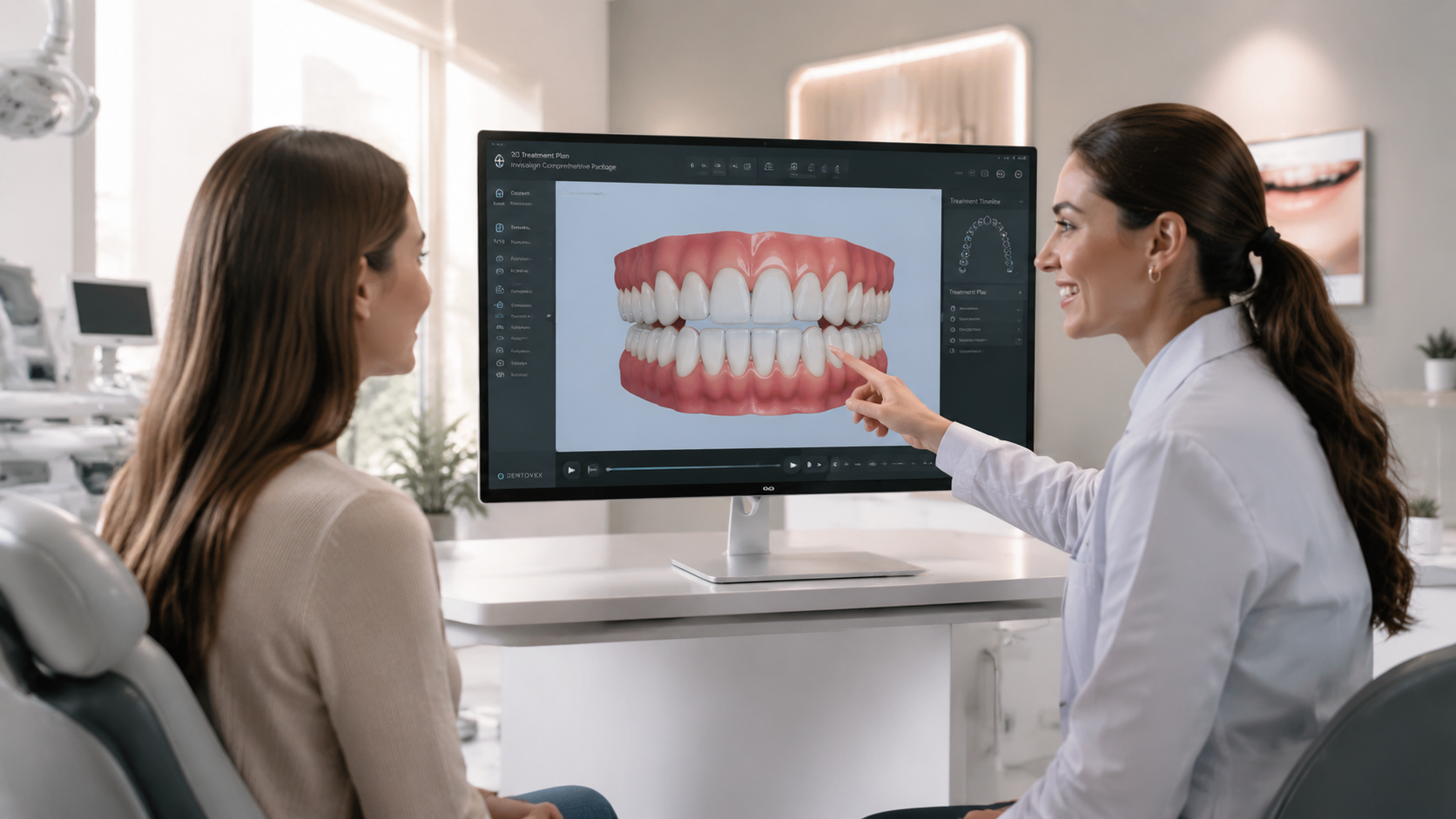
You will sit down with the specialist in front of a high-definition monitor displaying your 3D digital scans. Using powerful simulation software, the orthodontist will manipulate your digital model right before your eyes, demonstrating exactly how different treatment options (like clear aligners vs. specialized brackets) will guide your teeth into perfect alignment over time.
3.Financial Framework Mapping and Scheduling:Duration: 15 – 20 minutes.
Once the clinical blueprint is mutually agreed upon, a treatment coordinator will walk you through a detailed breakdown of costs. They will explain insurance coverage, lay out flexible in-house financing options, and schedule your subsequent bonding or custom scanning appointments to officially launch your active care phase.
4. Phase 3: The Treatment Planning Decisions
During your discussion, the orthodontist will synthesize all your diagnostic data to present the most efficient mechanical paths forward. This is where your personal goals match clinical realities.
The Appliance Showdown: Braces vs. Clear Aligners
Your specialist will outline the distinct engineering profiles of the available treatment modalities:
| Appliance Modality | Biomechanical Advantages | Practical Considerations |
|---|---|---|
| Traditional Metal Braces | Unmatched rotational control; highly efficient for severe structural corrections and complex space closures. | Highly visible; requires strict dietary modifications to prevent broken brackets. |
| Advanced Ceramic Braces | Combines the raw mechanical power of fixed brackets with translucent, stain-resistant aesthetics. | Slightly more brittle than metal; requires meticulous hygiene to prevent staining around ties. |
| Custom Clear Aligners | Practically invisible; completely removable for effortless eating, flossing, and brushing. | Relies 100% on patient compliance (must be worn 22 hours a day); requires attachments on enamel. |
| Lingual Braces | Bonded entirely behind the teeth for ultimate, 100% hidden aesthetic discretion. | Initial speech adjustments are more pronounced; requires advanced clinical chair-time. |
Addressing Adjunct Biomechanical Needs
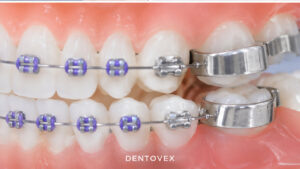
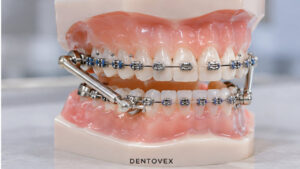
Depending on the severity of your malocclusion, your specialist may introduce advanced auxiliary tools into the plan. For instance, if you present with a severe deep bite, they might integrate protective bite turbos behind your incisors. If you exhibit a skeletal discrepancy, they may discuss using temporary anchorage devices (TADs) to achieve precise open bite closure without invasive surgery.
5. Navigating the Financial and Insurance Ecosystem
A premier orthodontic transformation is a significant financial investment in your lifelong health. A transparent, high-quality clinic will never leave you guessing about the financial components of your care.
- The Inclusive Pricing Framework: Ensure your treatment quote is fully global. A proper financial contract should cover all active diagnostic records, all intraoral hardware, every routine adjustment appointment, emergency visits for broken components, and your initial set of post-treatment stabilization retainers.
- Maximizing Orthodontic Insurance Benefits: Orthodontic insurance coverage functions distinctly from standard dental insurance. It often features a lifetime maximum benefit per individual. Your clinic’s treatment coordinator will interface directly with your provider to verify these benefits, deducting them directly from your out-of-pocket balance.
- Customized In-House Financing: To make exceptional care universally accessible, premier clinics provide flexible, interest-free monthly installment plans. This allows you to spread the cost of your structural alignment comfortably across the entire estimated duration of your treatment timeline.
6. How to Prepare: The Patient Pre-Appointment Checklist
To ensure your initial consultation is as streamlined, productive, and informative as possible, take a few moments to prepare utilizing this practical administrative blueprint:
- Secure a General Dental Clearance: You must never initiate active orthodontic force application on an unstable foundation. Ensure you have had a comprehensive general dental check-up and professional cleaning within the last six months to guarantee your teeth are completely free of active decay and your periodontal tissues are healthy.
- Compile Your Complete Medical History: Be prepared to disclose any chronic conditions, systemic bone disorders, current medications (especially bisphosphonates or anti-inflammatory drugs that alter bone remodeling), and histories of severe teeth grinding or TMJ discomfort.
- Gather Administrative Data: Bring your current dental insurance card, any recent dental X-rays captured within the last calendar year (which can occasionally save you from repeating diagnostics), and a written list of core questions you wish to ask the specialist directly.
7. Crucial Questions to Ask Your Specialist
Your initial appointment is a two-way conversation. You are actively partnering with a smile architect, and you should leave the clinic with complete clarity. Do not hesitate to ask the following high-value clinical questions:
- “What is the underlying root cause of my malocclusion? Is it driven purely by tooth positioning, or is there an underlying skeletal mismatch between my jaws?”
- “Which specific appliance modality will correct my bite most efficiently, and what is the estimated duration of my active treatment phase?”
- “Will my treatment plan require auxiliary components like elastics, temporary anchorage devices, palatal expanders, or interproximal reduction (IPR) to create space?”
- “What parameters will define my long-term retention phase once my active appliances are removed to ensure my new alignment never shifts?”
Conclusion: Launching Your Structural Evolution Your first orthodontist appointment is the definitive turning point where guesswork transforms into precise, customized health engineering. It is an enlightening diagnostic journey that breaks down the unique complexities of your craniofacial structure, providing you with a transparent, predictable roadmap to a beautifully aligned, highly functional smile.
By understanding the advanced digital technologies involved, preparing your records ahead of time, and engaging openly with your specialist, you can step into the clinic with total confidence. Your path to enhanced oral health, perfect masticatory mechanics, and unshakeable confidence begins with this single, foundational clinical conversation. Trust the data, embrace the science, and take the first definitive step toward re-engineering your smile today.
Disclaimer: The operational protocols, technology selections, and financial structures detailed in this manual represent standard practices within premier orthodontic clinics. Specific diagnostic workflows and individual treatment timelines must be determined on a case-by-case basis by a licensed orthodontic specialist during a formal face-to-face clinical consultation.

No responses yet