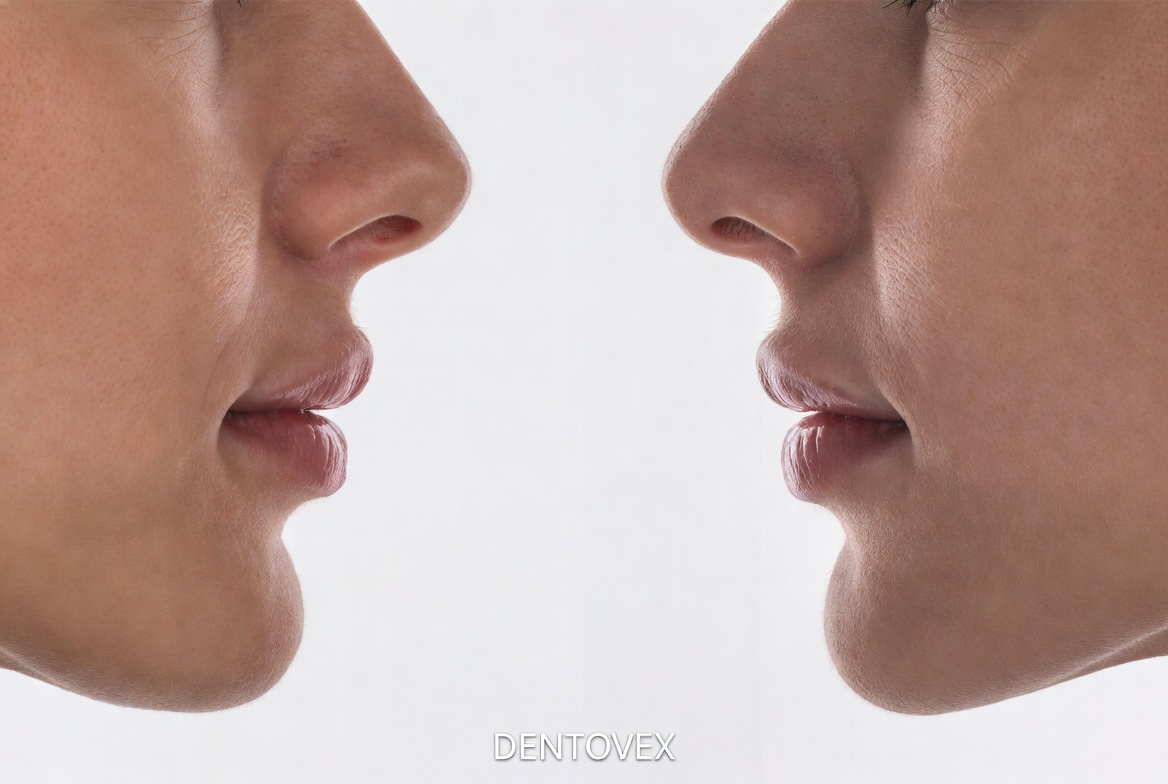
The “Hidden” Side of Orthodontics Most people seek orthodontic treatment for a perfect “Hollywood smile.” They focus on the alignment of the front six teeth. However, orthodontics is fundamentally a structural science. Because your teeth support the soft tissues of your lower face—specifically your lips and cheeks—moving them inevitably alters your facial aesthetics.
The question is: how much change is realistic? Can braces actually give you a sharper jawline or fix a recessed chin?
At Dentovex, we dive deep into the biological and structural reality of facial transformation. This 1,500-word guide separates viral TikTok myths from clinical science, explaining exactly how braces can (and can’t) change your face shape in 2026.
1. The Anatomy of Support: How Teeth Hold Your Face
Your face shape is determined by three main components: your skeletal structure (bone), your muscles, and the soft tissue (fat and skin).
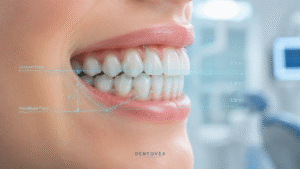
Orthodontics influences the dental-alveolar structure. Your lips “rest” on your front teeth. If your teeth are protruding (buck teeth), your lips are pushed forward. If your teeth are severely crowded or recessed, your lips may appear thin or “sunken.” By repositioning the teeth, an orthodontist is essentially moving the “scaffolding” that supports your lower face.
2. The Jawline Myth: Can Braces Create a “Chiseled” Look?
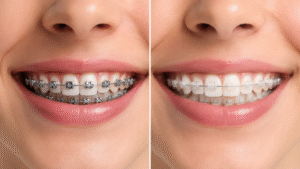
One of the most searched terms is “braces jawline before and after.” Here is the clinical truth:
- For Children/Teens: Yes. Using functional appliances (like Herbst or Twin Block) while a child is still growing can guide the growth of the jawbone itself. This can significantly improve a recessed chin or a prominent jaw.
- For Adults: Braces alone cannot grow bone in a fully developed adult. However, by correcting an “overbite” or “underbite,” the way you close your mouth changes. This often creates the illusion of a sharper jawline because the chin is no longer “hidden” by an improper bite.
3. The “Nose and Chin” Illusion
A common question is: “Do braces make my nose look bigger?” The answer is no, but with a catch. Your nose doesn’t change size, but its relationship to your lips does.
If an orthodontist moves protruding upper teeth backward, the distance between the nose and the lips increases. This can sometimes make the nose appear more prominent or “sharper” in the profile view. A skilled orthodontist plans for this to ensure the final profile remains balanced and harmonious.
4. Lip Fullness: The “Natural Filler” Effect
Before people spend thousands on lip fillers, they should look at their bite.
- Overjet Correction: When prominent front teeth are moved back, the upper lip may appear slightly thinner but more naturally positioned.
- Widening the Arch: If you have a narrow dental arch, widening it with braces or aligners (like Invisalign) provides better support for the corners of your mouth. This can make your smile look fuller and reduce the “dark triangles” at the corners of your lips, often creating a more youthful, lifted appearance in the lower face.
5. Changing the “Face Shape”: Round vs. Oval
Can braces change a round face into an oval one? Generally, no. Your fundamental bone structure—the width of your cheekbones and the length of your jaw—is genetic.
However, patients with a “Long Face Syndrome” or an open bite often experience a change. When an open bite is closed, the jaw rotates slightly, which can actually shorten the appearance of the face and make it look more symmetrical and proportionate.
6. High-CPC Analysis: Orthognathic Surgery vs. Braces
For some, braces alone aren’t enough to change the face shape. This is where Maxillofacial Surgery comes in.
- Surgical Orthodontics: For severe skeletal discrepancies (where one jaw is significantly larger than the other), surgery is required to physically move the bone.
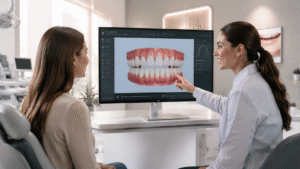
- The 2026 Approach: Modern 3D planning allows patients to see their “future face” before the first bracket is even glued on. This level of predictability has made facial transformation one of the highest-revenue sectors in modern dentistry.
7. What Happens After Treatment? (The Relapse Risk)
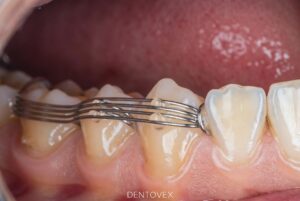
Facial changes are only permanent if the teeth stay in their new positions. This is why retention is non-negotiable. If your teeth shift back (relapse), the support for your lips and cheeks will also change, potentially “undoing” the aesthetic improvements you gained.
(Internal Link: Read our Ultimate Guide to Retainers to protect your facial transformation.)
Conclusion: More Than a Smile
Braces are a tool for total facial harmony. While they won’t give you a completely new face, they can refine your profile, balance your lips, and reveal the best version of your natural structure. When choosing a treatment plan, ensure your orthodontist is looking at your entire profile, not just your teeth.
No responses yet