Orthodontic treatment has undergone a massive transformation over the past two decades. For many years, patients seeking a straighter smile had only one viable option, which involved fixed metal brackets and wires. While effective, this traditional approach often caused aesthetic concerns, physical discomfort, and difficulties in maintaining optimal oral hygiene. Today, advancements in digital dentistry and biomaterials have introduced a revolutionary alternative. Clear aligners have become the gold standard for adult and teen orthodontics, offering a virtually invisible way to correct malocclusions.
At Dentovex, we prioritize evidence-based dental care and patient comfort. Our clinical experience shows that patients are highly motivated to complete their orthodontic journey when the appliances align with their daily lifestyle and professional aesthetic requirements. This comprehensive guide explores the science behind clear aligners, the step-by-step clinical workflow, and everything you need to know before starting your orthodontic transformation.
Understanding the Science of Clear Aligners
Clear aligners are custom-fabricated, transparent thermoplastic trays designed to move teeth incrementally into their ideal functional and aesthetic positions. Unlike fixed braces that rely on a pull force created by tightened wires, aligners use a gentle, constant push force. Each tray is uniquely molded to fit over the dental arch, applying precise pressure to specific teeth.
The manufacturing process utilizes proprietary polyurethane blends that offer the perfect balance of flexibility and rigidity. This biocampatible material ensures that the aligners are durable enough to facilitate tooth movement yet comfortable enough to be worn for the recommended 20 to 22 hours per day. Furthermore, the entire treatment plan is orchestrated using advanced computer algorithms. Orthodontists can map the exact trajectory of every single tooth from its initial position to the final desired outcome, eliminating the guesswork that sometimes accompanies older orthodontic techniques.
1.Initial Consultation and 3D Scanning:
The clinical process begins with a comprehensive orthodontic evaluation at Dentovex. Our specialists conduct a thorough examination of your dental and periodontal health. Instead of using uncomfortable traditional putty impressions, we utilize high-resolution intraoral scanners to capture a precise 3D digital model of your teeth in minutes.
2.Digital Treatment Planning:
Using specialized orthodontic software, our clinicians manipulate the 3D model to design your custom treatment plan. This software calculates the exact force required and the timeline for movement. Patients can actually view a digital simulation of their future smile before the physical aligners are even manufactured.
3.Custom Aligner Fabrication:
Once the digital plan is approved by both the orthodontist and the patient, the data is sent to the laboratory. A series of custom thermoplastic aligners is 3D printed and thermoformed. The number of aligners in your series depends directly on the complexity of your specific case.
4.Attachment Placement and Aligner Fitting:
During your next visit, the dentist may place small, tooth-colored composite bumps called attachments on specific teeth. These attachments act as anchors, allowing the aligners to grip the teeth and apply the necessary complex directional forces. You will receive your first sets of aligners and instructions on how to insert and remove them safely.
5.Ongoing Monitoring and Progression:
Patients are instructed to switch to the next aligner in the series every one to two weeks, depending on the clinical protocol. You will visit Dentovex periodically (usually every 6 to 8 weeks) so our team can monitor the tracking of your teeth and provide the subsequent batches of aligners.
6.The Retention Phase:
After the active movement phase is complete and the teeth have reached their optimal positions, the attachments are removed. To prevent orthodontic relapse, you will be provided with custom retainers. Wearing retainers as prescribed is a critical medical necessity to maintain your new dental alignment permanently.
Clear Aligners vs. Traditional Braces: A Clinical Comparison
Choosing the right orthodontic modality requires a clear understanding of the functional and lifestyle differences between the available systems. The table below outlines the primary distinctions between removable clear aligners and fixed traditional braces based on clinical parameters.
| Clinical Parameter | Clear Aligners | Traditional Metal Braces |
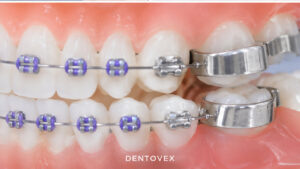
| Aesthetics | Virtually invisible transparent plastic. | Highly visible metal brackets and wires. |
| Removability | Removable for eating, drinking, and cleaning. | Fixed to the teeth for the entire duration. |
| Oral Hygiene | Standard brushing and flossing are easily maintained. | Requires specialized interdental brushes and floss threaders. |
| Dietary Restrictions | None. Aligners are removed during meals. | Hard, sticky, and chewy foods are strictly prohibited. |
| Comfort Level | Smooth plastic edges prevent soft tissue irritation. | Metal components can cause mouth ulcers and abrasions. |
| Patient Compliance | High reliance on the patient to wear trays 22 hours a day. | Compliance is built-in as the system is non-removable. |
| Office Visits | Less frequent, shorter check-up appointments. | Regular visits required for wire tightening and adjustments. |
Daily Life and Maintenance
Adapting to life with clear aligners is generally a swift process for most patients. However, adhering to specific guidelines is vital for the biological success of the treatment.
Because the trays cover the entire tooth surface, any trapped sugars or acids can accelerate enamel demineralization and promote dental caries. Therefore, patients must commit to brushing their teeth and cleaning the aligners before reinserting them after every meal. Drinking anything other than plain, unheated water while wearing the aligners is highly discouraged. Hot liquids can distort the heat-sensitive thermoplastic material, rendering the aligner useless, while colored beverages like coffee or red wine will severely stain the plastic, negating the aesthetic benefits of the system.
For maintenance, the aligners should be cleaned daily using a soft-bristled toothbrush and lukewarm water. Specialized effervescent cleaning crystals or gentle antibacterial soaps can also be utilized to keep the trays transparent and odor-free. We strongly advise reading our comprehensive dental hygiene protocols for orthodontic patients for more detailed daily care instructions.
Identifying the Right Candidates
While clear aligner technology has advanced significantly, making it suitable for a wide array of malocclusions, it is not a universal solution for every dental anomaly. The ideal candidates for clear aligners include individuals suffering from mild to moderate crowding, generalized spacing, and straightforward bite issues such as overbites or minor crossbites.
Patients requiring severe vertical tooth movements, extensive rotational corrections, or complex surgical orthodontic interventions might still require traditional fixed appliances or a hybrid approach. Additionally, candidate selection heavily depends on psychological readiness. The system works exclusively if the patient possesses the discipline to wear the aligners for the prescribed 22 hours daily. Teenagers and adults who can integrate this requirement into their daily routines achieve the highest success rates and the most predictable clinical outcomes. For further reading on pediatric and adolescent care, explore our guide on early orthodontic evaluation.
Investing in Your Dental Health
Understanding the financial aspect of orthodontic care is an important step in your treatment journey. The investment required for clear aligners is influenced by the severity of the malocclusion, the total number of aligners needed to achieve the desired result, and the projected duration of the treatment plan. While the initial cost may be comparable to or slightly higher than traditional braces, the added value in terms of daily comfort, aesthetic confidence, and reduced clinical emergency visits makes it a highly preferred choice among our patients.
At Dentovex, we conduct a transparent financial consultation alongside your clinical diagnosis, ensuring you have a complete understanding of the scope of your treatment without any hidden variables. Correcting dental alignment is not merely a cosmetic endeavor; it actively improves chewing function, reduces abnormal wear on tooth enamel, and makes daily plaque removal significantly easier, thereby lowering the long-term risk of periodontal disease.
Conclusion
Clear aligners represent a massive leap forward in the field of orthodontics, merging advanced digital planning with superior patient comfort. By choosing this modern approach, you are committing to a treatment pathway that respects your appearance and your lifestyle while delivering precise, biologically sound results. If you are considering correcting your smile, professional clinical assessment is the only way to determine the most effective strategy for your specific dental anatomy.
Medical Disclaimer:
The content provided in this article is for informational and educational purposes only and does not constitute professional medical or dental advice, diagnosis, or treatment. Always seek the advice of a qualified dentist, orthodontist, or other authorized healthcare provider regarding any medical condition or treatment plan. Never disregard professional medical advice or delay seeking it because of something you have read on the Dentovex blog.
No responses yet