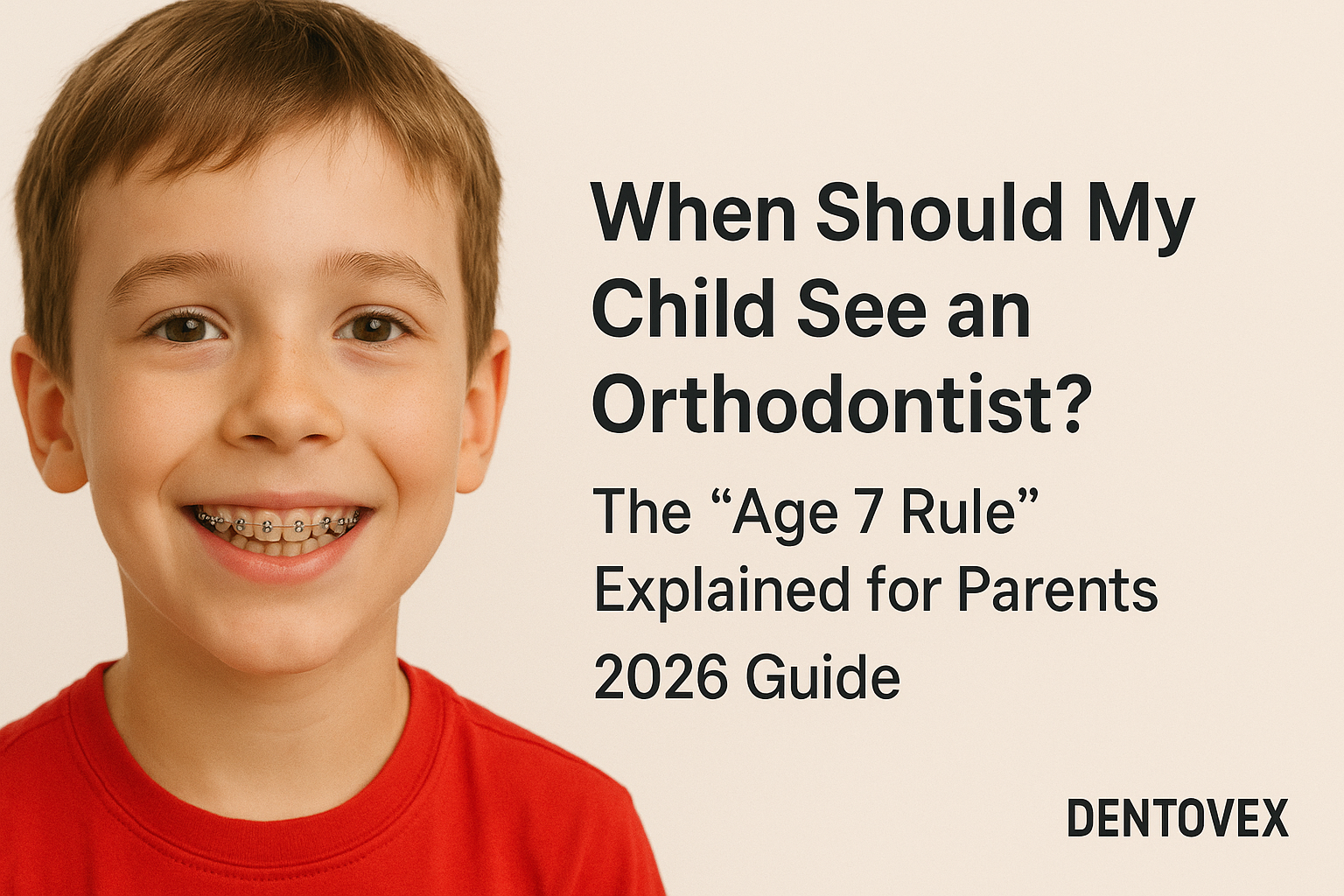
As a parent, you have a mental checklist for your child’s health: Pediatrician visits? Check. Eye exams? Check. Dentist cleanings? Check.
But when it comes to orthodontics, many parents unknowingly follow outdated advice: “Wait until all the baby teeth fall out before seeing an orthodontist.”
By the time a child is 12 or 13, nearly all permanent teeth have erupted, and the jaw bones have begun to harden. While braces can still work perfectly well at this age, some structural window of opportunity might have already closed.
This is why the American Association of Orthodontists (AAO) recommends that every child get an orthodontic check-up no later than age 7.
At Dentovex, we believe in proactive care. In this guide, we explain exactly why “Age 7” is the magic number, the warning signs to watch for at home, and the concept of “Phase 1 Treatment.”
1. Why Age 7? (The Magic Number)
You might be thinking, “My 7-year-old still has a mouth full of baby teeth. What can an orthodontist possibly do?”
Age 7 is the “sweet spot” of dental development. At this stage:
- The First Molars: The first adult molars have usually erupted, establishing the back bite. This allows the orthodontist to evaluate the front-to-back and side-to-side tooth relationships.
- The Mix: Children have a mix of baby and permanent teeth. We can see where the adult teeth are positioned before they even come out (thanks to X-rays).
- Jaw Growth: The jaw is still growing rapidly. If the jaw is too narrow or too far back, we can guide its growth painlessly while the bone is soft.
The Goal: An early screening doesn’t always mean braces immediately. In fact, in most cases, we simply say, “Everything looks great, let’s check again in a year.” This creates peace of mind for you at zero cost (as most consultations are complimentary).
2. Warning Signs: The Home Checklist
You don’t need a medical degree to spot potential issues. Watch your child for these subtle signs:
- Early or Late Loss of Baby Teeth: If they lose teeth way before age 5 or haven’t lost any by age 8, it could signal a problem.
- Difficulty Chewing or Biting: Do they avoid hard foods or shift their jaw when eating?
- Mouth Breathing: Does your child breathe through their mouth while watching TV or sleeping? This can alter facial growth and cause a narrow upper jaw.
- Thumb Sucking: If this habit continues past age 5, it can push the top teeth forward and narrow the palate.
- Crowding / Blocked Out Teeth: New teeth appearing “behind” or on top of others.
- Jaws that Shift or Make Sounds: Clicking or popping sounds in the jaw joint.
3. What is “Phase 1” Treatment? (Early Intervention)
If the orthodontist finds a significant structural issue, they might recommend Phase 1 Treatment.
- What it is: A short course of treatment (usually 6-12 months) specifically to fix jaw growth or create space for adult teeth.
- Common Appliances:
- Palatal Expander: Widens the upper jaw to fix crossbites and make room for teeth.
- Space Maintainers: Holds space open if a baby tooth falls out too early.
- Partial Braces: Sometimes placed on just the front 4 teeth.
Why do it? Phase 1 can prevent the need for permanent tooth extractions or corrective jaw surgery later in life. It makes the teenage years (Phase 2) much easier and shorter.
4. The Thumb Sucking Dilemma
Thumb sucking is natural for babies, but it becomes a villain for dental health as the child grows.
Prolonged sucking applies pressure to the roof of the mouth (palate) and the upper front teeth. This can result in an “Open Bite” (where the front teeth don’t touch even when the mouth is closed).
- The Fix: Orthodontists can provide gentle appliances like a “Habit Crib” that sit behind the teeth and remind the child not to suck their thumb, breaking the habit in just a few days.
5. Will They Still Need Braces Later?
Usually, yes. Phase 1 is about structure (building the foundation). Phase 2 (teen years) is about alignment (straightening the teeth for aesthetics).
Think of it like building a house. Phase 1 is pouring the concrete foundation and framing the walls. Phase 2 is painting and decorating. You can’t paint the walls if the foundation is crumbling!
However, because the hard work was done early, Phase 2 is often much shorter, less painful, and sometimes even cheaper.
6. “Invisalign First”: Clear Aligners for Kids
Technology in 2026 is amazing. We now have Invisalign First, designed specifically for growing children.
- Pros: No metal wires poking their cheeks, no food restrictions (popcorn is okay!), and easier to brush teeth.
- Cons: Requires responsibility. If the child loses the aligners in the school cafeteria, treatment stops.
- Best For: Disciplined kids with mild to moderate spacing issues.
Conclusion: Don’t Guess, Just Check
Bringing your child for an orthodontic screening at age 7 is one of the best investments you can make in their future health and confidence. Worst case scenario? You leave with the knowledge that everything is fine. Best case? You catch a developing problem early and fix it easily.
Concerned about costs? Read our guide on Orthodontic Costs & Insurance in 2026 to understand how coverage works for children.
Disclaimer: This guide is for educational purposes. Every child’s growth is unique. Consult a board-certified orthodontist for an individual evaluation.






No responses yet