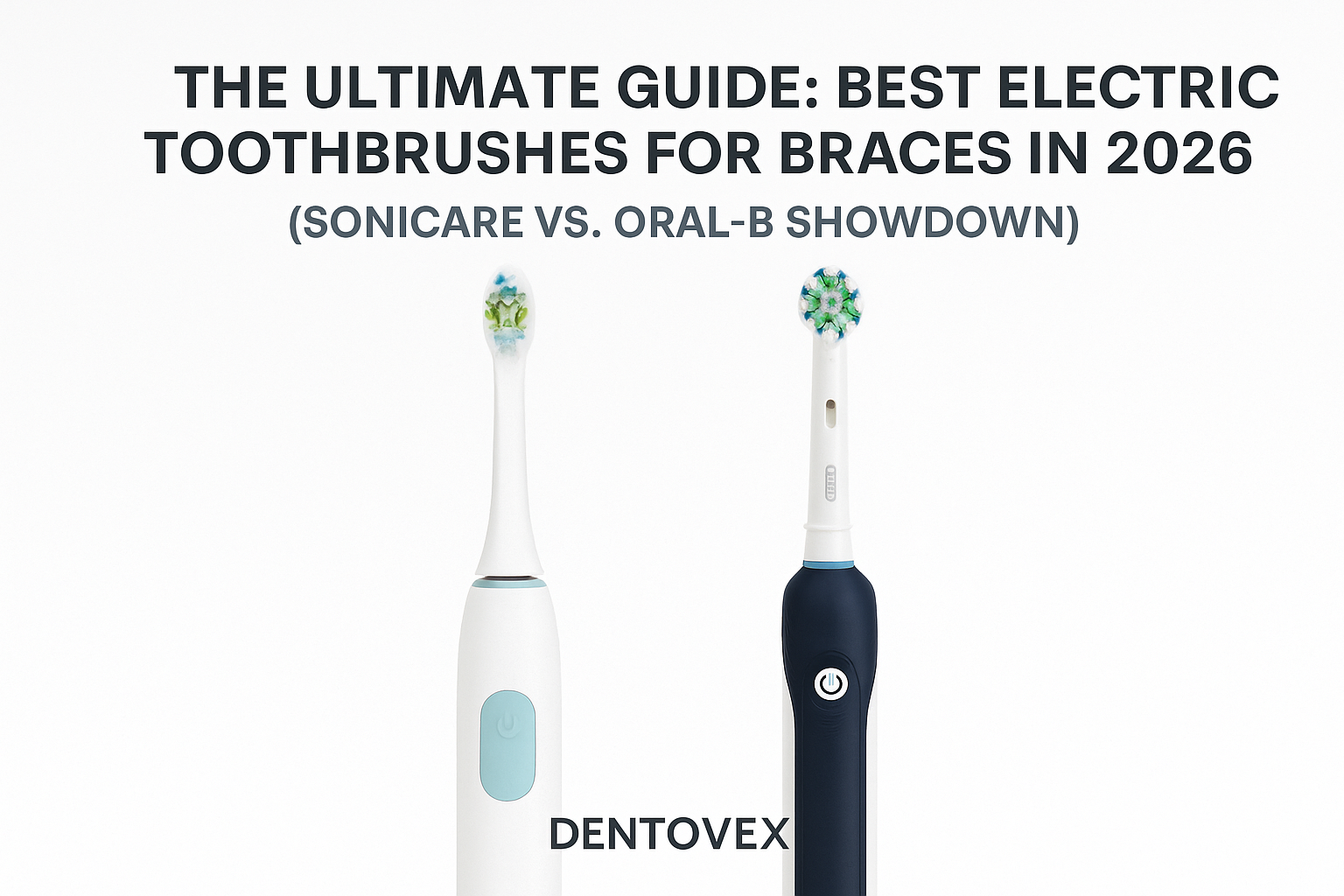
Ditch the Manual Effort
If you are brushing with a standard manual toothbrush, you are making your life much harder than it needs to be.
Brackets have rough edges, tiny wires, and countless places where plaque loves to hide. A manual brush, no matter how hard you scrub, often misses these critical areas. Electric toothbrushes are proven to be superior for orthodontic patients because their high-speed, consistent movements clean around the brackets more effectively.
But which one is right for you?
At Dentovex, we break down the two industry giants Philips Sonicare and Oral-B and tell you exactly what features an orthodontic patient needs in 2026 to keep their teeth stain-free and their gums healthy.
1. Why Electric is Mandatory for Braces
An electric toothbrush provides thousands of movements per minute, something your hand simply cannot replicate.
The Benefits for Orthodontics:
- Targeted Cleaning: The small, oscillating or sonic heads can get under wires and around brackets with precision.
- Consistent Pressure: High-end models have pressure sensors that warn you if you are pushing too hard a crucial feature, as excessive scrubbing can damage brackets and enamel.
- Built-in Timer: Ensures you brush for the full, dentist-recommended two minutes.
2. The Showdown: Sonicare vs. Oral-B
These two brands dominate the market, but their cleaning technology is fundamentally different.
| Feature | Philips Sonicare (Sonic Technology) | Oral-B (Oscillating/Rotating Technology) |
| Movement Style | High-speed, sweeping vibrations (Side-to-Side). Gentle on the gums. | Round head rotates and pulsates (3D Cleaning). Aggressive cleaning. |
| Best for Brackets | The wide, sweeping action cleans large surfaces (like wires) well. | The small, round head excels at cleaning each tooth and bracket individually. |
| Brush Head Type | Longer, more traditional head shape. Look for “Gum Health” or “Daily Clean” modes. | Small, round heads. Look for the specific “Ortho” brush head. |
| Vibe/Feel | Very gentle, feels like a buzzing sensation. | More aggressive, feels like a deep scrub. |
| Price Range | Mid to High | Wide range (Entry-level to High) |
Verdict for Braces: Both are excellent, but Oral-B’s small, round head often makes it slightly easier to maneuver around individual brackets. However, Sonicare is often gentler on sensitive gums.
3. Essential Features for Orthodontic Patients
If you are buying a new electric brush, make sure it has these features, regardless of the brand:
- Pressure Sensor: (A must-have!) If you press too hard, the brush lights up or stops vibrating, preventing you from accidentally popping off a bracket.
- 2-Minute Timer (Quad-Pacer): The timer vibrates every 30 seconds, guiding you to clean each quadrant of your mouth evenly.
- Orthodontic Brush Head: Look for specialized heads (like the Oral-B Ortho or similar generic versions) designed with a V-shaped groove to clean over wires and brackets.
4. Tips for Brushing with an Electric Toothbrush
An electric toothbrush requires a different technique than a manual one.
- Divide the Tooth: Mentally divide each tooth into three parts: Above the bracket, on the bracket, and below the bracket.
- Angle Up and Down: Angle the brush head slightly up to clean under the wire, then angle it down to clean over the wire. Let the brush do the work; you only need to guide it gently.
- Brush Head Life: Change your brush head every 3 months or immediately if the bristles look frayed.
Conclusion: A Small Investment, A Huge Difference
Switching to an electric toothbrush, coupled with a water flosser, is the single greatest thing you can do for your orthodontic hygiene. It minimizes the risk of gum disease, reduces white spots (decalcification), and keeps your treatment on track.
You’re investing in straight teeth; make sure you invest in the tools to keep them healthy!
Looking for the other half of the hygiene routine? Read our detailed review on The Best Water Flossers for Braces.
Disclaimer: Dentovex is a third-party reviewer. We always recommend you seek advice from your own dental professional before purchasing specific models.
Disclaimer: This article is for informational purposes only. Treatment plans for missing teeth vary highly based on bone structure. Consult a specialist for a personalized plan.
This article has been compiled and presented by Dentovex Orthodontics – Research Group for educational purposes only. It is not intended as medical advice and should not replace a face-to-face consultation with a licensed dentist, orthodontist, or other qualified healthcare professional. Always seek the advice of your own clinician regarding any questions or concerns about diagnosis, treatment, or health conditions.





No responses yet