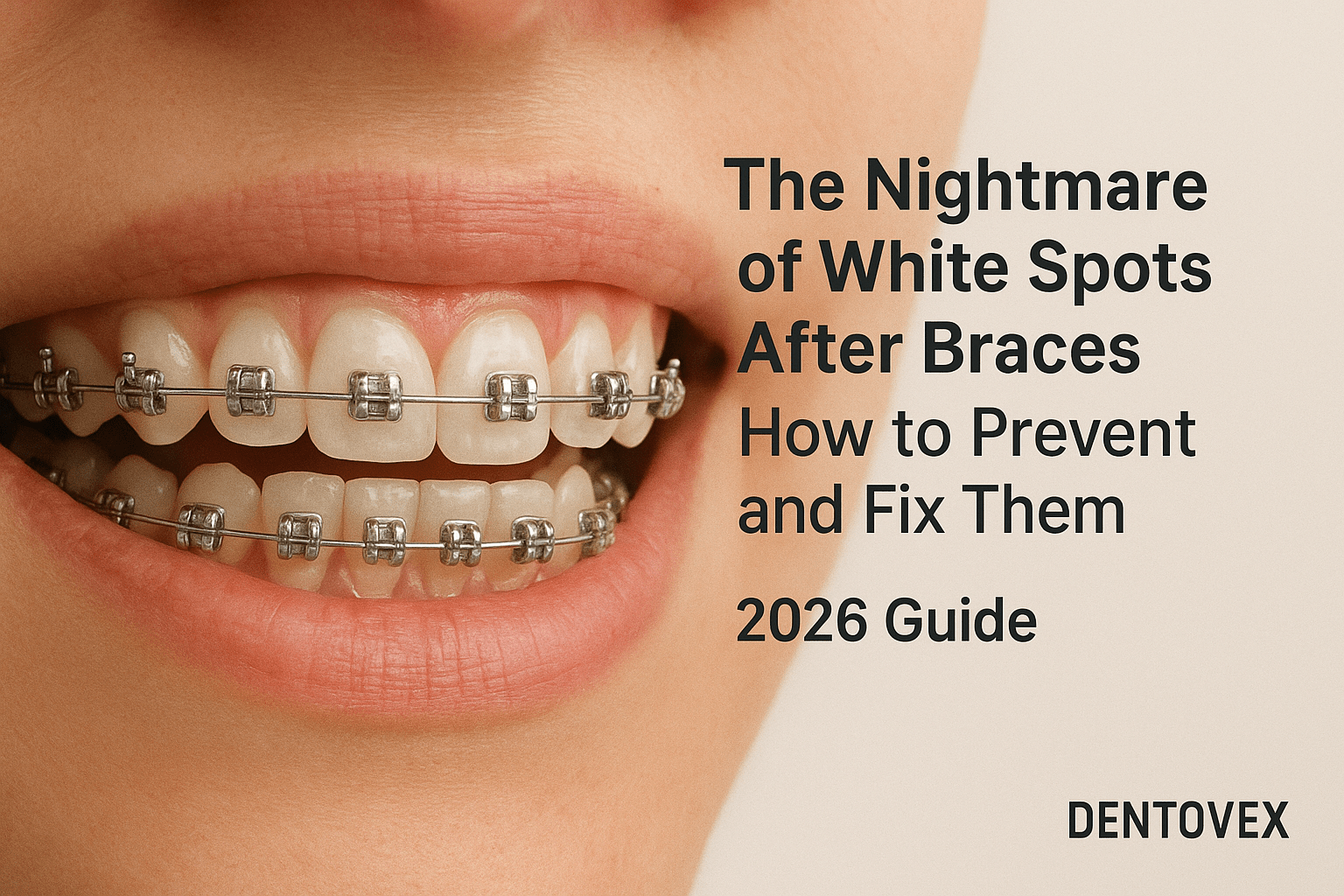
Picture this: It’s the day you’ve been waiting for Debonding Day. You’ve endured 18 months of metal wires, skipped the popcorn, and dealt with the soreness. The orthodontist finally clicks off the brackets. You sit up, grab the mirror, smile wide, and… your heart sinks.
Instead of a flawless, Hollywood smile, you see chalky, white square outlines on your teeth exactly where the brackets used to be.
These are called White Spot Lesions (WSL), or in medical terms, decalcification. They are the #1 unwanted side effect of orthodontic treatment.
If you are reading this while wearing braces, don’t panic—you can stop this before it starts. If you already have them, don’t lose hope—modern dentistry has incredible ways to erase them.
In this comprehensive guide, we will dive deep into the science of these spots, the rigorous hygiene routine to prevent them, and the latest treatments available in 2026 to restore your enamel.
Part 1: What Exactly Are These “White Spots”?
Many patients mistake these marks for “stains” caused by coffee or food. They try to brush them off, but nothing happens. That’s because they are not surface stains.
The Science of Decalcification: A white spot is actually the very first stage of a cavity (tooth decay). It happens when acids from plaque bacteria sit on your enamel for too long. These acids strip away the minerals (calcium and phosphate) from the tooth surface.
- Normal Enamel: Reflects light evenly, looking shiny and translucent.
- Decalcified Enamel: Becomes porous and rough. Light gets trapped inside these pores, scattering it and creating a “chalky white” appearance.
Unlike a regular cavity that turns brown or black, these lesions stay white because the surface hasn’t collapsed yet. But make no mistake—this is permanent damage to the tooth structure unless treated.
Part 2: The Culprits (Why Did This Happen?)
It’s easy to blame the braces, but the brackets themselves do not cause stains. They simply create a perfect hiding spot for the real enemy: Plaque.
- Poor Hygiene around Brackets: Brackets create nooks and crannies that a normal toothbrush creates can’t easily reach. If you don’t use an interdental brush (as we explained in our Cleaning Guide), plaque accumulates in a “ring” around the bracket.
- Acidic Diet: Sipping on sodas, sports drinks, or energy drinks bathes your teeth in acid. With braces, this acid gets trapped under the wires, accelerating the mineral loss.
- Dry Mouth: Saliva is your mouth’s natural defense system—it washes away acid and remineralizes teeth. If you breathe through your mouth or take certain medications, your saliva flow decreases, putting you at higher risk.
Part 3: Prevention is Better Than Cure (For Current Patients)
If you still have your braces on, you are in the “Safe Zone.” You can ensure this never happens to you by following these Golden Rules:
1. The “Christmas Tree” Brush Rule You must use a proxy brush (interdental brush) every single night. Slide it under the wire and clean the sides of the bracket. If you skip this, you are leaving 40% of the tooth surface dirty.
2. Fluoride is Your Best Friend Fluoride acts like a shield for your enamel.
- Use a high-fluoride toothpaste.
- Ask your dentist for a prescription fluoride varnish or gel to use weekly.
- Pro Tip: After brushing at night, spit out the toothpaste but don’t rinse with water. Let the fluoride sit on your teeth while you sleep.
3. Watch the Sugar Sugar feeds the bacteria that create acid. Limit sugary snacks to mealtimes only, and drink water immediately after.
Part 4: How to Fix White Spots (Treatment Options)
Okay, the braces are off, and the spots are there. What now? Important Note: Do not attempt to whiten your teeth immediately. Your gums need time to heal, and the enamel needs to rehydrate. Wait at least 6 months before aggressive treatment.
Here are the top professional solutions, ranked from mild to invasive:
1. Remineralization Pastes (MI Paste / CPP-ACP)
Cost: $ – Low Best for: Mild, fresh spots. Your dentist might prescribe a topical cream containing calcium and phosphate (like MI Paste). You apply this to your teeth daily. Over time, it helps minerals re-enter the porous enamel, fading the white appearance. It’s a slow process but non-invasive.
2. Microabrasion
Cost: $$ – Medium Best for: Shallow surface spots. Think of this as “exfoliation” for your teeth. The dentist uses a mixture of pumice and mild acid to gently polish off the very top layer of the enamel where the white spot lives. It removes the damaged layer to reveal the healthy tooth underneath.
3. Resin Infiltration (ICON Treatment) – The Game Changer
Cost: $$$ – High ($300-$500 per tooth) Best for: Deep, stubborn white spots. This is a revolutionary treatment that requires no drilling.
- How it works: The dentist applies a special gel to open the pores of the white spot. Then, they fill those pores with a highly fluid clear resin (liquid plastic). The resin soaks into the spot like water into a sponge.
- The Result: The refractive index of the tooth is restored. The white spot disappears instantly, blending in with the healthy enamel.
4. Professional Teeth Whitening
Cost: $$$ Best for: Blending everything together. Sometimes, simply whitening the rest of the tooth to match the lightness of the white spot can mask the issue. However, proceed with caution—sometimes whitening makes the spots pop out even more. Always consult a professional first.
5. Veneers or Bonding
Cost: $$$$ – Very High Best for: Severe damage or cavities. If the white spots have turned into actual holes or are too deep for other treatments, cosmetic bonding (composite resin) or porcelain veneers might be the only option to cover the surface completely.
Part 5: Myths You Should Ignore
The internet is full of “DIY Hacks” that can actually destroy your teeth.
- Myth: “Rub lemon juice and baking soda on the spots.”
- Reality: STOP! Lemon juice is highly acidic. You are adding more acid to enamel that is already damaged by acid. This will make the spots worse and cause sensitivity.
- Myth: “Scrub with charcoal.”
- Reality: Charcoal is abrasive. It can scratch your enamel, making it duller and more prone to staining.
Conclusion: Don’t Let Spots Steal Your Joy
White spots are annoying, but they are not the end of the world. With 2026’s dental technology, even the most stubborn post-braces marks can be significantly improved or completely erased.
The most important takeaway? Hygiene during treatment is non-negotiable.
If you are struggling with keeping your braces clean, revisit our Ultimate Cleaning Routine to get back on track. Your future self will thank you.
Looking for remineralization products? Check out our recommended Dental Care Collection to keep your enamel strong.
Disclaimer: This article provides general dental information. Diagnosis and treatment of white spot lesions should only be performed by a licensed dental professional.






No responses yet