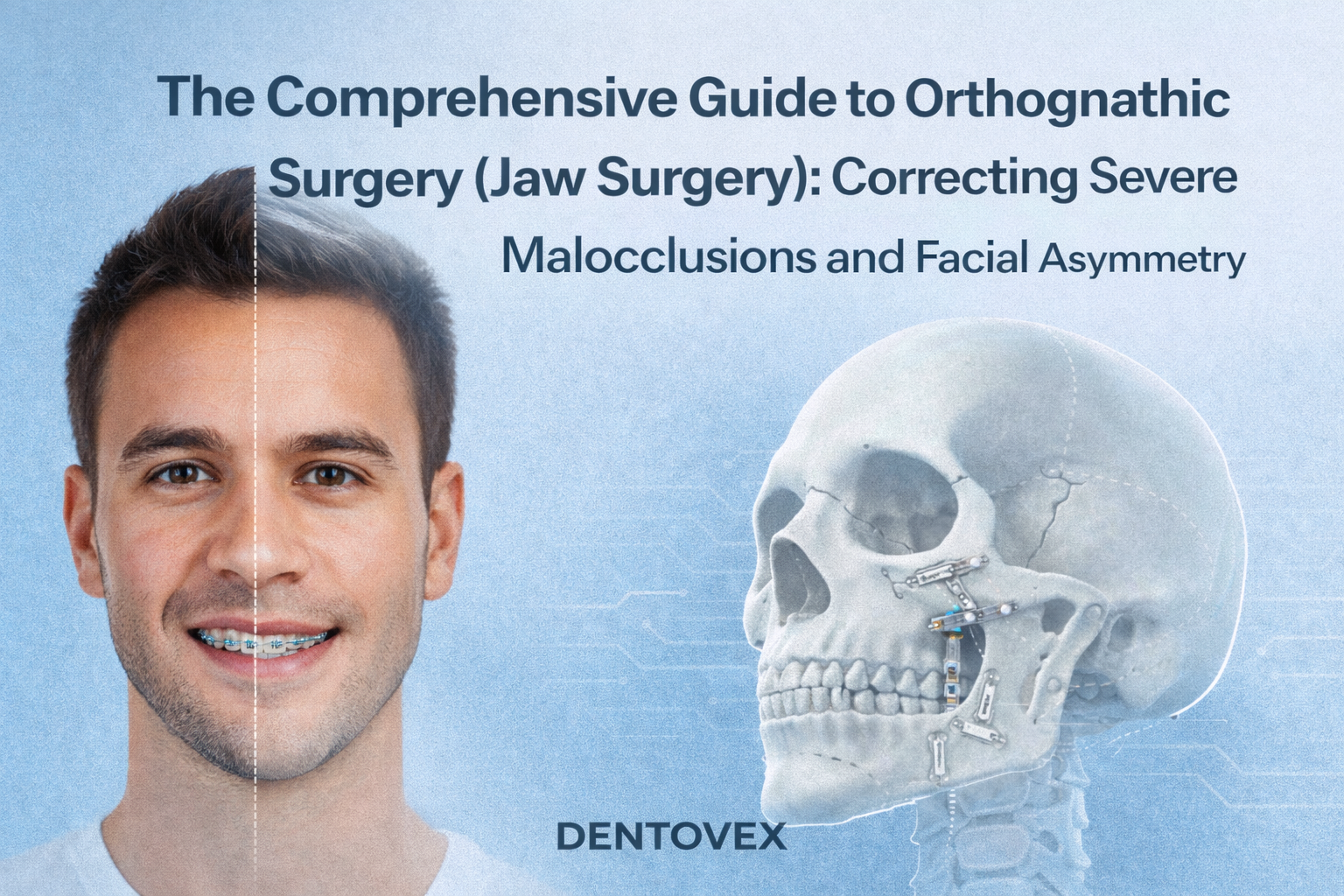
When Braces Alone Aren’t Enough
For most patients, orthodontic problems—such as crowding, gaps, or minor bite issues—can be corrected solely with braces or clear aligners. However, in cases of severe malocclusion (bad bite) or significant skeletal discrepancies, the problem isn’t just tooth alignment; it’s a mismatch between the size and position of the upper and lower jaws.
This is where Orthognathic Surgery (Jaw Surgery) becomes necessary.
Orthognathic surgery is a sophisticated, combined approach involving both an orthodontist and a maxillo-facial surgeon. It is a major commitment, but the functional and aesthetic results are often life-changing, addressing problems that affect breathing, speech, chewing, and facial harmony.
At Dentovex, we provide an honest, detailed look into this procedure. This guide walks you through the intensive, multi-phase process of correcting skeletal malocclusions.
1. What is Orthognathic Surgery and Who Needs It?
Orthognathic surgery repositions one or both jaws to improve facial symmetry and ensure the teeth meet correctly.
Common Indications for Surgery:
- Severe Class II Malocclusion (Extreme Overbite): The upper jaw or teeth protrude significantly, or the lower jaw is underdeveloped (often called a “receding chin”).
- Severe Class III Malocclusion (Underbite): The lower jaw protrudes past the upper jaw, giving a “protruding chin” or “bulldog” appearance.
- Facial Asymmetry: One side of the jaw or face is noticeably different from the other.
- Functional Issues: Problems that cannot be fixed by moving teeth alone, such as chronic temporomandibular joint (TMJ) pain or obstructive sleep apnea due to jaw position.
The Team Approach:
This treatment is a relay race between two specialists:
- Orthodontist: Plans the treatment, aligns the teeth on the base of the misaligned jaws (pre-surgical phase), and completes the final bite alignment (post-surgical phase).
- Oral and Maxillofacial Surgeon: Performs the surgical cuts and repositions the jaws in the hospital.
2. The Phases of Combined Treatment
The entire process typically spans 18 to 30 months, broken into three distinct phases:
Phase I: Pre-Surgical Orthodontics (9–18 Months)
The initial phase might seem counter-intuitive: your orthodontist uses braces or aligners to make your bite look worse before surgery.
- The Goal: To perfectly align the teeth over the existing, mismatched jaws. This ensures that when the surgeon repositions the jaws, the teeth will perfectly interlock immediately.
- Patient Experience: During this phase, the patient’s bite often gets worse aesthetically before it gets better.
Phase II: The Surgery (Hospital Stay)
The surgeon performs the operation, typically lasting 2 to 4 hours under general anesthesia.
- Types of Surgery:
- Maxillary Osteotomy (Upper Jaw): Used for severe overbite correction or to improve gum exposure when smiling.
- Mandibular Osteotomy (Lower Jaw): Used for underbite correction or to move the jaw forward/backward.
- Bi-Maxillary Surgery: Involves repositioning both the upper and lower jaws.
- The Outcome: The jaws are secured in their new position using small metal plates and screws, which typically remain permanently.
Phase III: Post-Surgical Orthodontics (6–12 Months)
This is the refinement phase where the final bite is achieved.
- The Immediate Goal: Using elastics (rubber bands) immediately after surgery is crucial to settle the bite into its final, perfect relationship.
- The Final Step: Once the bite is stable and finalized, the braces are removed, and a long-term retainer is placed to maintain the dramatic skeletal changes.
3. Recovery and Lifestyle
This is the most challenging part of the process and requires dedication.
Immediate Recovery (First 1-2 Weeks):
- Hospital Stay: Usually 1-3 nights.
- Swelling: Severe swelling is common for the first week, subsiding over the first month.
- Diet: Strict non-chewing, liquid diet for several weeks (smoothies, pureed soup, protein shakes). Do not attempt to chew.
- Pain Management: Pain is manageable with prescribed medication, but discomfort from swelling and restricted jaw movement is significant.
Long-Term Recovery (3-6 Months):
- Jaw Function: Patients gradually transition from a liquid to a soft diet (scrambled eggs, mashed potatoes). Full chewing ability often takes 3 to 6 months to return.
- Numbness: Temporary numbness of the lips, chin, or gums is common due to nerve disruption during surgery. This can take several months or up to a year to fully resolve.
4. Cost and Financial Planning (Major Investment)
Orthognathic surgery is one of the most significant investments in dental/medical health.
- Cost Components: The total cost includes: the surgeon’s fee, the hospital/anesthesia fee, the orthodontic fee (Phase I & III), and the cost of diagnostic records.
- Insurance Coverage: In many regions, if the surgery is performed for functional reasons (improving chewing, correcting a severe breathing problem, TMJ), the hospital and surgeon fees may be covered by medical insurance rather than dental insurance. This is a critical distinction that should be investigated thoroughly.
Read our full guide on [Orthodontic Cost Comparison] to understand the financial planning.
Conclusion: Function Meets Aesthetics
Orthognathic surgery is not merely a cosmetic procedure; it is a complex reconstructive process that significantly improves functional health, comfort, and, as a beautiful side effect, provides dramatic aesthetic harmony. While the journey is long and demanding, the results—a stable bite, improved facial profile, and a major boost in confidence—are permanent and transformative.
If your orthodontist suggests surgery, it is because braces alone cannot physically move your bones. Trust the combined expertise of your surgical and orthodontic team.
Disclaimer: This is a high-level overview. All patients must undergo detailed surgical planning with their licensed Oral and Maxillofacial Surgeon and Orthodontist.
Disclaimer: This article is for informational purposes only. Treatment plans for missing teeth vary highly based on bone structure. Consult a specialist for a personalized plan.
This article has been compiled and presented by Dentovex Orthodontics – Research Group for educational purposes only. It is not intended as medical advice and should not replace a face-to-face consultation with a licensed dentist, orthodontist, or other qualified healthcare professional. Always seek the advice of your own clinician regarding any questions or concerns about diagnosis, treatment, or health conditions.







No responses yet