Why Orthodontic Prices Vary Wildly
When you search for the cost of braces, you often find frustratingly vague answers: “Between $3,000 and $10,000.” Why such a huge range?
Orthodontic treatment isn’t a single product; it’s a customized service tailored to your unique biological needs. The final price depends less on the goal (straight teeth) and more on the method used to achieve it.
At Dentovex, we believe you deserve clarity. We break down the major price categories in 2026 and explain the critical factors that cause a $7,000 difference between a basic metal case and a premium invisible one.
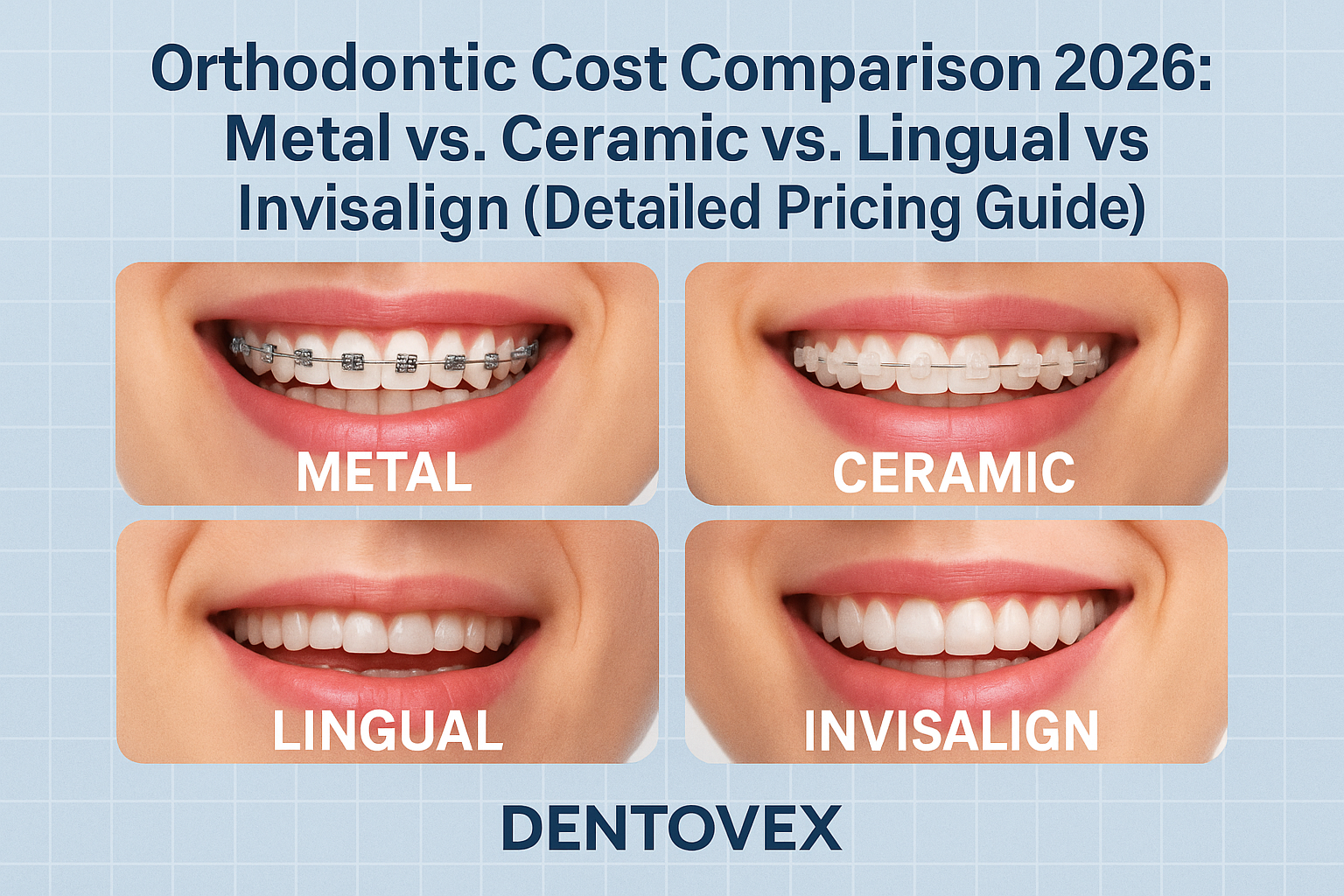
1. The Cost Breakdown by Appliance Type (Estimated Ranges 2026)
The material placed on your teeth is the single largest factor determining the initial cost.
| Appliance Type | Description | Visibility | Estimated Cost Range (USD Equivalent) |
| Metal Braces (Traditional) | Stainless steel brackets bonded to the front of the teeth. | High | $3,000 – $6,000 |
| Ceramic Braces | Tooth-colored or clear brackets on the front. | Medium (Less noticeable than metal) | $4,000 – $7,500 |
| Invisalign/Clear Aligners | Removable, custom-made transparent plastic trays. | Low (Nearly invisible) | $3,500 – $8,000 |
| Lingual Braces | Brackets bonded to the back (tongue side) of the teeth. | Invisible | $8,000 – $12,000+ |
Note: These ranges reflect common fees for standard 18-24 month treatment plans in major metropolitan areas.
2. Why Lingual Braces Are the Most Expensive
Lingual braces offer the ultimate invisibility but come with the highest price tag. Why the huge jump?
- Customization: Lingual brackets are entirely custom-made using digital scanners and 3D printing to fit the unique anatomy of each tooth’s back surface. They are not mass-produced.
- Skill Level: Placing brackets on the back of the teeth requires extreme precision and takes much longer. Fewer orthodontists are certified and highly experienced in lingual techniques, driving up the service cost.
3. Factors That Inflate or Reduce the Final Price
Beyond the appliance type, five major variables determine your final bill:
| Factor | Effect on Price | Explanation |
| 1. Treatment Length | Higher for longer plans | A complex 36-month case requires more materials and chair time than a simple 6-month case. |
| 2. Geographical Location | Higher in city centers | Costs reflect higher clinic overhead (rent, utilities, staff wages) in major urban areas. |
| 3. Orthodontist’s Experience | Higher for specialists | Highly experienced, board-certified specialists often charge more due to their proven expertise. |
| 4. Acceleration Methods | Added Cost | Using devices like AcceleDent or procedures like Propel to speed up treatment is a separate, added fee. |
| 5. Insurance Coverage | Reduces your out-of-pocket cost | Check your insurance maximums! They often cover $1,000 to $3,000 of the total fee. |
4. How to Get the Most Accurate Quote
Avoid asking, “How much are braces?” Instead, frame your question around the entire service:
- Ask for a “Comprehensive Treatment Fee”: This quote should include the appliance (braces/aligners), all necessary adjustments, emergency visits, and the crucial Retainer Fee (which is sometimes billed separately!).
- Compare “All-Inclusive” Prices: Get quotes from 3 different certified orthodontists. Ensure the quotes cover the exact same type of appliance (e.g., compare apples-to-apples: Damon brand metal vs. Damon brand metal).
5. Final Word: Cost vs. Value
While it is tempting to choose the cheapest option, remember you are investing in a medical procedure that affects your bite, jaw, and health for a lifetime. Prioritize finding an orthodontist you trust over saving a small percentage on the total fee.
Curious about the acceleration costs mentioned? Read our guide on Can You Speed Up Your Braces Treatment?.
Disclaimer: The prices listed are general estimates for comparative purposes in 2026. Consult a licensed orthodontist for a personalized quote.







No responses yet