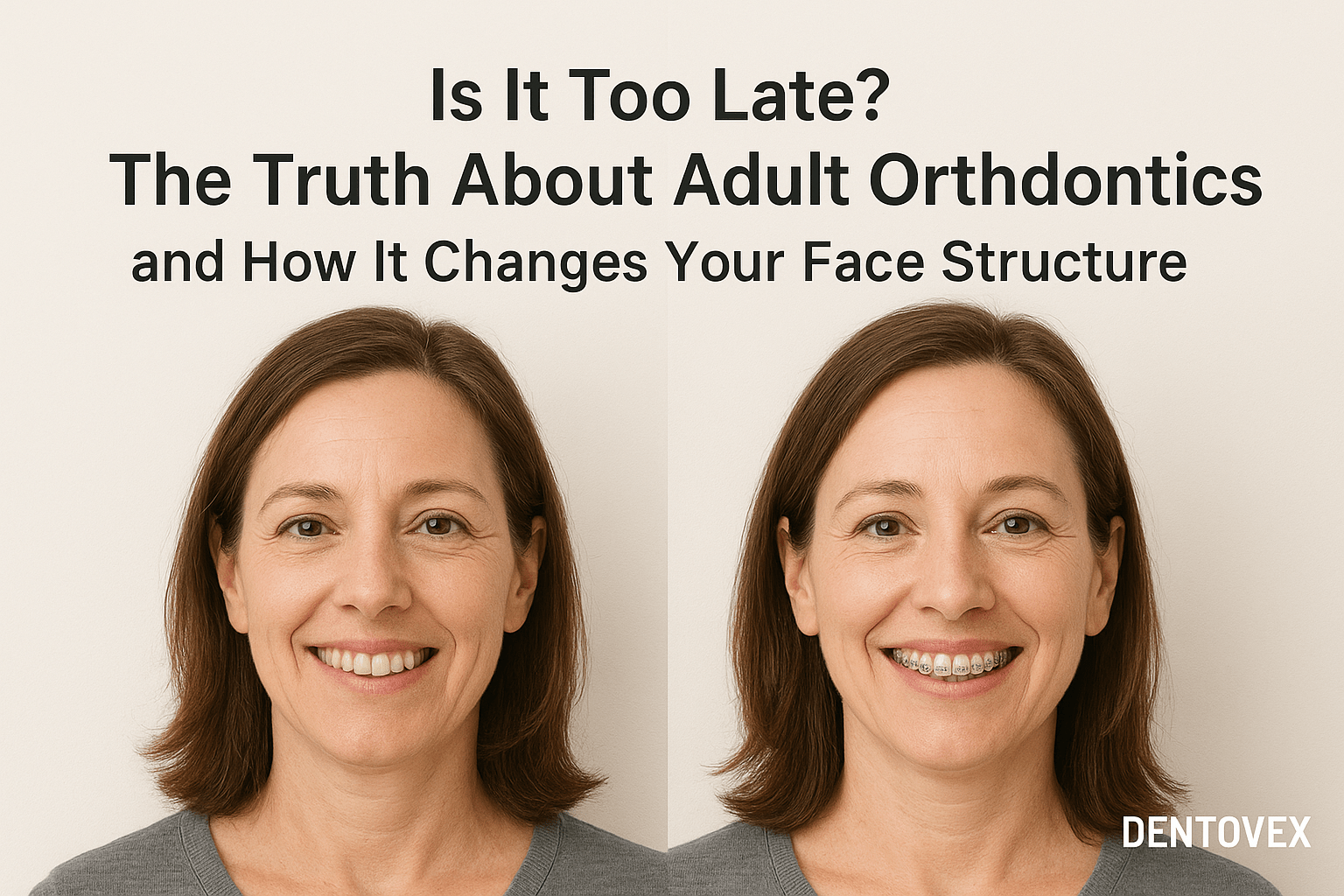
Walk into any modern orthodontic clinic today, and you might notice something surprising. The waiting room isn’t just filled with teenagers scrolling on their phones. You’ll see professionals in suits, parents, and even grandparents.
For a long time, there was a stigma that braces were a “rite of passage” for high schoolers. If you missed that boat, you were stuck with your smile forever. But that narrative has completely shifted. According to the American Association of Orthodontists, one in four orthodontic patients is an adult.
Why the sudden surge? It’s not just about vanity. Sure, we all want a dazzling smile for Instagram or that big corporate presentation. But adult orthodontics goes deeper than surface-level aesthetics. It’s about correcting decades of bite issues, relieving jaw pain, and yes—subtly reshaping the face for a more balanced, youthful appearance.
If you’ve been looking in the mirror wondering, “Is it too late for me?” or “Will braces ruin my face shape?”, you are in the right place. In this comprehensive guide, we are going to strip away the myths and dive deep into the biological and aesthetic realities of getting straight teeth as an adult.
Part 1: The “Orthodontic Facelift” – Does It Really Change Your Face?
This is the million-dollar question. When you move teeth, do you move the face? The short answer is yes, but in a good way.
Your teeth and jawbones provide the structural support for the soft tissues of your face (your lips, cheeks, and chin). When that support structure shifts, the draping of the skin shifts with it. Here is precisely how orthodontics can enhance facial aesthetics in adults:
1. Defining the Jawline
Many adults suffer from an “overbite” (where the top teeth protrude too far forward) or a “weak chin.” This can make the lower jaw look recessive or undefined. By aligning the bite and pulling the top teeth back while bringing the lower jaw into its proper position, orthodontics can create a sharper, more defined jawline. It’s often compared to a non-surgical chin augmentation.
2. Fixing Asymmetry
Take a selfie and flip the image. Do you notice that one side of your face looks different from the other? Often, facial asymmetry is caused by a deviated midline (where the center of your two front teeth doesn’t align with the center of your nose). Correcting this alignment can bring harmony and balance to the entire face, making you look more photogenic.
3. The Lip Profile
- Protruding Lips: If your teeth stick out (buck teeth), your lips are forced to stretch over them. Retracting the teeth allows the lips to relax and close naturally, improving the side profile.
- Thin Lips: Conversely, some people have teeth that tip inward, making their lips look unsupported and thin. Broadening the dental arch can provide more support, giving the appearance of fuller lips without fillers.
4. The Anti-Aging Effect
As we age, our face naturally loses volume, and the lower third of the face begins to collapse slightly. This is often accelerated by missing teeth or a deep bite. By restoring proper tooth height and arch width, orthodontics can restore lost vertical dimension, effectively smoothing out some of the deep creases around the mouth (nasolabial folds).
Part 2: The Biological Difference (Adults vs. Kids)
You might be thinking, “If it works so well, why didn’t I do it when I was 12?” Or maybe you’re worried that your bones are too “old” to move.
Here is the science: Teeth can move at any age. The physiological process of tooth movement is the same. Pressure is applied, bone dissolves on one side (resorption) and rebuilds on the other (deposition).
However, there are two key differences for adults:
- Density of the Bone: Adult bone is denser and has stopped growing. In children, we can use appliances to actually widen the jawbone because the sutures aren’t fused yet. In adults, we are working with the bone structure you already have. This means severe skeletal issues in adults might require surgery alongside braces, whereas in kids, it could be fixed with just an expander.
- Speed of Treatment: Because the bone is denser and the metabolism is slightly slower, adult treatment can take a bit longer than it does for a teenager. While a teen might finish in 18 months, an adult with a similar case might need 22-24 months.
Part 3: Beyond Looks – The Hidden Health Benefits
While the aesthetic perks get all the attention on social media, the health benefits are what will save you thousands of dollars in dental bills down the road.
1. Gum Disease Prevention Crowded / Crooked teeth create “tight spots” that toothbrush bristles and floss simply cannot reach. These spots become breeding grounds for plaque and bacteria. Over decades, this leads to periodontal disease, bone loss, and eventually tooth loss. Straight teeth are self-cleaning and much easier to maintain.
2. Protecting Your Enamel If your bite is misaligned (malocclusion), your teeth might be hitting each other incorrectly every time you chew or speak. This causes abnormal wear and tear. You might notice your teeth looking shorter or flatter over the years. This is enamel erosion. Orthodontics ensures your teeth meet perfectly, distributing force evenly.
3. Relief from Headaches and TMJ Pain A bad bite puts immense stress on the Temporomandibular Joint (TMJ) – the hinge that connects your jaw to your skull. This tension often radiates upwards, causing chronic headaches, earaches, and neck pain. Many adult patients are shocked to find that their years of “migraines” disappear once their bite is fixed.
Part 4: Discreet Options for the Professional Adult
The biggest barrier for adults isn’t the cost—it’s the embarrassment. You don’t want to walk into a board meeting or a client dinner looking like a teenager. Luckily, 2025 technology offers solutions that are practically invisible.
- Ceramic Braces: These work just like metal braces but use clear or tooth-colored brackets. They blend in with your teeth and are very popular.
- Lingual Braces: The ultimate stealth mode. These metal brackets are glued behind your teeth. No one will ever know you are wearing them unless you show them.
- Clear Aligners (Invisalign): The gold standard for adults. Removable, invisible, and comfortable. You can take them out for that important presentation or date night.
Part 5: The Honest Challenges (What to Expect)
We believe in transparency at Dentovex. While the results are life-changing, the journey requires commitment.
- Discomfort: Yes, it will hurt initially. Your teeth haven’t moved in decades; waking them up is a shock to the system.
- Lifestyle Changes: You’ll need to be meticulous about hygiene. Brushing after every meal becomes a ritual.
- Gum Recession: In some adults with thin gum tissue, moving teeth can cause slight gum recession. Your orthodontist will monitor this closely.
- Retention is Non-Negotiable: We cannot stress this enough. Adult teeth have a strong “memory” and want to drift back. You will need to wear a retainer at night for the rest of your life.
Part 6: Frequently Asked Questions (FAQ)
Q: Is 40 too old for braces? A: Absolutely not. As long as your gums and bones are healthy, you can move teeth at 60, 70, or even 80. We have patients in their retirement years who finally decided to do something for themselves.
Q: Will braces make my face look longer? A: In some cases, correcting a deep bite can slightly increase the vertical height of the lower face, which is actually a desirable trait as it counteracts the “collapsed” look of aging. Your orthodontist can simulate these changes digitally before you start.
Q: Can I get braces if I have crowns or implants? A: Yes. Brackets can be bonded to crowns with special adhesives. Implants, however, cannot move because they are fused to the bone. Your orthodontist will use the implant as an “anchor” and move the natural teeth around it.
Conclusion: An Investment in You
Deciding to undergo orthodontic treatment as an adult is a significant commitment of time, money, and energy. It’s natural to hesitate. But consider this: The time is going to pass anyway. Two years from now, you can either be two years older with the same smile that makes you hide in photos, or you can be two years older with a healthy, confident, perfectly aligned smile.
The “orthodontic facelift” is real, but the confidence boost is even more powerful.
Ready to explore your options? Don’t guess about the cost. Check out our detailed guide on Orthodontic Treatment Costs in 2026 to start planning your budget today.
Disclaimer: The information provided in this article is for educational purposes only and does not constitute medical advice. Facial changes vary by individual. Consult a board-certified orthodontist for a personalized assessment.



No responses yet