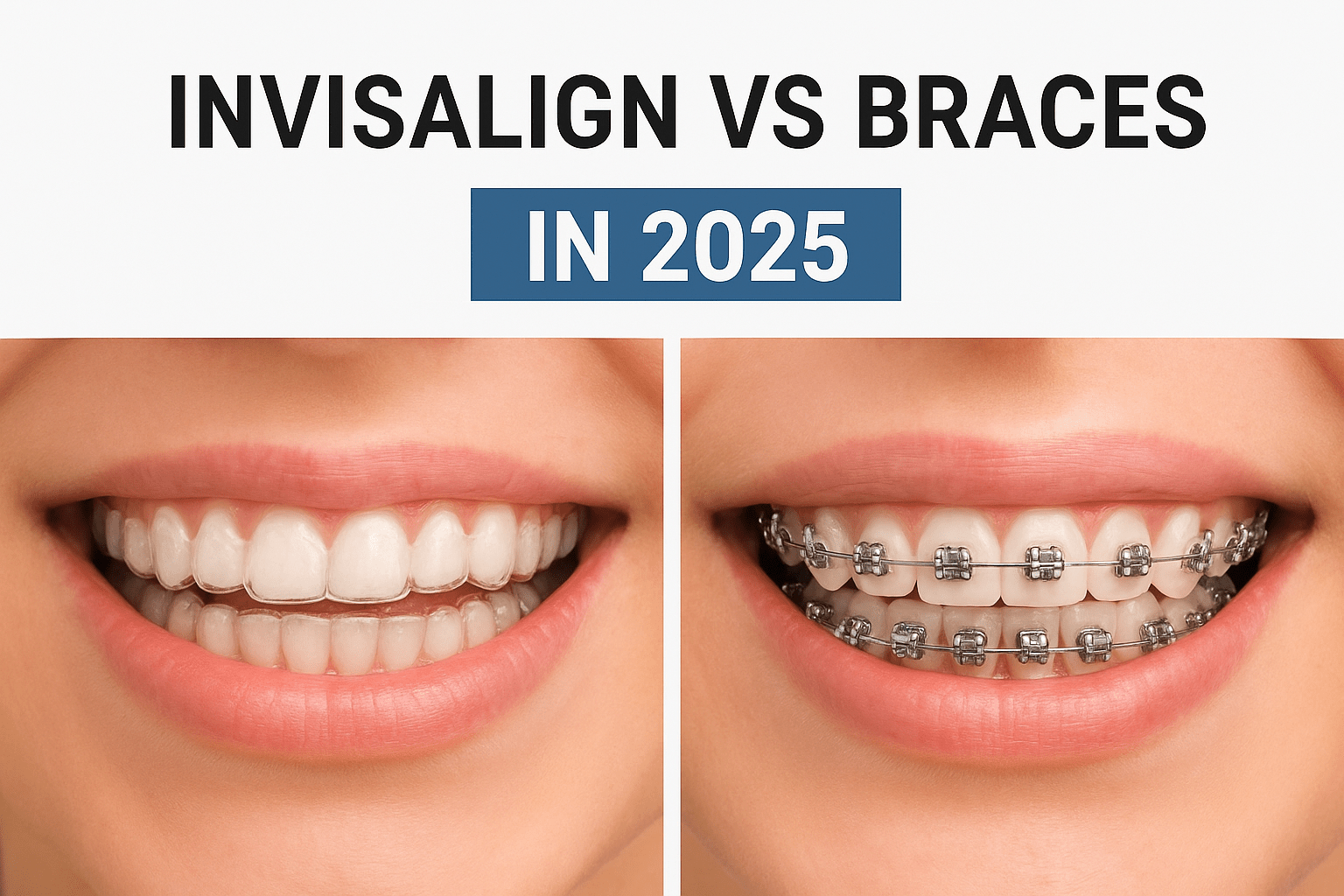
Invisalign vs Braces in 2025: Which Orthodontic Option Is Right for You?
Orthodontic technology has advanced rapidly in the last decade, and Invisalign vs braces remains one of the most common questions patients ask when beginning their smile-alignment journey. In 2025, both treatments continue to evolve with new materials, shorter treatment times, smarter digital planning tools, and improved comfort.
Whether you’re considering a discreet clear-aligner system or traditional brackets, understanding the differences is essential—especially with rising orthodontic costs in the US, UK, and European markets.
This guide breaks down everything you need to know: cost, comfort, aesthetics, treatment time, lifestyle, maintenance, and which option truly fits your needs.
What Is Invisalign?
Invisalign is a clear-aligner system that uses a series of thin, transparent trays to gradually shift teeth into place. These trays are custom-designed using 3D digital scans and updated every one to two weeks as teeth move.
How Invisalign Works
- Digital 3D mouth scan
- Customized treatment plan created by the orthodontist
- A set of aligners worn for 20–22 hours daily
- Trays changed every 7–14 days
- Attachments may be added to enhance movement
- Regular check-ins every 6–10 weeks
Who Invisalign Is Best For
- Adults seeking a discreet solution
- Teens comfortable with removable aligners
- Mild to moderate crowding
- Spacing issues
- Certain bite corrections (depending on complexity)
In 2025, newer versions of clear aligners are more durable, more precise, and more comfortable than previous generations.
What Are Traditional Braces?
Traditional braces consist of brackets fixed to each tooth and connected with an archwire. Gradual adjustments guide the teeth into their ideal positions. Modern braces now include metal, ceramic, lingual (behind the teeth), and self-ligating options.
How Braces Work
- Brackets bonded to teeth
- Archwire applies steady force
- Regular tightening or adjustments
- Elastic bands used for bite correction
Who Braces Are Best For
- Children and teens
- Patients with complex orthodontic issues
- Severe crowding or rotation
- Deep bite, open bite, or crossbite
- Cases where precise control is needed
Braces remain the gold standard for complicated cases where full mechanical control is essential.
⭐ Invisalign vs Braces: 2025 Comparison Table
| Feature | Invisalign | Braces |
|---|---|---|
| Appearance | Nearly invisible | Noticeable (metal or ceramic) |
| Cost (US) | $3,000–$8,500 | $2,500–$7,500 |
| Cost (UK) | £2,000–£5,500 | £1,800–£5,000 |
| Cost (EU) | €2,000–€6,000 | €1,800–€5,500 |
| Comfort | Smooth, no sharp wires | Possible irritation from brackets |
| Pain Level | Mild pressure each tray | Soreness after adjustments |
| Treatment Time | 6–24 months | 12–30 months |
| Dental Visits | Fewer visits | Frequent adjustments |
| Eating Restrictions | None (remove to eat) | Many restrictions |
| Oral Hygiene | Easier to maintain | Harder to clean around brackets |
| Best For | Adults/teens with mild–moderate issues | All ages, especially complex cases |
Cost Comparison (US – UK – Europe, 2025 Updated)
United States
- Invisalign: $3,000–$8,500
- Braces (metal): $2,500–$6,500
- Braces (ceramic): $3,500–$7,500
Insurance in the US may cover $1,000–$3,000 depending on the plan.
United Kingdom
- Invisalign: £2,000–£5,500
- Braces: £1,800–£5,000
NHS only covers braces for children with medical necessity; adults pay privately.
Europe
- Invisalign: €2,000–€6,000
- Braces: €1,800–€5,500
Prices vary depending on the country (Germany, France, Spain, Netherlands, Italy all differ slightly).
Pain & Comfort: What to Expect
One of the top search factors behind Invisalign vs Braces is pain level.
Invisalign Pain
- Mild pressure on teeth when switching to a new tray
- Slight discomfort during the first 2–3 days
- No sharp edges or wires
- Less gum irritation
Braces Pain
- Soreness after adjustments
- Irritation from brackets or wires
- Possible cheek or lip discomfort
- More intense pressure for certain movements
In general, Invisalign offers a more comfortable experience for most adults and teens.
Treatment Time: Which Is Faster?
Treatment duration varies based on complexity.
Invisalign
- Mild cases: 6–12 months
- Moderate cases: 12–18 months
- Some advanced cases: 18–24 months
Advances in 2024–2025 have shortened average Invisalign treatment times thanks to AI-guided planning and improved materials.
Braces
- Mild cases: 12–18 months
- Complex cases: 18–30 months
- Severe cases may take longer
For complicated bite corrections, braces remain the more predictable option.
Aesthetics & Lifestyle
Appearance
This is where Invisalign shines:
- Clear, nearly invisible trays
- No metal components
- Ideal for professionals, public-facing roles, and adults
Braces:
- Visible brackets unless ceramic
- Lingual braces are hidden but expensive
Diet & Eating
- Invisalign: eat anything (remove trays)
- Braces: avoid hard, sticky, or chewy foods
Sports
- Invisalign: safer with less mouth injury risk
- Braces: mouthguards required
Speech
- Invisalign may cause minor lisping for 1–3 days
- Braces rarely affect speech
Maintenance & Oral Hygiene
Invisalign Care
- Brush after meals before reinserting trays
- Clean aligners daily
- Keep trays protected from heat
Braces Care
- Brush meticulously around brackets
- Floss with threaders or water flossers
- Higher risk of plaque and white-spot lesions
From a hygiene standpoint, Invisalign is significantly easier to manage.
Which Option Is Better for You?
Choose Invisalign if:
- You want a discreet, nearly invisible treatment
- You prefer comfort and flexibility
- You can commit to wearing aligners 20–22 hours daily
- You have mild to moderate alignment issues
- You want fewer orthodontic visits
Choose Braces if:
- You have complex bite issues
- You need significant rotation or vertical corrections
- You want a more affordable option
- You’re treating a child or teen who may lose aligners
- You need maximum precision
⭐ Pros & Cons Summary
Invisalign Pros
- Nearly invisible
- Comfortable and smooth
- Removable for eating
- Easy to clean teeth
- Fewer office visits
Invisalign Cons
- Requires discipline
- Not ideal for all complex cases
- Can be misplaced or damaged
Braces Pros
- Works for all cases
- No risk of losing the appliance
- Predictable mechanical control
Braces Cons
- Visible
- Harder to clean
- Dietary restrictions
- More discomfort
Final Recommendation
Both treatments are effective in 2025, but the right choice depends on your lifestyle, orthodontic needs, and budget.
If aesthetics, comfort, and flexibility are important, Invisalign is an excellent option.
If you need highly complex corrections or want a reliable method for children and teens, braces remain the best solution.
Before deciding, a consultation with an orthodontist in your region (US, UK, or Europe) will help confirm the ideal plan for your exact case.
Disclaimer: The content on this blog is for informational purposes only and does not constitute medical advice. Always consult with a qualified healthcare professional for diagnosis and treatment.




No responses yet