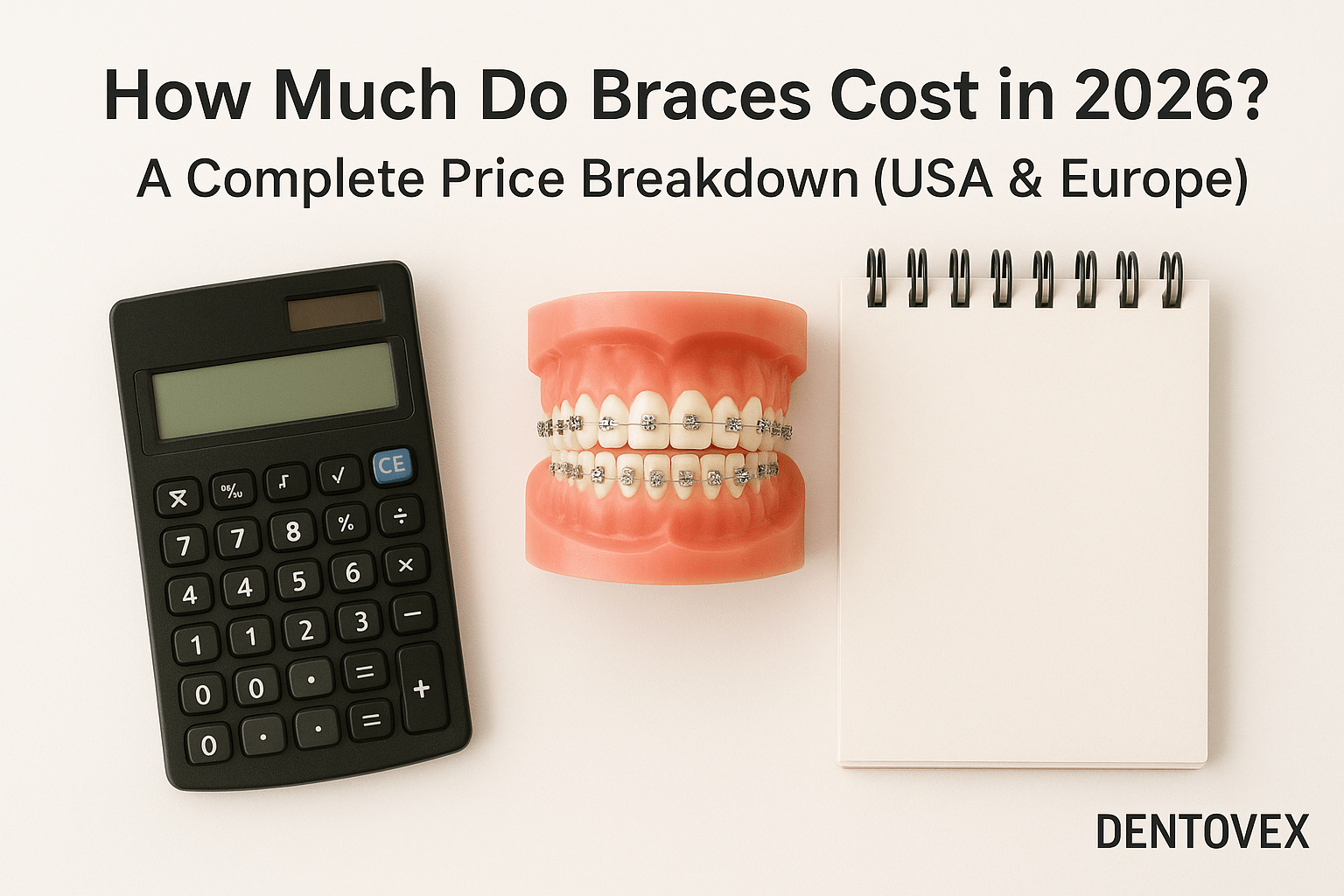
One of the first questions patients ask at Dentovex is: “Is a perfect smile within my budget?”
The truth is, there is no single price tag for braces. The cost depends on the complexity of your teeth, the type of treatment you choose, and where you live. However, understanding the market averages for 2026 can help you plan your finances and avoid “sticker shock” at the orthodontist’s office.
In this guide, we analyze the current pricing landscape for orthodontic treatments in the United States and Europe.
1. Average Costs by Treatment Type (2026 Estimates)
The biggest factor affecting price is the hardware you choose. Here is what you can expect to pay:
Metal Braces (Traditional)
- USA: $3,000 – $7,000
- Europe: €2,500 – €5,000
- Verdict: Still the most affordable and durable option. Best for severe corrections.
Ceramic Braces (Clear/Tooth-Colored)
- USA: $4,000 – $8,000
- Europe: €3,500 – €6,000
- Verdict: More expensive due to the aesthetic material, but less visible than metal.
Lingual Braces (Behind the Teeth)
- USA: $8,000 – $13,000
- Europe: €7,000 – €11,000
- Verdict: The most expensive option. They are completely invisible but require specialized customization and longer chair time.
Clear Aligners (Invisalign & Competitors)
- USA: $3,500 – $8,500
- Europe: €3,500 – €7,000
- Verdict: Prices have become competitive with metal braces. Cost varies heavily based on the number of trays needed.
2. Does Insurance Cover Braces?
This is where geography matters.
In the United States:
- Children (Under 18): Many dental insurance plans cover up to 50% of the cost for children, usually with a lifetime cap (e.g., $1,000 to $3,000 maximum benefit).
- Adults: Unfortunately, most standard plans consider adult orthodontics “cosmetic” and do not cover it. However, you can use HSA (Health Savings Account) or FSA (Flexible Spending Account) pre-tax dollars to pay for it.
In Europe:
- Public Health Systems (UK NHS, Germany, France): Often cover treatment for children with severe dental issues (medically necessary). Minor corrections are usually private.
- Private Insurance: Available for adults who want faster access or aesthetic options not covered by the state.
3. Smart Ways to Pay: Financing Options
If you don’t have $5,000 sitting in your bank account, don’t worry. Most orthodontic clinics offer flexible payment solutions:
- In-House Monthly Payment Plans: Many orthodontists allow you to make a down payment and then pay the rest in interest-free monthly installments over the course of treatment (18-24 months).
- Third-Party Financing: Services like CareCredit (in the US) offer loans specifically for healthcare expenses.
- Paid-in-Full Discounts: Some clinics offer a 3-5% discount if you pay the entire amount upfront.
4. Factors That Can Increase the Price
Be aware of potential “hidden” costs:
- Emergency Visits: Breaking brackets frequently might incur extra fees.
- Lost Retainers: Replacement retainers are rarely free.
- Extractions: If you need teeth pulled before braces, this is usually a separate bill from an oral surgeon.
Conclusion
Investing in orthodontics is investing in your self-confidence and long-term oral health. While the upfront cost might seem high, the monthly payment options make it accessible for most families.
Ready to get started? The only way to get an exact quote is to book a consultation with a local specialist.
Disclaimer: The prices listed above are national averages for informational purposes only. Actual costs will vary based on your specific case, location, and provider. Always request a detailed written quote from your orthodontist.






No responses yet