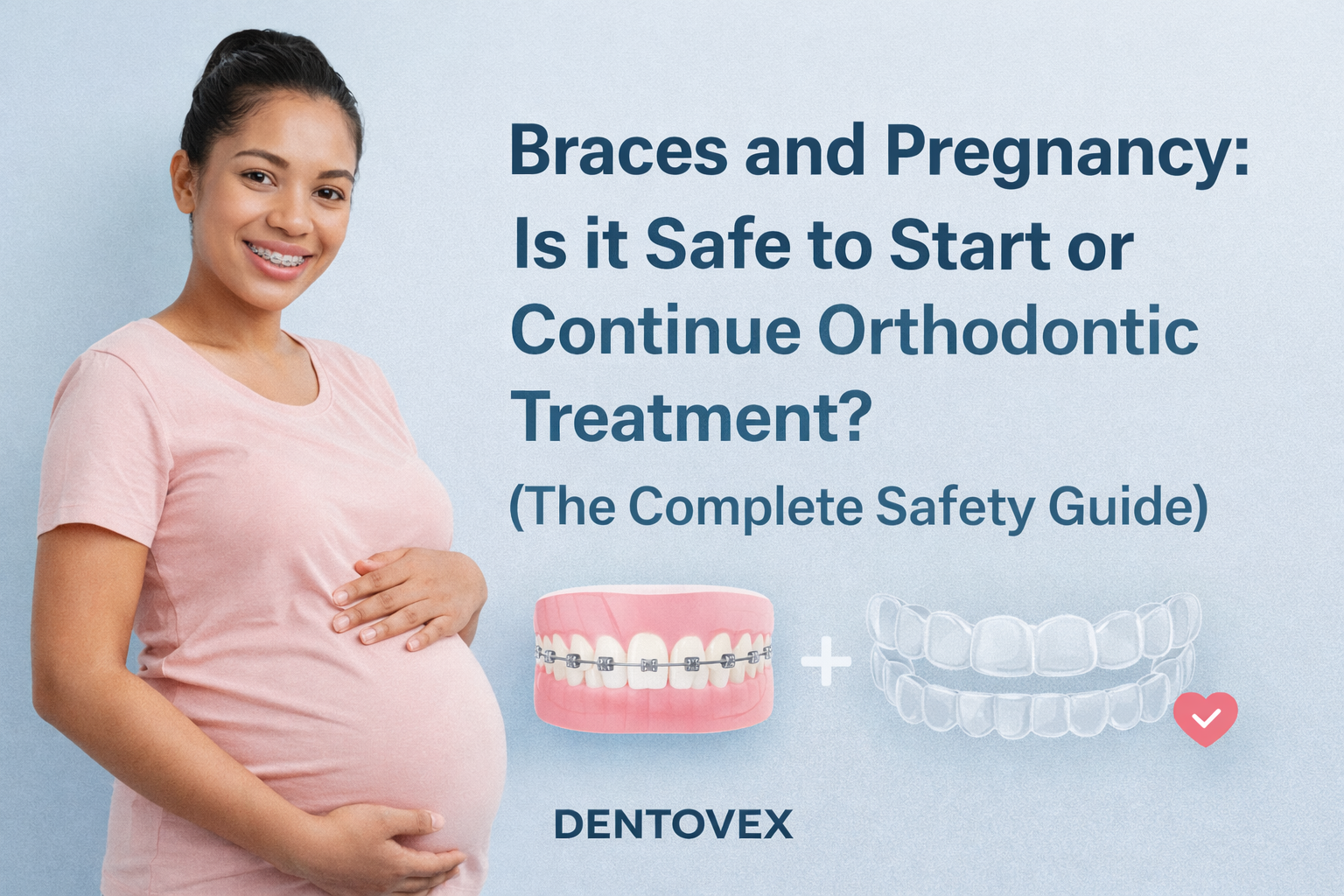
Prioritizing Two Healths
Pregnancy brings a whirlwind of changes, and hormonal shifts affect nearly every part of your body including your mouth. If you are pregnant or planning to be, the thought of starting or continuing orthodontic treatment likely brings up many questions: Is it safe for the baby? Will my gums bleed more? Can I still get X-rays?
The good news is that orthodontic treatment is generally safe throughout pregnancy. However, special precautions must be taken, and your treatment plan needs to be carefully coordinated with both your orthodontist and your OB/GYN.
At Dentovex, we prioritize the health of both mother and baby. Here is the complete safety guide for navigating your smile journey while expecting.
1. Safety Concerns: X-Rays and Medications
The primary risks during orthodontic treatment involve diagnostic procedures and medications.
A. X-Rays: When to Say No
- The Rule: X-rays are usually avoided entirely during the first trimester. While modern dental X-rays have low radiation levels and are usually localized to the mouth, the consensus is to eliminate all non-essential exposure.
- The Solution: If a critical X-ray is needed later in the pregnancy, your doctor must use a lead apron and neck collar, and you must have approval from your OB/GYN. Ideally, initial treatment planning X-rays should be done before conception.
B. Pain Relief and Anesthetics
- Local Anesthesia: The lidocaine used for minor dental procedures (like placing temporary anchorage devices) is typically safe in pregnancy, but the dose should be minimized.
- OTC Pain Relief: For soreness after adjustments, Acetaminophen (Paracetamol) is generally considered safe. Ibuprofen (Advil, Motrin) and Aspirin are usually discouraged, especially in the third trimester.
2. Hormones and Your Gums: The Swelling Challenge
The increase in progesterone and estrogen during pregnancy causes changes in the body’s response to plaque.
- “Pregnancy Gingivitis”: It is extremely common. Gums become more tender, red, and prone to bleeding, even with minimal plaque. This can make wearing braces uncomfortable.
- The Fix: Ramp up your hygiene! This is non-negotiable. Use a Water Flosser (oral irrigator) daily to massage the gums and blast away irritants. Clean, plaque-free gums are less likely to swell and bleed.
3. Starting Treatment vs. Continuing Treatment
A. Starting Treatment While Pregnant
- The Recommendation: Wait, if possible. Starting treatment involves the most pain, medication use, and X-ray requirements (initial planning). If you can wait until after delivery, your journey will be smoother.
- The Exception: If you choose to proceed, your orthodontist must use previous X-rays or delay the initial X-rays until the safest stage of your pregnancy.
B. Continuing Treatment While Pregnant
- The Recommendation: Continue! Stopping treatment halfway can allow teeth to relapse, which is inefficient. Once the initial planning X-rays are done, continued treatment primarily involves wire changes and elastic adjustments.
- Appointment Timing: Schedule adjustments for the second trimester, when most women feel their best (the “honeymoon phase”).
4. Post-Partum Care: The Fatigue Factor
After the baby arrives, life becomes extremely busy, and self-care drops off the list.
- Compliance Risk: It becomes easy to forget to wear your elastics or clear aligners 22 hours a day. This causes major delays.
- The Plan: Talk to your orthodontist about extending the time between adjustments to accommodate your new schedule. If you are using clear aligners, keep your old trays as backups in case you miss a week of wear.
Conclusion: Communication is Essential
Orthodontics is a safe journey for expectant mothers, provided there is open and honest communication. Inform your entire dental team (orthodontist, hygienist, and general dentist) about your pregnancy status immediately.
Prioritize your oral health now to prevent bigger issues later.
Need a hygiene boost to fight gum swelling? Review our guide on The Best Water Flossers for Braces.
Disclaimer: This guide is for informational purposes only. You must consult your OB/GYN and orthodontist for medical advice related to your specific condition.
Disclaimer: This article is for informational purposes only. Treatment plans for missing teeth vary highly based on bone structure. Consult a specialist for a personalized plan.
This article has been compiled and presented by Dentovex Orthodontics – Research Group for educational purposes only. It is not intended as medical advice and should not replace a face-to-face consultation with a licensed dentist, orthodontist, or other qualified healthcare professional. Always seek the advice of your own clinician regarding any questions or concerns about diagnosis, treatment, or health conditions.







No responses yet