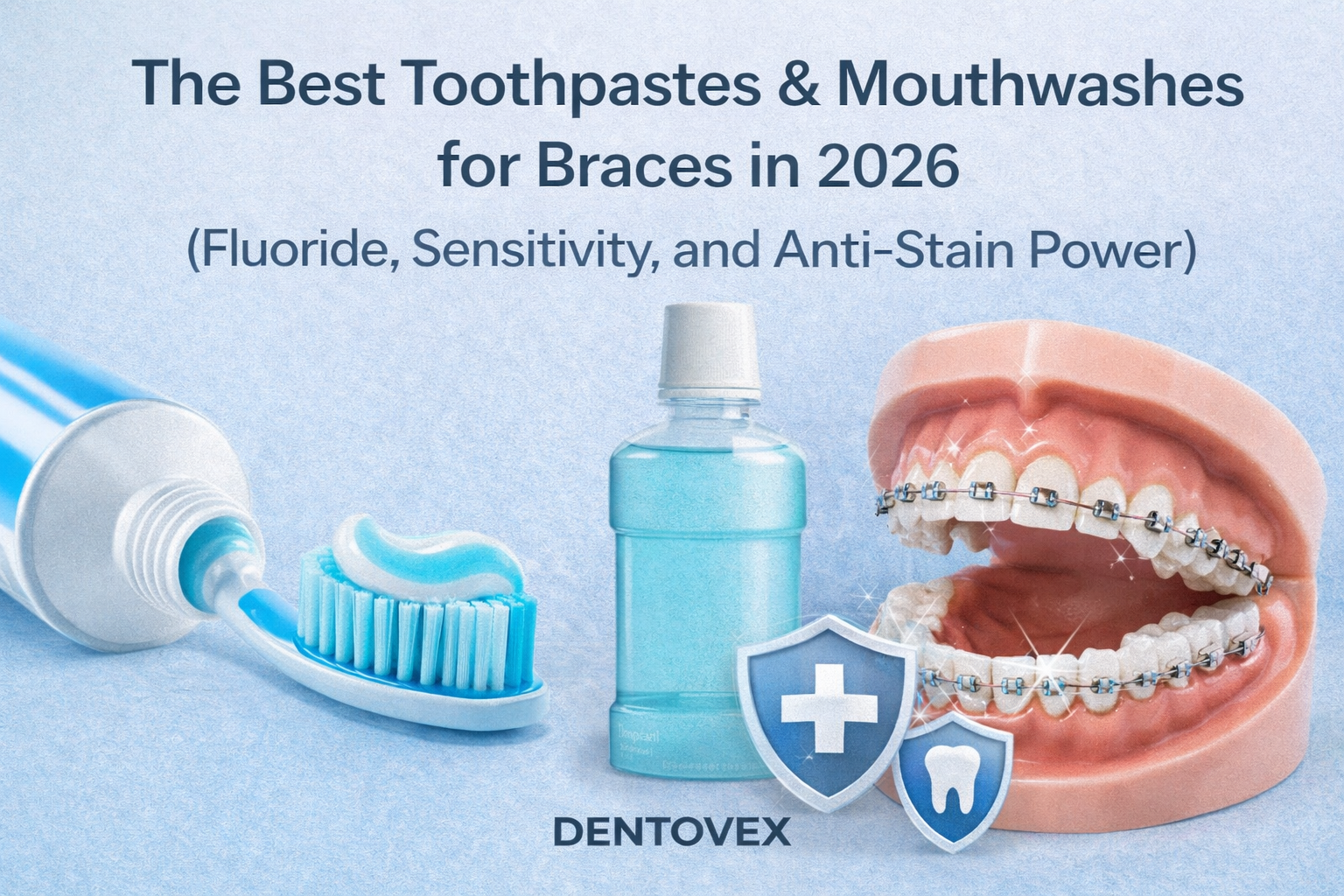
The Fight Against White Spots
When you have braces, your daily oral hygiene routine is your frontline defense against two major problems: decalcification (the white spots left on the enamel when braces come off) and gingivitis (gum inflammation).
The tools you use your toothbrush and flosser are only half the battle. The other half is the ammunition: your toothpaste and mouthwash.
A standard toothpaste might be fine for alignment-free teeth, but braces introduce a complex environment where plaque thrives and mineral loss accelerates. You need specialized ingredients to protect the enamel surrounding your brackets.
At Dentovex, we break down the necessary ingredients and review the best products available in 2026 to ensure your teeth stay healthy and stain-free throughout your orthodontic journey.
1. Toothpaste: Your Anti-Cavity Armor
Your focus should be on maximizing fluoride delivery and minimizing unnecessary abrasion.
A. The Fluoride Imperative (The #1 Ingredient)
Fluoride is a mineral that remineralizes enamel, effectively fighting the acid that causes white spots and cavities.
- Standard Fluoride (1,000–1,500 ppm): Acceptable for general use.
- Prescription/High-Fluoride (5,000 ppm): If your orthodontist identifies you as high-risk for cavities (poor hygiene, many cavities before treatment), they may prescribe a high-concentration fluoride paste. This is highly effective for protecting enamel under braces.
B. The Sensitivity Solution
Many patients experience temporary tooth sensitivity during or immediately after adjustments due to the pressure being applied.
- Key Ingredient: Look for pastes containing Potassium Nitrate or Strontium Chloride. These compounds work by blocking the pathways in the dentin that lead to the tooth’s nerve, reducing sensitivity quickly. Using these pastes for a few days before an adjustment can preemptively ease discomfort.
C. Abrasives: Stick to Gels
Avoid highly abrasive “whitening” or “tarter-control” pastes, which use coarse particles to scrub the surface. These can potentially dull the metal or plastic of your brackets and are unnecessary if you are brushing correctly with a sonic or electric toothbrush. Gel-based or smooth-texture pastes are generally gentler.
2. Mouthwash: The Plaque Penetrator
Mouthwash should be used as an adjunct (supplement) to brushing and flossing, not a replacement. It helps reach areas the brush can’t quite get to.
A. Non-Alcoholic, Anti-Cavity Rinses
- Alcohol: Rinses containing alcohol can cause severe drying of the mouth tissue, which is uncomfortable, especially when you have sores or irritation from wires. Choose non-alcoholic formulas.
- Chlorhexidine Gluconate (CHX): Your doctor may prescribe a CHX rinse for short periods (1-2 weeks) if you have severe gum inflammation (gingivitis). It is a powerful antibacterial agent. Caution: It can temporarily stain teeth and should only be used under a doctor’s instruction.
B. Fluoride Rinses (The Nighttime Boost)
Using a fluoride rinse before bed—after brushing and flossing—is highly recommended. Since you won’t be eating or drinking afterward, the fluoride remains in contact with the enamel for hours, providing maximum protection against white spots while you sleep.
3. Product Reviews: Our Top 2026 Picks
Note: Always consult your orthodontist for personalized product recommendations.
| Category | Recommended Ingredient/Product Type | Best For Braces Patient |
| Daily Toothpaste | High Fluoride (1450+ ppm) | Preventing cavities and decalcification around brackets. |
| Sensitivity Relief | Potassium Nitrate | Post-adjustment soreness and general tooth pain. |
| Routine Mouthwash | Non-Alcoholic, Fluoride Rinse | Daily plaque reduction and overnight enamel protection. |
| Gum Health (Prescribed) | Chlorhexidine Gluconate (CHX) | Short-term severe gingivitis treatment. |
The Oral Hygiene Trio for Braces Success:
- Water Flosser (M16): For debris removal under the wires.
- Electric Toothbrush (M17): For mechanical plaque removal.
- High-Fluoride Paste (M26): For chemical enamel protection.
4. How to Use Mouthwash Effectively with Braces
Many people rinse too quickly. To maximize the benefit:
- Do Not Swallow: Most professional rinses are not meant to be ingested.
- Rinse for 30 Seconds: Swish the product vigorously, allowing the liquid to move through the spaces created by the wires and brackets.
- No Rinsing After: After using the mouthwash, do not rinse your mouth with water immediately. Allow the fluoride to remain on your enamel for 30 minutes to maximize remineralization.
Conclusion: Small Choices, Big Results
Choosing the right toothpaste and mouthwash is a simple yet powerful way to influence the final outcome of your orthodontic treatment. Protecting your gums from inflammation and your enamel from decay ensures that when your braces come off, the reveal is a perfect, uniformly healthy, and beautiful smile.
Disclaimer: The products mentioned are examples of effective formulations. Always check ingredient labels and follow the specific advice of your treating clinician.
Disclaimer: This article is for informational purposes only. Treatment plans for missing teeth vary highly based on bone structure. Consult a specialist for a personalized plan.
This article has been compiled and presented by Dentovex Orthodontics – Research Group for educational purposes only. It is not intended as medical advice and should not replace a face-to-face consultation with a licensed dentist, orthodontist, or other qualified healthcare professional. Always seek the advice of your own clinician regarding any questions or concerns about diagnosis, treatment, or health conditions.

No responses yet