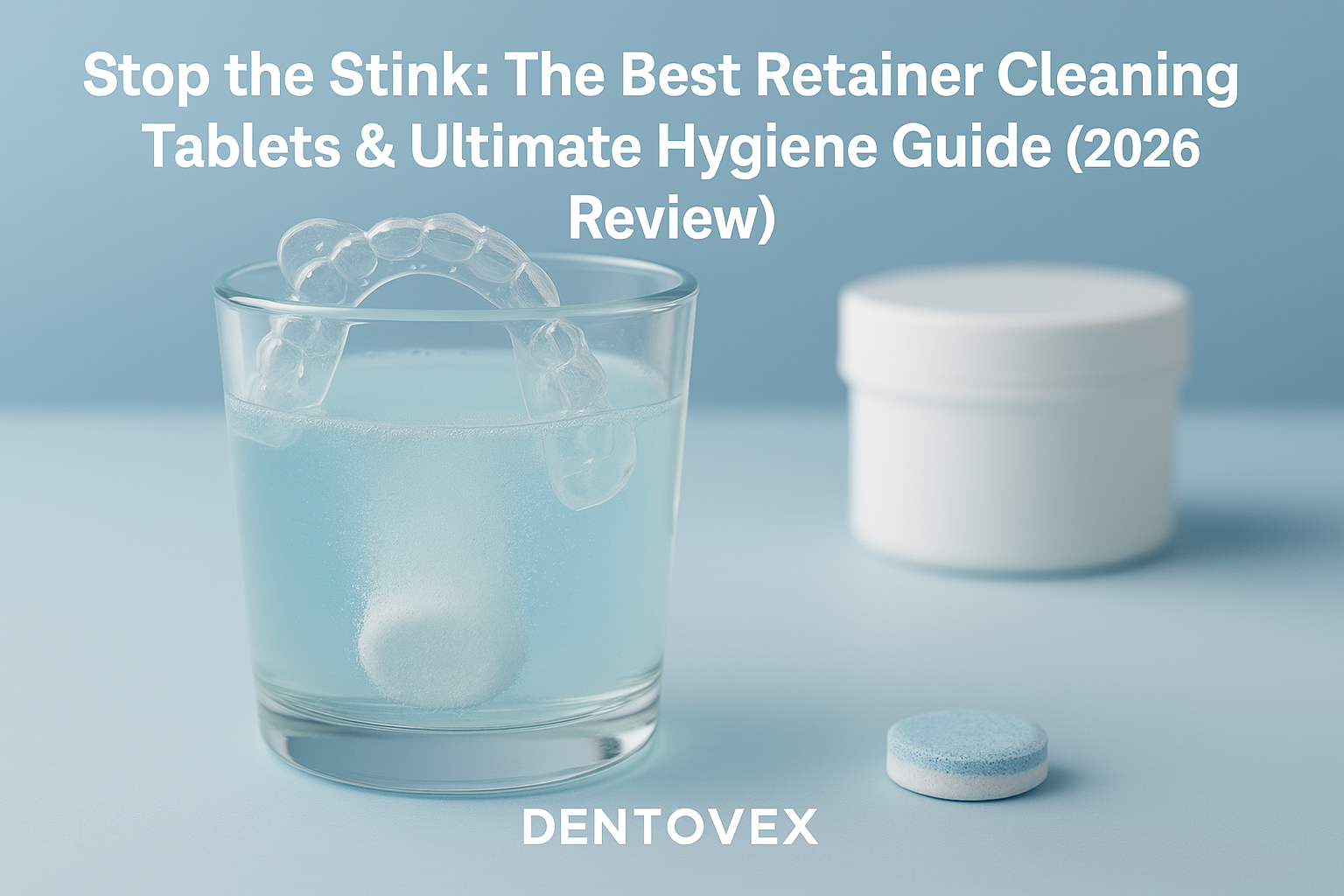
Congratulations! You finished your braces treatment, and your teeth are perfectly straight. Now comes the part your orthodontist stressed the most: The Retainer.
Your retainer (whether it’s a clear plastic tray like a Vivera or a wire-and-acrylic Hawley) is the key to keeping your new smile forever. But like any medical device you wear in your mouth, it accumulates bacteria, plaque, and eventually, that unmistakable stinky smell.
Skipping cleaning can lead to dental issues and even ruin the retainer’s clarity.
At Dentovex, we know cleaning a retainer can be tricky. This guide will walk you through the ultimate rules for lifelong retainer care and review the top specialized cleaning products available in 2026.
1. Why Does My Retainer Smell? (Biofilm 101)
The smell is not just old food; it’s a thin, sticky layer of bacteria and fungi called Biofilm or Plaque. It’s the same stuff that causes morning breath.
- When you wear a retainer, moisture gets trapped, creating a perfect warm, dark environment for bacteria to multiply.
- The plaque eventually hardens and turns your clear retainer cloudy or yellow.
2. The Golden Rule: NEVER Use Toothpaste!
This is the biggest mistake patients make.
- The Problem: Most toothpastes contain abrasive particles (like silica) that are designed to scrub plaque off your hard enamel.
- The Result: These abrasives create microscopic scratches on the soft plastic material of your retainer. Bacteria then hide and multiply inside these scratches, making the retainer cloudy and smelling even worse.
Rule: Clean your retainer with non-abrasive methods only.
3. The Cleaning Methods: From DIY to Specialized
| Method | Product | Pros | Cons |
| Daily Rinse | Non-abrasive liquid soap (e.g., clear dish soap) and soft brush | Cheap, gentle, non-toxic. | Does not remove hardened plaque (calculus). |
| DIY Soak | White Vinegar (50/50 water mixture) | Good for removing mineral deposits/tartar. | Smells strong, requires long soaking time. |
| Specialized Soak | Cleaning Tablets (e.g., Retainer Brite, Polident) | Kills 99.9% of bacteria, fast, removes odor effectively. | Can be expensive for daily use. |
4. Review: Best Retainer Cleaning Tablets (2026 Picks)
These specialized tablets are effervescent (fizzing) and contain gentle cleaning agents (like sodium bicarbonate and citric acid) that break down biofilm without scratching the plastic.
A. Retainer Brite
- Why We Love It: Specifically formulated for clear aligners and retainers. Highly effective at maintaining clarity and removing odor.
- Best For: Everyday quick cleaning.
B. Polident or Efferdent (Denture Cleaners)
- Why We Love It: Widely available and cheaper than specialized brands. Good cleaning power.
- Best For: Budget-conscious users. (Check with your orthodontist first, as some strong denture formulas can slightly dry out certain plastics).
C. OAP Cleaner (Retainer Foam)
- Why We Love It: A non-soak alternative. You pump foam into the retainer, put it back in your mouth, and the foam cleans while you wear it.
- Best For: Users who need cleaning while on-the-go.
5. Final Care Tips
- Always Dry: Before putting your retainer in its case, make sure it is dry. Storing a wet retainer guarantees bacteria growth.
- Clean the Case: Your retainer case is just as dirty! Clean it weekly with soap and water or run it through the dishwasher.
- Brush Gently: When brushing the retainer, use a soft-bristled brush and clear liquid soap (like hand or dish soap).
Conclusion: Protect Your Investment
Your straight teeth are a massive investment. Treating your retainer with care is the simplest way to protect that investment for decades to come. Don’t let a stinky, cloudy retainer become the new problem after your braces are off!
Still in braces? Ensuring you clean under your brackets will prevent plaque buildup and make your retainer cleaning journey easier later. Read our guide on The Best Electric Toothbrushes for Braces.
Disclaimer: Dentovex is not affiliated with the listed brands. Always follow the manufacturer’s directions for use.
Disclaimer: This article is for informational purposes only. Treatment plans for missing teeth vary highly based on bone structure. Consult a specialist for a personalized plan.
This article has been compiled and presented by Dentovex Orthodontics – Research Group for educational purposes only. It is not intended as medical advice and should not replace a face-to-face consultation with a licensed dentist, orthodontist, or other qualified healthcare professional. Always seek the advice of your own clinician regarding any questions or concerns about diagnosis, treatment, or health conditions.
No responses yet